Blogs
Alternatives to Traditional Metal Dental Crowns
Table of Contents
- Why Patients Choose Alternatives to Traditional Metal Dental Crowns
- Porcelain vs. Metal Crowns: What's the Difference
- All-Ceramic Crowns: A Metal-Free Option
- Zirconia Dental Crowns: Strength Without Metal
- Dental Onlay vs. Crown: When You May Not Need Full Coverage
- Alternatives to Tooth Crowns: Inlays, Veneers, and Conservative Restorations
- How to Choose the Right Restoration for Your Tooth
- Expert Dental Restoration in Albuquerque
- Frequently Asked Questions
Last Updated: October 6, 2026
Why Patients Choose Alternatives to Traditional Metal Dental Crowns
When a tooth needs restoration, many patients in Albuquerque and nearby Rio Rancho, Placitas, North Valley, Uptown, and Nor Este think of the traditional metal crown.
Modern dentistry offers several alternatives to traditional metal dental crowns that deliver strength without the cosmetic compromise.
At Osuna Dental Care, we've helped hundreds of Albuquerque-area patients choose the right restoration, with over 30 years of experience guiding them through options from same-day crowns to full-mouth implant solutions.
Porcelain vs. Metal Crowns: What's the Difference
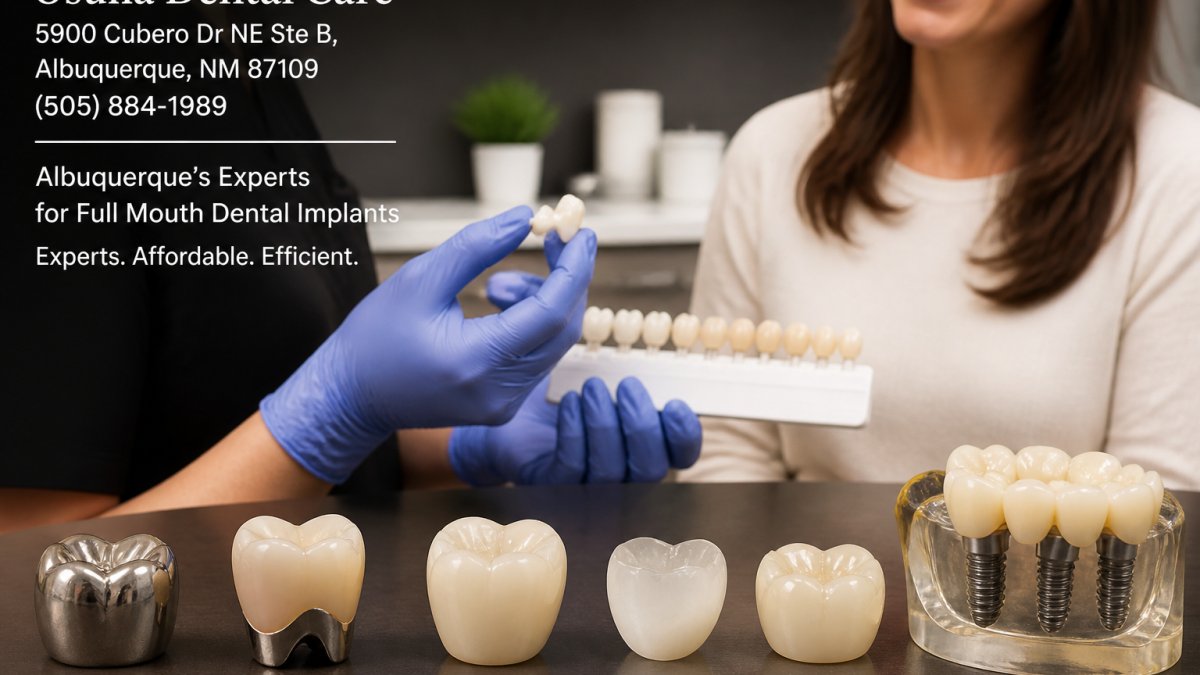
The core distinction between porcelain and metal crowns comes down to material and appearance. A traditional metal crown uses a gold alloy or stainless steel base, highly durable but visibly metallic.
Metal crowns excel in durability, resisting chips under heavy chewing.
The trade-off is straightforward: metal offers longevity and affordability; porcelain offers natural appearance. For back molars, many patients accept metal; for front teeth, porcelain is the obvious choice.
All-Ceramic Crowns: A Metal-Free Option
All-ceramic crowns eliminate metal entirely, using tooth-colored ceramic throughout.
All-ceramic crowns work well for patients with metal sensitivities or allergies. They're biocompatible, and the ceramic bonds well to tooth structure, allowing conservative preparation that removes less healthy tooth.
The main limitation is brittleness. All-ceramic crowns can chip or crack under heavy biting forces, especially if you grind at night, so they suit front teeth and premolars better than back molars.
Zirconia Dental Crowns: Strength Without Metal
Zirconia is an advanced ceramic combining the aesthetics of all-ceramic crowns with exceptional strength.
Zirconia crowns bond securely to tooth structure and resist chipping better than all-ceramic options.
One consideration: zirconia is more opaque than all-ceramic, so it may not match very translucent front teeth perfectly in certain lighting. For most patients the difference is imperceptible, and zirconia's superior strength often makes it the practical choice.
Dental Onlay vs. Crown: When You May Not Need Full Coverage
Not every damaged tooth requires a full crown. A dental onlay is a partial-coverage restoration that covers only the damaged portion of your tooth, preserving more healthy structure, a middle ground between a filling and a crown.
Dental onlays work best when decay or damage affects one or more cusps but the tooth structure is otherwise sound.
Onlays come in tooth-colored ceramic or composite, giving the same aesthetic benefits as crowns without full coverage.
The key question: does your tooth need full or partial coverage?
| Restoration Type | Coverage | Best For | Material Options |
|---|---|---|---|
| Filling | Small area | Minor decay | Composite resin |
| Onlay | One or more cusps | Moderate damage, sound tooth structure | Ceramic, composite |
| Crown | Entire tooth | Extensive damage, weakened tooth | Metal, porcelain, zirconia, ceramic |
What Actually Decides Onlay vs. Crown
The decision comes down to four clinical questions:
- How much healthy tooth remains? If the remaining walls are thin or undermined, the tooth flexes under biting force and a partial restoration can crack it, full coverage is safer even if visible damage looks small.
- Which cusps are involved? Damage to one cusp often suits an onlay; damage crossing the central groove and involving multiple cusps usually tips toward a crown.
- Is there a crack? A crack extending below the gum line generally cannot be saved with an onlay; cracks stopping above the gum line may still qualify.
- What are the bite forces on that tooth? Second molars and teeth near a heavy bite or grinding habit generate forces conservative restorations tolerate less well.
Longevity and Failure Modes
Well-placed ceramic onlays on vital teeth can serve for many years, often comparable to crowns when remaining tooth structure is adequate. The failure modes differ:
- Onlays tend to fail by debonding at the margins or fracture of the remaining cusps. Debonding is often repairable; a fractured cusp usually converts the case to a full crown.
- Crowns tend to fail by fracture of the crown material, loss of cement seal, or root fracture underneath. Root fracture is the least repairable outcome and the main reason dentists avoid crowning teeth that don't need it.
Because onlays preserve more tooth structure, they leave more options open if the restoration ever needs replacement, the strongest argument for choosing an onlay when the tooth qualifies.
When an Onlay Is the Wrong Choice
An onlay is not appropriate when:
- The tooth has already had a root canal and lost significant internal structure
- The crack or fracture extends below the gum line
- The remaining walls are too thin to support the restoration
In those cases, a full-coverage crown, often zirconia or metal-ceramic, is the more predictable long-term solution, matching the restoration to the tooth's actual condition rather than overselling.
At Osuna Dental Care, we evaluate every damaged tooth with this onlay-versus-crown framework before recommending treatment. Call (505) 884-1989 to schedule an exam at 5900 Cubero Dr NE Ste B, Albuquerque, NM 87109.
Alternatives to Tooth Crowns: Inlays, Veneers, and Conservative Restorations
Beyond onlays, several options restore damaged teeth while preserving structure.
Dental veneers are thin shells bonded to the front surface of teeth, primarily for cosmetic improvement.
For minor chips, cracks, or discoloration, composite resin bonding might suffice.
The decision tree is simple: minor surface damage suggests bonding or veneers; damage affecting chewing surfaces suggests inlays or onlays; extensive damage or weakened structure requires a full crown.
How to Choose the Right Restoration for Your Tooth
Choosing among alternatives to traditional metal dental crowns requires weighing tooth location, extent of damage, bite force, aesthetic priorities, and budget. Here's how those factors play out clinically.
Step 1: Does the Tooth Need Full Coverage at All?
Before comparing crown materials, confirm a crown is even necessary. Ask your dentist:
- Is the damage limited to one cusp or one surface? If yes, an onlay or inlay may be sufficient.
- Is the tooth cracked below the gum line? If yes, a crown is usually required.
- Has the tooth had a root canal? Root-canal-treated teeth are more brittle and often need full coverage, though a well-preserved tooth with an onlay can sometimes work.
This single question, full coverage or partial, eliminates half the options before material choice even comes up.
Step 2: Match Material to Tooth Location and Bite
Front teeth (incisors and canines). Aesthetics dominate. All-ceramic or layered porcelain crowns give the best shade match and translucency.
Premolars. The transition zone. Zirconia or metal-ceramic crowns balance strength and appearance.
Molars. Chewing forces are highest here. Zirconia and metal-ceramic crowns are the most predictable.
Grinding or clenching. Monolithic zirconia or metal-ceramic is more fracture-resistant than layered porcelain.
Metal sensitivity or allergy. Ceramic and zirconia eliminate the concern.
Step 3: Understand What Drives the Cost
Cost varies widely by material and procedure. The main drivers are:
- Material. Prices vary by material, lab, and region.
- Laboratory work. Crowns made in a dental lab cost more than same-day milled crowns, but the trade-off is often fit and esthetics.
- Tooth position and complexity. A second molar is harder to access and prepare than a front tooth, which can affect the fee.
Insurance is another variable. Many plans cover a percentage of a crown's cost but may pay based on the least expensive alternative, if a metal crown would suffice, the plan may only cover that amount and you pay the difference for a ceramic or zirconia upgrade. Ask your insurer directly:
- Does the plan cover onlays and inlays, or only full crowns?
- Is there a waiting period for major restorative work?
- Does the plan require pre-authorization?
Osuna Dental Care's team can help you review your benefits before treatment so there are no surprises. Call (505) 884-1989 to discuss coverage for your situation.
Step 4: Plan for the Treatment Process
Knowing what to expect reduces anxiety and helps you schedule around work or family commitments.
- Onlays and inlays. Usually two visits: the first prepares the tooth, takes an impression or digital scan, and places a temporary; the second bonds the finished restoration. Some offices can mill ceramic onlays same-day.
- Crowns. Traditional crowns take two visits; same-day crowns can be completed in one. A temporary crown protects the tooth between visits.
- Veneers. Typically two to three visits, including a consultation, preparation, and bonding appointment.
After any of these, expect mild sensitivity for a few days, especially with cold liquids. Avoid chewing hard foods on the restored tooth until your dentist confirms the bite is balanced. Good oral hygiene and regular checkups extend the life of every restoration.
Step 5: Weigh Longevity Against Upfront Cost
Metal crowns last the longest but look the least natural; all-ceramic crowns look the best but carry higher fracture risk in the back of the mouth; zirconia sits in between.
At Osuna Dental Care, we walk every patient through this framework in person. We're experts of choice for full-mouth dental implants in Albuquerque, bringing the same expertise, affordability, and efficiency to single-tooth restorations.
Expert Dental Restoration in Albuquerque
If you're in Albuquerque or surrounding areas like Rio Rancho, Placitas, North Valley, Uptown, or Nor Este and considering alternatives to traditional metal dental crowns, Osuna Dental Care is here to guide you.
We're experts of choice for full-mouth dental implants in Albuquerque, bringing that same expertise and efficiency to single-tooth restorations.
Our approach is straightforward: we examine your tooth, explain your options clearly, discuss the pros and cons, and help you decide.
Whether you need a single crown or full-mouth restoration, we're committed to gentle, efficient treatment.
Frequently Asked Questions
What are the main alternatives to traditional metal dental crowns?
The primary alternatives to traditional metal dental crowns include all-ceramic crowns, porcelain crowns, zirconia crowns, dental onlays, inlays, and veneers. All-ceramic and zirconia crowns provide full coverage without metal and offer a natural appearance. Onlays and inlays preserve more tooth structure when damage is limited to one surface. Veneers work best for front teeth and cosmetic concerns. Your dentist can recommend the best option based on which tooth needs restoration, how much damage exists, and your aesthetic goals.
Are porcelain or ceramic crowns better than metal crowns?
Porcelain and ceramic crowns offer advantages over metal crowns for visible teeth because they match natural tooth color and blend seamlessly with your smile. Metal crowns are stronger and last longer in high-bite-force areas like back molars. Ceramic and porcelain crowns typically last 10-15 years, while metal crowns may last 20+ years. The choice depends on whether the tooth is visible, how much bite force it experiences, and whether you prefer the appearance of a tooth-colored restoration over the durability of metal.
Can a damaged tooth be restored without a crown?
Yes, depending on the extent of damage. If damage is limited to one surface of the tooth, a dental onlay, inlay, or filling may restore the tooth without full-crown coverage. These conservative treatments preserve more of your natural tooth structure. However, if the damage is extensive, affects multiple surfaces, or the tooth is significantly weakened, a full crown provides the strength and protection needed for long-term durability. A dentist can evaluate the damage and recommend whether a crown or a more conservative restoration is appropriate.
Are zirconia crowns a good alternative to metal crowns?
Zirconia crowns are an excellent metal-free alternative to traditional metal crowns. Zirconia offers strength comparable to metal while providing a tooth-colored appearance. Zirconia crowns resist fracture, handle biting forces well, and work for both front and back teeth. They typically last 10-15 years or longer with proper care. Unlike metal crowns, zirconia crowns don't cause metal sensitivity or allergic reactions. For patients who want the durability of metal without the visible appearance, zirconia is a popular choice.
If you're ready to explore alternatives to traditional metal dental crowns and want expert guidance tailored to your specific situation, Osuna Dental Care is your trusted partner in Albuquerque. Our team combines three decades of experience with modern restorative techniques to deliver natural-looking, durable restorations that restore both function and confidence. Call us at (505) 884-1989 or visit our office at 5900 Cubero Dr NE Ste B, Albuquerque, NM 87109 to schedule your consultation.
