Blogs
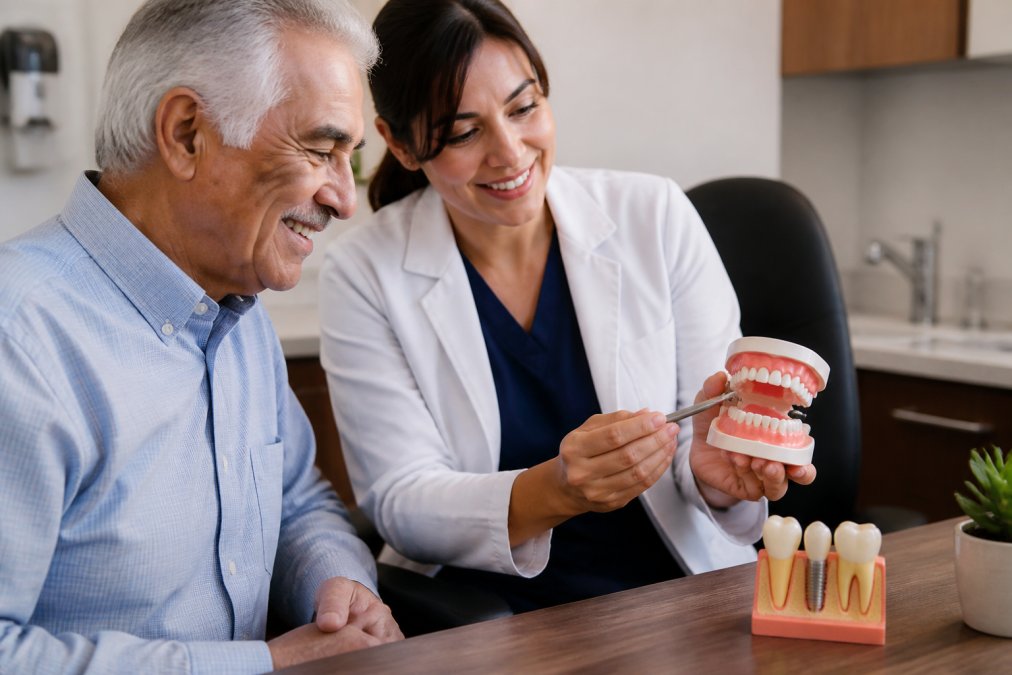
Best Tooth Replacement Options for Seniors
Table of Contents
- Understanding Tooth Loss and Its Impact on Seniors
- Dental Implants for Seniors in Albuquerque: A Permanent Solution
- All-on-4 Dental Implants in Albuquerque: Fast and Efficient
- Traditional Dentures: Affordability and Practicality
- Cost of Dentures vs. Implants in New Mexico
- Fixed Bridges and Implant-Supported Options
- Comparing Tooth Replacement Options: Durability and Maintenance
- Health Considerations for Seniors Choosing Tooth Replacement
- Making Your Decision: Finding the Right Solution for You
- Frequently Asked Questions
Last Updated: September 1, 2026
Understanding Tooth Loss and Its Impact on Seniors
Tooth loss profoundly affects quality of life beyond aesthetics. Missing teeth change how you eat, speak, and interact with others, and the psychological impact, embarrassment, withdrawal, lost confidence, can be equally significant.
When a tooth is missing, the jawbone beneath it deteriorates through bone resorption. This gradual but relentless process changes your facial shape, making you look older and making dentures harder to wear. Early intervention preserves your options and prevents costly complications later.
For seniors in Albuquerque and surrounding areas like Rio Rancho, Placitas, North Valley, Uptown, and Nor Este, choosing how to replace missing teeth depends on how many teeth are missing, your overall health, your budget, and what matters most in daily life.
Dental Implants for Seniors in Albuquerque: A Permanent Solution
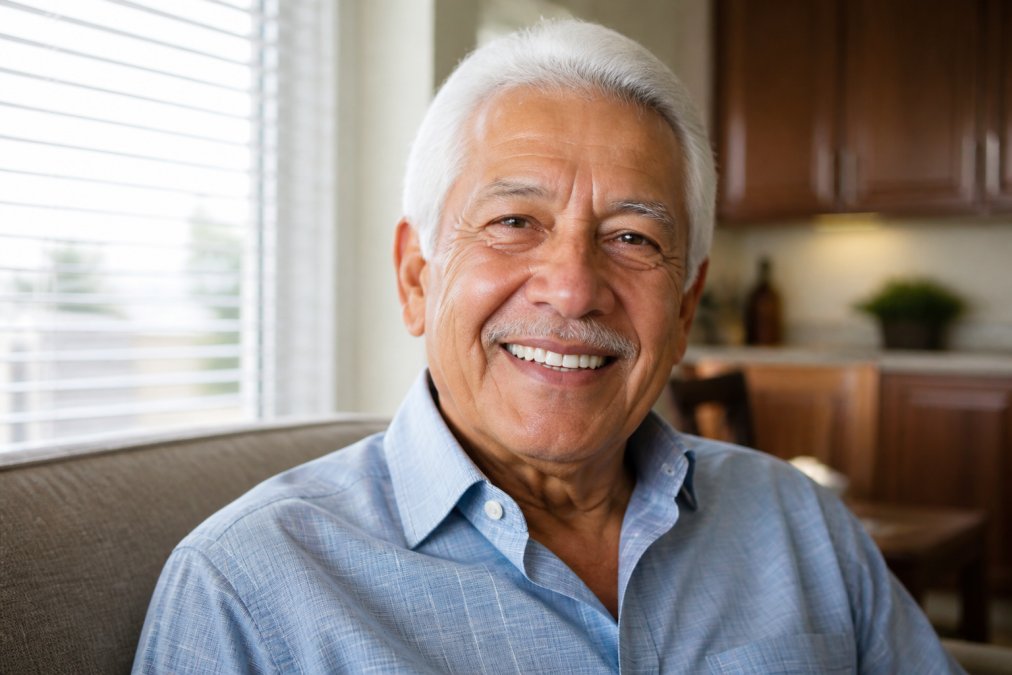
Dental implants are the closest thing to having your natural teeth back. A titanium post is surgically placed into your jawbone to act as an artificial tooth root. Once integrated with the bone through osseointegration, it supports a crown, bridge, or denture that looks, feels, and functions like a real tooth.
How Dental Implants Work and Osseointegration
When a titanium implant is placed in your jaw, bone cells recognize it as biocompatible and grow around it. Over 3-6 months, the bone fuses directly to the implant surface in a process called osseointegration, creating a bond stronger than a natural tooth root (peer-reviewed research). During healing, you wear a temporary tooth so you're never without one.
This integration is why implants outlast every other tooth replacement option. They don't decay, don't need root canals, and stimulate your jawbone the way natural teeth do, preventing the bone loss that occurs with dentures or bridges.
Single Implants vs. Full-Arch Solutions
A single dental implant works well for one or two missing teeth, preserving maximum bone and tooth structure. When you're missing most or all of your teeth, full-arch solutions become practical and cost-effective. Instead of replacing each tooth individually, full-arch implant systems use a strategic number of implants to support an entire set of replacement teeth.
All-on-4 Dental Implants in Albuquerque: Fast and Efficient
The All-on-4 technique uses just four strategically angled implants to support a complete arch of replacement teeth. This approach often avoids the need for bone grafting, even in patients with moderate bone loss.
Many patients receive temporary teeth the same day implants are placed, so you walk out with teeth. The permanent restoration is completed after osseointegration, typically within 3-6 months. You're never edentulous during the healing process.
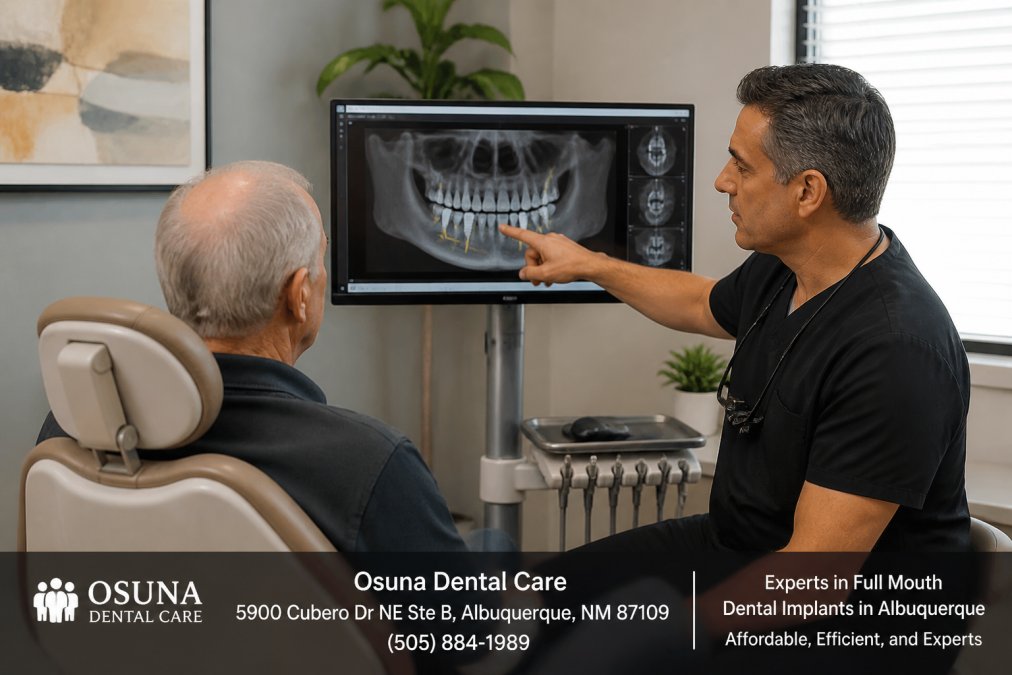
Osuna Dental Care specializes in All-on-4 dental implants in Albuquerque and is recognized as one of the top highly-rated dental providers across Google and multiple platforms. The team uses advanced 3D imaging to plan each case precisely, ensuring optimal implant placement and faster healing. The All-on-4 approach works exceptionally well for seniors because it balances permanence with practicality. You get a fixed solution that functions like natural teeth without the bulk and maintenance issues of removable dentures. The four implants distribute forces evenly across your jaw, preventing bone loss.
Traditional Dentures: Affordability and Practicality
Dentures replace all teeth in an upper or lower arch, resting on the gums and held in place by suction or denture adhesive. Modern dentures are custom-crafted to match your facial structure and desired tooth appearance.
The primary advantage is affordability. They require no surgery, no healing time, and no bone grafting. You can have dentures made in weeks. For seniors on a fixed income or those who want to avoid surgical procedures, dentures offer accessible tooth replacement.
However, dentures slip or shift during eating or speaking, especially when chewing hard foods. They require daily removal, cleaning, and storage. Many people find them uncomfortable initially, with adjustment periods lasting weeks or months. Medicare dental coverage.
The biggest issue is what happens beneath them. Without tooth roots stimulating the jawbone, bone loss accelerates. Within the first year, many patients experience noticeable bone resorption. This changes the fit, requiring periodic relines to maintain comfort. Over time, significant bone loss makes dentures increasingly difficult to wear.
Cost of Dentures vs. Implants in New Mexico
The financial comparison between dentures and implants isn't as simple as initial price. Dentures may cost less upfront, but implants can deliver better long-term value for many seniors.
Dentures require ongoing maintenance: adhesives, relines every 1-2 years as your jaw changes shape, and eventual replacement as they wear out. Over time, these recurring costs can add up. Implants require only standard dental care, brushing, flossing, and regular checkups. Once osseointegration is complete, they're maintenance-free beyond normal oral hygiene.
For seniors in Albuquerque and surrounding areas, Osuna Dental Care provides transparent pricing with no hidden fees. The team discusses the complete cost picture so you can make an informed decision based on your budget and long-term goals.
Some seniors choose dentures initially and later upgrade to implants once they've saved more. Others invest in implants upfront because they value permanence and don't want denture maintenance.
Fixed Bridges and Implant-Supported Options
A dental bridge spans the gap left by one or more missing teeth, anchored to crowns placed on healthy adjacent teeth. Unlike dentures, bridges are permanently cemented in place.
Bridges work well when you have strong, healthy teeth on either side of the gap. However, they require reshaping those adjacent teeth to accommodate crowns. You're essentially sacrificing two healthy teeth to replace one missing tooth. Bridges typically last 10-15 years.
Implant-supported bridges represent an alternative when multiple teeth are missing in a row. Instead of anchoring to natural teeth, the bridge is supported by dental implants. This approach doesn't require modifying any healthy teeth. The implants integrate with your jawbone, preventing bone loss.
For seniors deciding between traditional bridges and implant-supported options, the key question is whether you want to preserve your remaining natural teeth. Many dentists recommend protecting healthy teeth rather than crowning them for a bridge.
Comparing Tooth Replacement Options: Durability and Maintenance
Different tooth replacement options have dramatically different lifespans and maintenance requirements.
Dental implants are a durable option. With proper care, implants can last 25+ years or even a lifetime. They require only standard brushing, flossing, and regular dental checkups. Many patients who receive implants in their 60s or 70s never need replacement.
All-on-4 implants follow the same durability pattern. The implants themselves last decades, though the artificial teeth attached to them may eventually need replacement due to wear, typically after 10-15 years.
Dentures typically last 5-8 years before replacement. As your jaw changes shape from bone loss, dentures require relines every 1-2 years to maintain fit.
Traditional bridges last 10-15 years on average. They require the same care as natural teeth but can develop decay around the edges where they meet supporting teeth.
For seniors who value simplicity and minimal maintenance, implants and implant-supported solutions can be a good choice.
Health Considerations for Seniors Choosing Tooth Replacement
Not every senior is a candidate for every tooth replacement option. Your overall health, medications, bone density, and specific dental situation all influence what's possible.
Dental implants require adequate jawbone density to anchor securely. If you've had significant bone loss, you may need bone grafting before implant placement. Some seniors with moderate bone loss can skip grafting entirely by using angled implants like All-on-4.
Certain health conditions affect implant candidacy. Uncontrolled diabetes can slow bone healing. Bisphosphonate medications require special consideration. Smoking impairs healing and increases implant failure risk. These aren't absolute contraindications, but factors your dentist must evaluate carefully.
Dentures and bridges have fewer health restrictions since they don't require surgery. However, dentures require manual dexterity for daily cleaning and insertion. Seniors with arthritis or limited hand mobility may struggle with denture care.
For seniors in Albuquerque considering their options, a comprehensive consultation is essential. At Osuna Dental Care, the team evaluates your complete health picture, discusses your concerns, and explains which tooth replacement options are realistic for your situation.
The psychological impact of tooth loss shouldn't be underestimated. Seniors who feel embarrassed about missing teeth often withdraw socially, which negatively affects mental health and overall wellbeing.
According to research on oral health and aging from the National Institute on Aging, maintaining healthy teeth and addressing tooth loss significantly improves quality of life, nutritional intake, and social engagement in older adults.
Making Your Decision: Finding the Right Solution for You
Choosing the best tooth replacement options for seniors comes down to balancing several factors: your budget, health status, how many teeth are missing, how important permanence is to you, and how much maintenance you're willing to manage.
If you're missing one or two teeth and want a natural, permanent solution: single dental implants are ideal.
If you're missing most or all of your teeth and want a permanent, efficient solution: All-on-4 dental implants offer speed, stability, and excellent long-term outcomes.
If you're on a tight budget and want to avoid surgery: traditional dentures provide an affordable starting point, though you'll manage ongoing maintenance and eventual bone loss.
If you're missing multiple teeth in a row and want to preserve your remaining natural teeth: implant-supported bridges protect your healthy teeth while delivering permanent restoration.
For seniors in Albuquerque and surrounding communities including Rio Rancho, Placitas, North Valley, Uptown, and Nor Este, Osuna Dental Care offers comprehensive evaluation and transparent guidance. The team specializes in all-on-4 dental implants and full mouth dental implant solutions, delivering affordable, efficient, expert care.
Osuna Dental Care 5900 Cubero Dr NE Ste B Albuquerque, NM 87109 (505) 884-1989
Osuna Dental Care is recognized as one of the top highly-rated dental providers in Albuquerque across Google and multiple platforms. Whether you're exploring your options or ready to move forward with treatment, the team provides the personalized attention and professional expertise seniors deserve.
The best tooth replacement options for seniors aren't one-size-fits-all. They're determined by your unique situation, your priorities, and your vision for your future. Taking time to understand your choices and consulting with an experienced dental team ensures you make a decision you'll be confident about for years to come.
Research from the American Dental Association on tooth replacement options confirms that implants and implant-supported restorations deliver superior long-term outcomes compared to traditional removable options, with higher patient satisfaction and better preservation of jawbone health.
Contact Osuna Dental Care today for a consultation. Let the team help you explore which tooth replacement option aligns best with your goals, health status, and lifestyle. Your smile, and your confidence, are worth the investment.
Frequently Asked Questions
Q: Is there an age limit for getting dental implants in Albuquerque?
A: There is no specific age limit for dental implants. Many seniors in their 70s, 80s, and beyond have successful implants. What matters most is jawbone density and overall health. Your dentist will evaluate whether you're a good candidate through imaging and a health assessment. Osuna Dental Care has placed dental implants for seniors throughout Albuquerque, Rio Rancho, and surrounding areas, and can discuss your individual situation during a consultation.
Q: How do All-on-4 dental implants compare to traditional dentures for seniors?
A: All-on-4 dental implants offer a fixed, non-removable solution that prevents bone loss and functions like natural teeth, with superior chewing efficiency and comfort. Traditional dentures are removable, more affordable upfront, and require no surgery, but they can shift, require daily adhesives, and don't stop jawbone resorption. All-on-4 dental implants in Albuquerque provide permanence and stability, while dentures offer flexibility and lower initial investment. The choice depends on your budget, surgical comfort level, and lifestyle preferences.
Q: What is the healthiest way to replace missing teeth for seniors?
A: Dental implants are considered a very healthy option because they integrate with your jawbone, preventing bone loss and preserving facial structure. They restore normal chewing function and don't require modification of healthy adjacent teeth. For seniors with significant bone loss or those not surgical candidates, implant-supported dentures (snap-in dentures on 2-4 implants) offer a middle ground. Traditional dentures are the least invasive but don't prevent bone resorption. Consult with a qualified professional to determine which option best supports your long-term oral health.
Q: Are dental implants safe for seniors with underlying health conditions?
A: Dental implants can be safe for seniors with many health conditions, but certain factors require careful evaluation: controlled diabetes, heart disease, and osteoporosis can affect healing and implant success. Medications like bisphosphonates may increase risks. Your dentist will review your medical history, current medications, and any recent treatments before recommending implants. Many seniors with well-managed conditions successfully receive implants. Osuna Dental Care evaluates each patient individually to ensure safe, appropriate treatment planning for your specific health profile.
This article was written using GrandRanker
