Blogs
Can I Get Implants in One Day? A Complete Guide
Table of Contents
- What Are Same-Day Dental Implants?
- How Does the Same-Day Implant Procedure Work?
- Are You a Candidate for Same-Day Implants?
- Same-Day Implants vs. Traditional Implants: Key Differences
- Dental Implant Recovery Timeline: What to Expect
- All-on-4 Dental Implants in Albuquerque: Full-Arch Solutions
- Benefits of 3D Dental Imaging in Implant Planning
- Temporary vs. Permanent Restorations: Understanding Your Options
- Frequently Asked Questions
Last Updated: September 29, 2026
What Are Same-Day Dental Implants?
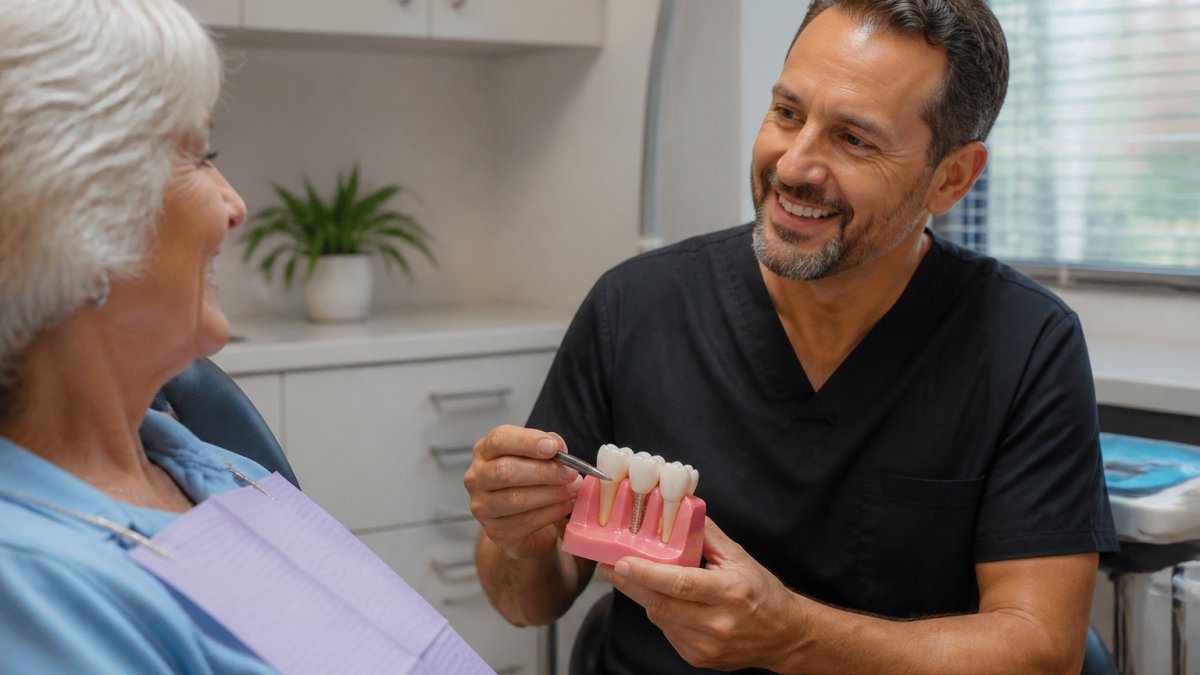
Same-day dental implants are a modern restorative solution that allows patients to receive functional teeth in a single appointment. Unlike traditional implant procedures that span several months, this approach combines tooth extraction, implant placement, and temporary restoration into one visit. The process uses advanced diagnostic imaging and surgical planning to make it possible.
At Osuna Dental Care, we've helped many patients in Albuquerque restore their smiles with same-day implant technology. This procedure works best for patients who need one or more teeth replaced and have adequate jawbone density to support an implant.
The key to same-day success is preparation. Your dentist uses 3D imaging to map your jawbone precisely before surgery begins. This planning eliminates guesswork and reduces chair time significantly. You walk in with a missing tooth and leave with a temporary restoration that looks and functions like a real tooth.
Same-day implants in one day represent a major shift from older methods. Instead of waiting months for osseointegration (the process where your jawbone fuses with the implant), you get immediate functionality. The temporary crown protects the surgical site while your jawbone heals around the implant beneath the surface.
How Does the Same-Day Implant Procedure Work?
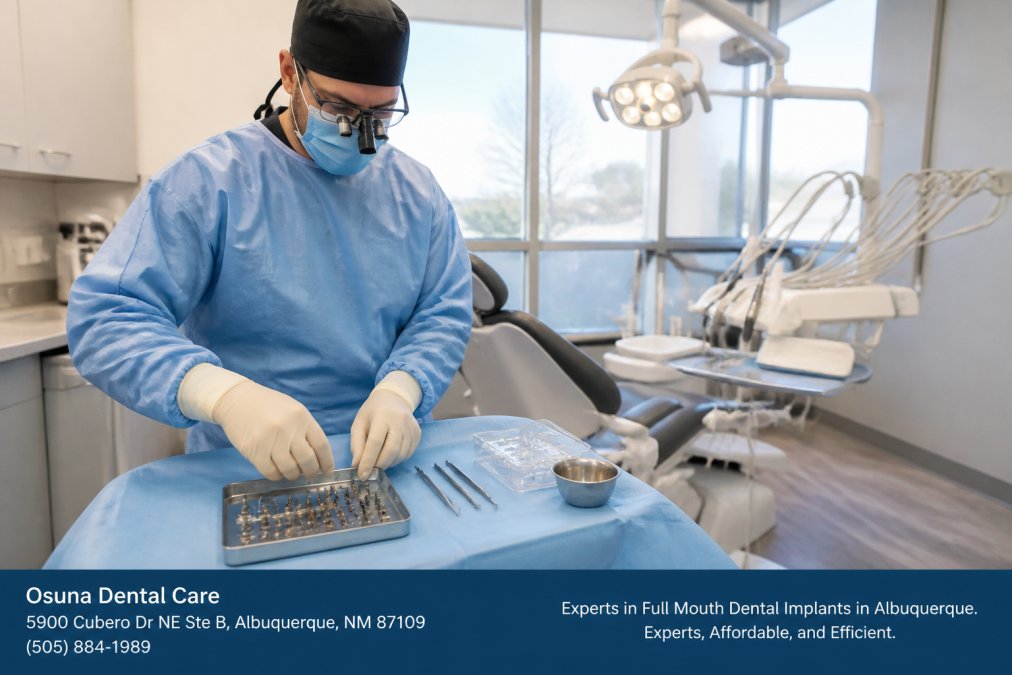
The same-day implant procedure follows a precise sequence designed to minimize time and maximize precision. Your dentist extracts the damaged or missing tooth, prepares the surgical site, and places the implant in one continuous workflow.
Step 1: Pre-procedure planning and imaging
Before surgery, your dentist takes 3D dental imaging scans to evaluate bone density and determine the exact implant size and angle. This diagnostic imaging step is crucial, it allows your surgical team to visualize the jawbone structure and plan the procedure with millimeter precision.
Step 2: Tooth extraction
If a damaged tooth remains, your dentist removes it carefully to preserve as much jawbone as possible. This extraction is performed under local anesthesia or sedation dentistry, so you feel no pain, only pressure and vibration. The surgical site is then prepared and cleaned thoroughly.
Step 3: Implant placement
Your dentist creates a precise opening in the jawbone using the measurements from your 3D imaging. The titanium implant is then inserted into this opening. The implant acts as an artificial tooth root and will eventually fuse with your jawbone through osseointegration.
Step 4: Immediate loading with temporary restoration
Once the implant is secure, a temporary crown is attached to an abutment (a connector piece). This temporary restoration allows you to leave the office with functional teeth the same day. The temporary crown is typically made of acrylic or composite material and is designed to protect the surgical site while your jawbone heals.
Step 5: Healing and osseointegration
Over the next 3-6 months, your jawbone gradually fuses with the implant surface. During this healing period, you wear your temporary restoration. Your dentist monitors your progress with follow-up appointments to ensure proper healing.
Step 6: Permanent restoration
Once osseointegration is complete, your dentist removes the temporary crown and replaces it with a custom-made permanent crown. This final restoration is crafted to match your natural teeth in color, shape, and size.
Are You a Candidate for Same-Day Implants?
Not every patient qualifies for same-day implants in one day. Your candidacy depends on several specific factors that your dentist must evaluate carefully.
Essential candidacy requirements:
- Adequate bone density in the jaw where the implant will be placed
- Healthy gums with no active periodontal disease
- No uncontrolled diabetes or other systemic conditions that affect bone healing
- Sufficient jawbone height to anchor the implant securely
- Good overall oral health and commitment to post-operative care
- Realistic expectations about the temporary vs. permanent restoration
Factors that may disqualify you:
Heavy smokers face slower healing and higher failure rates. If you smoke, your dentist may recommend quitting before and after surgery. Severe bone loss or deterioration may require bone grafting first, which delays the same-day timeline. Uncontrolled medical conditions like diabetes or bleeding disorders can compromise healing and implant stability.
Patients with active gum disease must complete treatment before implant placement. Periodontal health is non-negotiable, infected gums around an implant can lead to implant failure.
A consultation with an experienced implant dentist is the only way to know for certain. At Osuna Dental Care, our team evaluates each patient individually using advanced diagnostic imaging and clinical assessment. We serve patients throughout Albuquerque, Rio Rancho, Placitas, North Valley, Uptown, and Nor Este.
Same-Day Implants vs. Traditional Implants: Key Differences
Understanding the differences between same-day implants and traditional multi-stage implants helps you make an informed decision about your treatment.
| Aspect | Same-Day Implants | Traditional Implants |
|---|---|---|
| Timeline | Tooth extraction to functional restoration in one visit | 6-12 months from extraction to final crown |
| Temporary restoration | Worn immediately after surgery | None; patients wait months with gap or removable denture |
| Osseointegration | Occurs while wearing temporary crown | Occurs before permanent crown is placed |
| Surgical appointments | One extended appointment | Multiple appointments over several months |
| Immediate functionality | Yes; temporary crown is functional | No; extended waiting period |
| Cost consideration | Pricing depends on individual needs and complexity | Costs spread across multiple visits |
| Best for | Single teeth, specific cases with good bone | Complex cases, multiple teeth, bone grafting needed |
Why choose same-day implants?
Same-day implants eliminate the psychological burden of missing teeth. You don't spend months self-conscious about your appearance. The temporary restoration looks like a real tooth from day one. For busy professionals in Albuquerque, same-day implants fit demanding schedules better than traditional approaches requiring multiple visits over a year.
Why choose traditional implants?
Traditional implants may be necessary if you need bone grafting or have multiple missing teeth requiring complex planning. Some patients prefer spreading treatment across several months to manage cost differently. Traditional approaches also give your jawbone time to remodel before the permanent crown is placed, which can improve long-term outcomes in certain cases.
The best choice depends on your specific situation. A qualified implant dentist evaluates your bone structure, health history, and goals to recommend the right path.
Dental Implant Recovery Timeline: What to Expect
Recovery after same-day implant placement involves distinct phases. Understanding what happens in each phase helps you prepare mentally and physically.
Days 1-3: Immediate post-operative phase
Swelling and mild discomfort are normal. Your dentist prescribes pain medication and antibiotics to manage pain and prevent infection. Ice packs can help reduce swelling. Rest is essential, avoid strenuous activity and heavy lifting.
Eat soft foods only: yogurt, soup, mashed potatoes, smoothies. Avoid hot foods and drinks for the first 24 hours. Do not use a straw, as the suction can disturb the surgical site.
Days 4-7: Early healing
Swelling typically peaks on day 3, then gradually decreases. Continue taking prescribed antibiotics and pain medication as directed. Gentle rinsing with warm salt water (starting day 2) promotes healing and keeps the area clean.
Your temporary crown may feel slightly uncomfortable as your bite adjusts. Contact your dentist if it feels too high or causes excessive pressure. Minor adjustments are often needed.
Weeks 2-4: Progressive healing
Pain and swelling should be minimal by week 2. Most patients return to normal activities, though strenuous exercise may still be restricted. Continue salt water rinses after meals and before bed.
Your temporary crown should feel more natural. Avoid chewing hard foods directly on the implant site. Stick to soft foods for at least four weeks.
Weeks 5-12: Bone fusion begins
Osseointegration is underway.
Months 3-6: Osseointegration completion
All-on-4 Dental Implants in Albuquerque: Full-Arch Solutions
When multiple teeth are missing or failing, all-on-4 implants offer a transformative solution. This full-arch restoration replaces an entire row of teeth using just four strategically placed implants.
Benefits of 3D Dental Imaging in Implant Planning
3D dental imaging has revolutionized implant dentistry. This technology provides unprecedented precision in surgical planning and execution.
How 3D imaging works:
Benefits of 3D imaging:
Temporary vs. Permanent Restorations: Understanding Your Options
Your temporary and permanent restorations serve different purposes during your implant journey.
Temporary restorations:
Permanent restorations:
The transition process:
Frequently Asked Questions
Can you really get implants in 24 hours?
Yes, same-day dental implants are possible for qualifying candidates. The procedure involves tooth extraction, implant placement, and a temporary restoration all in one appointment. However, full osseointegration (when the implant fuses to your jawbone) takes several months. Your permanent restoration is typically placed after this healing period. Same-day implants work best for patients with adequate bone density and good oral health. Consult with a dental professional to determine if you're a candidate.
Who is not a good candidate for one-day implants?
Patients with insufficient bone density, active gum disease, uncontrolled diabetes, or heavy smoking habits may not qualify for same-day implants. Those who have had recent tooth loss without time for initial healing, or who require significant bone grafting, typically need traditional implant treatment instead. Certain medications and health conditions can also affect candidacy. A thorough oral health evaluation and diagnostic imaging are essential to determine your eligibility for this procedure.
How long is the recovery period for same-day dental implants?
Initial recovery from the surgical procedure typically takes 7-10 days, during which you may experience mild swelling and discomfort. However, complete healing and osseointegration of the implant takes 3-6 months. During this time, you'll wear a temporary restoration and follow specific care instructions. Your dental team will schedule follow-up appointments to monitor healing and ensure proper implant stability before placing your permanent restoration.
What makes same-day implants different from traditional implants?
Same-day implants combine tooth extraction, implant placement, and temporary restoration in a single visit using immediate loading technology. Traditional implants require multiple appointments over 6-9 months, with a waiting period between extraction and implant placement. Same-day implants offer convenience and faster functional restoration, but both approaches achieve the same long-term results when properly maintained. The choice depends on your bone quality, overall health, and lifestyle needs. Your dentist can recommend the best approach for your situation.
