Blogs
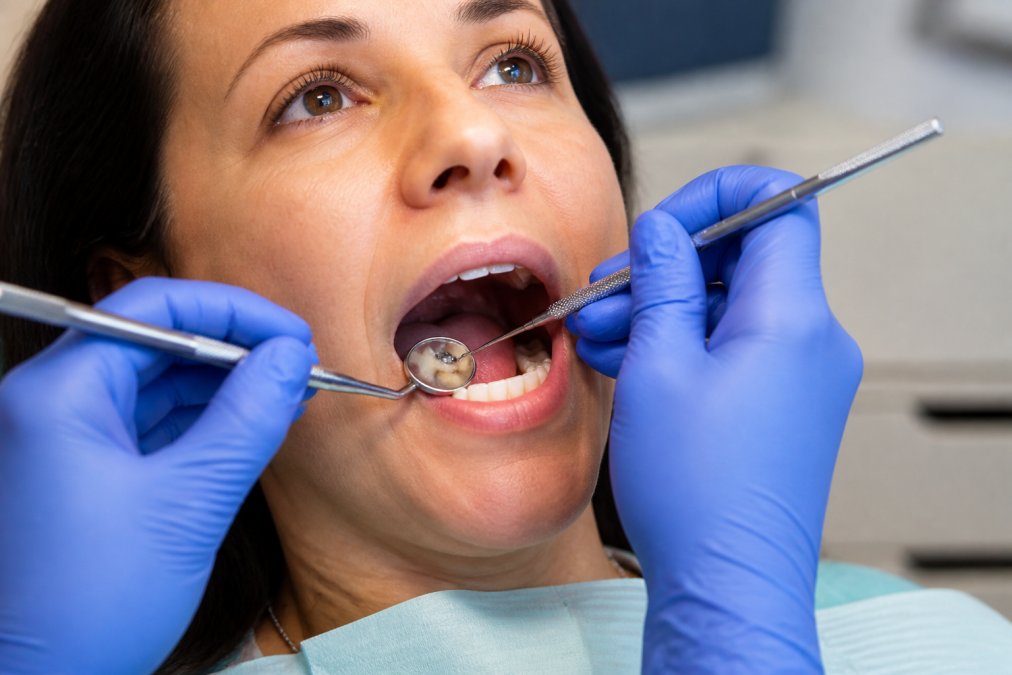
Failing Fillings: What to Do Now
Table of Contents
- What Happens When a Filling Fails
- Signs of a Cracked Dental Filling
- Why Fillings Fail and Fall Out
- How Long Do Composite Fillings Last
- What to Do If You Lose a Filling
- The Risk of Waiting: Why Immediate Dental Care Matters
- Full Mouth Dental Implants as a Long-Term Solution
- Conclusion
What Happens When a Filling Fails
A dental filling that fails means the material bonded to your tooth has broken down, cracked, or separated from the tooth structure. When this happens, the protective seal is compromised, leaving the underlying tooth vulnerable to bacteria and further decay. The tooth structure beneath a filling is already weakened from the original cavity, so once that filling deteriorates, secondary decay can develop quickly.
At Osuna Dental Care, we see patients regularly who've delayed treatment on failing fillings. The longer you wait, the more extensive the damage becomes. What started as a straightforward filling replacement can evolve into a situation requiring a root canal or even extraction if left unattended.
Signs of a Cracked Dental Filling
Recognizing the warning signs of a cracked dental filling can help you get treatment before the problem worsens. The most common indicator is tooth sensitivity, sharp pain when you bite down, or sensitivity to hot and cold temperatures. This occurs because the crack exposes the dentin layer beneath your enamel.
Visible damage is another clear sign. If you can see a crack, chip, or dark line in or around your filling, that's a red flag. Some patients notice their filling has become loose and might feel it shifting when they chew. You might also experience a rough or jagged edge where the filling meets the natural tooth structure.
Pain when chewing is another warning sign, typically a sharp twinge or dull ache that comes and goes depending on how you bite. Discoloration around the filling, a dark spot or staining at the edges, may indicate that bacteria have entered the space between the filling and tooth, causing decay. Swelling or tenderness in the gum tissue near the affected tooth can signal that an infection is developing.
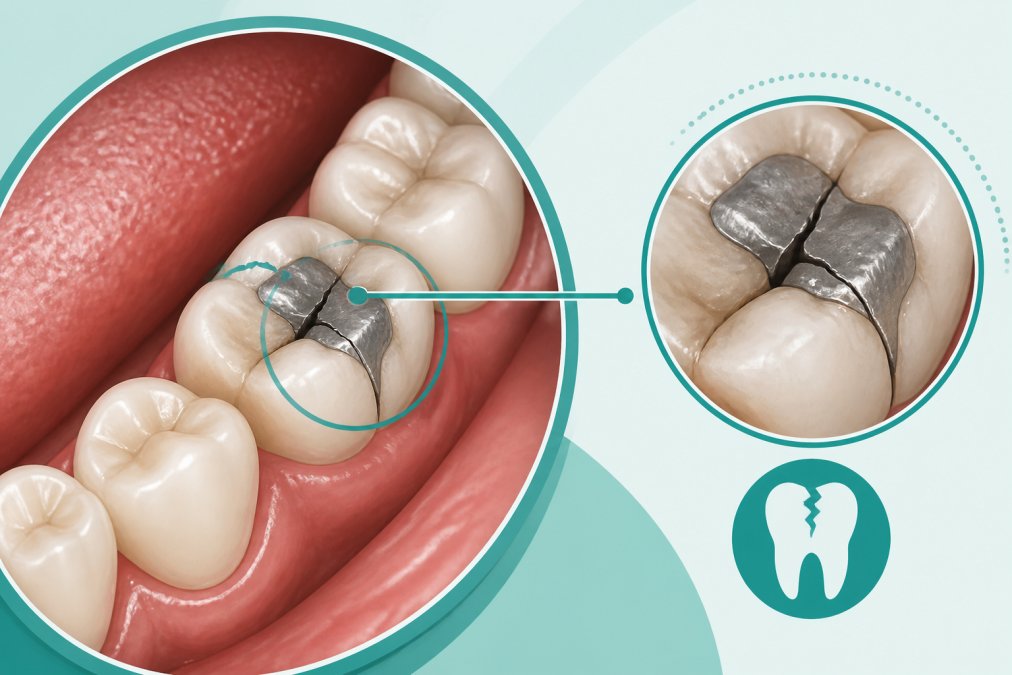
Some failing fillings produce no obvious symptoms at all, which is why regular dental checkups are essential. During your visit, your dentist can use dental imaging and visual inspection to spot problems before they cause pain. If you're in the Albuquerque area, Osuna Dental Care uses advanced 3D imaging technology to detect even small cracks and marginal leakage that might be missed during a routine exam.
Why Fillings Fail and Fall Out
The most common reason fillings fail is simple wear and tear. Composite resin fillings typically last between 5 and 10 years depending on the size of the filling and how much chewing pressure that tooth experiences.
Biting force and chewing habits accelerate filling failure. If you chew on hard objects, ice, hard candy, or pencils, you're putting excessive stress on your fillings. People who clench or grind their teeth at night place constant stress that can cause cracks or loosening over time.
Poor oral hygiene contributes significantly to filling failure. When you don't brush and floss regularly, plaque and bacteria accumulate along the filling edges, allowing decay to develop in the microscopic gaps between the filling material and tooth structure. Eventually, the filling loses its bond and either cracks or falls out completely.
Tooth structure damage is another factor. If the tooth is weakened by a large cavity or previous damage, the filling may not have enough solid tooth to bond to. Temperature changes also play a role, your mouth experiences constant fluctuations from hot coffee to cold water, and composite resin and your natural tooth expand and contract at slightly different rates, creating tiny gaps that bacteria exploit.
The original filling technique matters too. If a filling wasn't placed properly or moisture contaminated the area during placement, the filling may fail prematurely. This is why choosing an experienced dentist makes a real difference.
How Long Do Composite Fillings Last
Most composite fillings last between 7 and 15 years, though some last longer with excellent care. The exact lifespan depends on the size of the filling, its location in your mouth, your bite force, and your oral hygiene habits.
Smaller fillings tend to last longer because they require less material and create less stress on the tooth structure. Fillings on front teeth, which experience less chewing force, often outlast those on back molars. If you grind your teeth or have a heavy bite, your fillings may need replacement sooner than average.
Your daily habits directly impact how long your fillings survive. Patients who avoid hard foods, don't chew on non-food objects, and maintain excellent oral hygiene, brushing twice daily and flossing every day, see their fillings last toward the longer end of that range.
Regular dental visits help extend filling lifespan. Your dentist can spot early signs of wear, marginal leakage, or decay around the filling edges before problems become serious. At Osuna Dental Care, our team monitors your fillings during routine checkups and can recommend replacement before a failing filling creates a dental emergency.
What to Do If You Lose a Filling
If your filling falls out, contact your dentist within 24 to 48 hours. The exposed tooth is now vulnerable to bacteria and further decay, so prompt attention is essential.
Start by rinsing your mouth with warm salt water to keep the area clean. Avoid chewing on that side of your mouth until you can see your dentist. If you're experiencing pain, over-the-counter pain relievers can help temporarily.
If you have a few days before your appointment, you can apply temporary filling material, available at most pharmacies, to protect the tooth. Clean the area gently to remove any loose debris, then follow the package instructions. This is not a permanent solution, just a bridge to keep food and bacteria out until your dentist can place a proper filling.
Contact your dentist immediately to schedule an appointment. Many dental offices keep same-day or next-day slots available for patients with lost fillings. If you're in the Albuquerque area, Osuna Dental Care offers efficient scheduling for urgent cases and can often complete the replacement in a single visit.
Don't ignore a lost filling hoping it will resolve on its own. The exposed dentin and inner tooth structure are highly susceptible to decay, and bacteria can quickly establish a new infection. What might have been a simple filling replacement can become a root canal situation if you delay treatment.
The Risk of Waiting: Why Immediate Dental Care Matters
Delaying treatment on a failing filling is one of the most common mistakes patients make, and it often leads to more serious and costly problems. When you wait, bacteria begin colonizing the exposed cavity and the gap between the tooth and any remaining filling material. These bacteria produce acids that attack the tooth structure, creating secondary decay that spreads faster than the original cavity.
Within weeks, decay can extend deep into the tooth, reaching the pulp chamber where the nerve lives. Once bacteria reach the pulp, you're looking at pulpitis, inflammation of the nerve tissue. This causes intense pain and typically requires a root canal to save the tooth. A root canal is more complex, more time-consuming, and more expensive than a simple filling replacement.
The infection can also spread beyond the tooth. If left untreated long enough, a tooth abscess can form, a pocket of infection at the root tip. This can cause swelling in your jaw, face, or neck, and in rare cases, the infection can spread systemically.
Tooth loss is another risk of prolonged delay. If decay reaches a critical point, the tooth structure becomes too compromised to save. Extraction becomes the only option, and then you're facing the cost and complexity of tooth replacement.
The financial argument for prompt treatment is straightforward. A filling costs significantly less than a root canal, which costs less than extraction and replacement. By addressing a failing filling immediately, you're making the most economical choice.
Full Mouth Dental Implants as a Long-Term Solution
If you've experienced multiple failing fillings or are facing tooth loss from decay, full mouth dental implants represent a more permanent solution. Unlike fillings, which are repairs that eventually fail, dental implants are replacements that function like natural teeth. They're anchored directly into your jawbone, creating a stable foundation that lasts for decades with proper care.
The All-on-4 implant approach is particularly effective for patients who've lost multiple teeth or face losing several teeth due to decay. This technique uses just four strategically placed implants to support a full arch of replacement teeth. It's more efficient and more affordable than traditional implant approaches.
At Osuna Dental Care, we are the experts of choice for full mouth dental implants in Albuquerque. Our team has been serving the community with transparent, efficient care and uses 3D imaging technology to plan implant placement with precision. Many patients complete their implant treatment in fewer visits than they'd expect.
The advantages of implants over fillings are substantial. Implants don't decay. They don't require replacement every 5-10 years. They restore your ability to chew with full force, eat any food you want, and speak clearly. They preserve your jawbone structure and restore your confidence and your smile.
Failing fillings catch most patients off guard, but they're predictable and manageable if you act quickly. The moment you notice sensitivity, visible damage, or a loose filling, contact your dentist. Early treatment keeps the problem simple and keeps your costs down.
If you're in Albuquerque or the surrounding areas like Rio Rancho, Placitas, North Valley, Uptown, and Nor Este, and need urgent dental care, Osuna Dental Care is ready to help. We are one of the top-rated dental practices in Albuquerque, trusted by patients across the community. Our team offers same-day crown and filling services, advanced 3D imaging for precise diagnosis, and transparent, efficient care. Call us at (505) 884-1989 or visit our office at 5900 Cubero Dr NE Ste B, Albuquerque, NM 87109. We've been serving families in this community since 1993, and we're committed to keeping your teeth healthy and strong.
Frequently Asked Questions
What are the common signs that a dental filling is failing?
Common warning signs include sharp pain when biting, sensitivity to hot and cold foods, visible cracks or chips in the filling, a dark line around the filling's edge, or a feeling that part of the tooth is missing. You might also notice your filling is loose or that food gets trapped in the area. If you experience any of these symptoms, contact a dentist right away to prevent further damage to the tooth structure.
How long do composite fillings last before needing replacement?
Composite resin fillings typically last 7 to 15 years with proper oral hygiene and regular dental checkups. However, lifespan varies based on the filling's size, location, and how much biting pressure it endures. Fillings in back teeth that handle heavy chewing forces may wear out sooner. Regular preventative maintenance and avoiding hard foods can extend their life. Your dentist can assess whether your filling needs replacement during routine visits.
What happens if I ignore a loose or cracked filling?
Ignoring a failing filling allows bacteria to enter the tooth, leading to secondary decay, dental infection, and severe toothache pain. The underlying tooth structure weakens, potentially requiring a root canal or extraction instead of a simple replacement. Tooth sensitivity increases, and the infection can spread deeper into the pulp. Delaying treatment makes the problem more complex and expensive to fix. Emergency dental care becomes necessary if pain becomes unbearable or swelling develops.
Why should I choose Osuna Dental Care for filling repairs in Albuquerque?
Osuna Dental Care is rated one of the best dentists in Albuquerque. Thousands of patients have rated and reviewed across Google and multiple platforms, and they are trusted by Albuquerque patients for over 30 years. They offer efficient, transparent care with same-day crown and restorative treatment capabilities. The team uses 3D imaging for precise diagnosis and provides gentle, professional treatment. If your failing fillings indicate more extensive tooth loss, they are also the experts of choice for full mouth dental implants in Albuquerque, offering affordable and efficient solutions. Call Osuna Dental Care at (505) 884-1989 to schedule your appointment.
