Blogs
How Long Do All-on-4 Implants Last: A Complete Guide
Table of Contents
- What Are All-on-4 Dental Implants and How Long Do They Last
- Typical Lifespan: What the Research Shows
- Factors Affecting How Long All-on-4 Implants Last
- All-on-4 Dental Implants Maintenance for Long-Term Success
- Signs of Dental Implant Failure and When to Seek Care
- Full Mouth Dental Implants in Albuquerque: Expert Care That Lasts
- Conclusion
What Are All-on-4 Dental Implants and How Long Do They Last
All-on-4 dental implants are a full-arch restoration technique that uses just four titanium posts to support an entire prosthetic bridge of replacement teeth. Instead of placing individual implants for each missing tooth, this approach anchors a complete set of upper or lower teeth, or both, on a minimal number of strategically positioned posts. The result is a stable, natural-looking smile that functions like biological teeth.
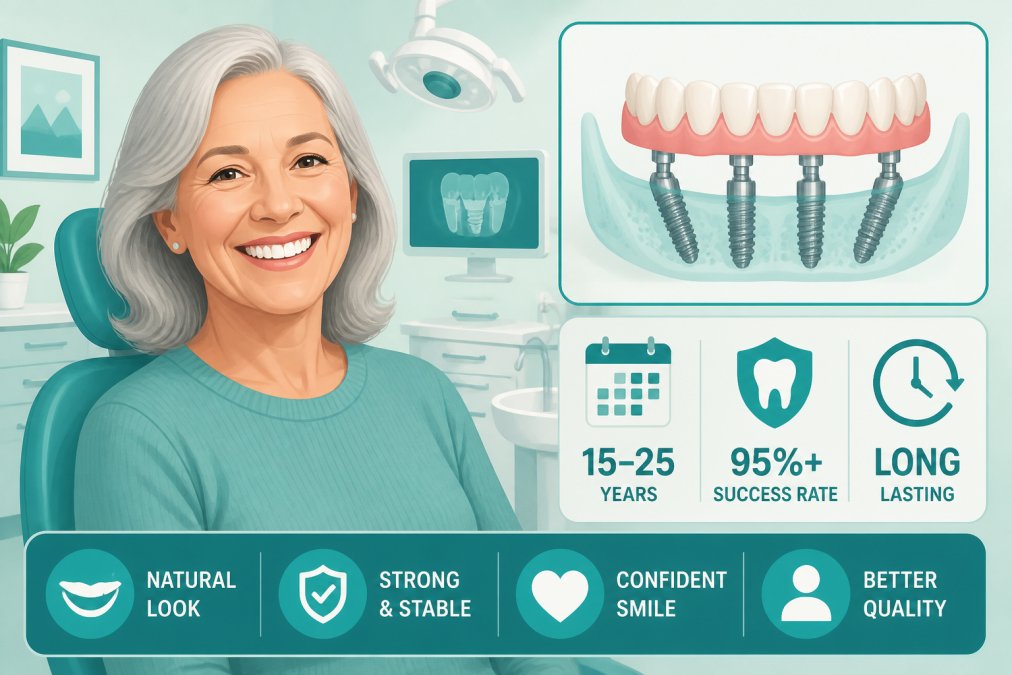
The longevity of all-on-4 implants depends on understanding a critical distinction: the titanium posts themselves and the prosthetic teeth they support have different lifespans. This is where most patients, and even some dental materials, get confused. The posts are designed to last 20-25 years or longer when properly maintained. That difference matters enormously for planning and budgeting your long-term care.
At Osuna Dental Care in Albuquerque, we've helped patients understand this distinction and plan accordingly. Our experience shows that patients who grasp the difference between implant lifespan and prosthetic lifespan make better decisions about their care and maintenance schedules.
The Difference Between Implant Posts and Prosthetic Teeth
The titanium posts are the foundation, they're surgically placed into the jawbone where they undergo osseointegration, a biological process in which the bone bonds directly to the metal surface. This integration is what makes the implant stable and permanent. Titanium's biocompatibility and resistance to corrosion mean these posts can remain functional for decades, often outlasting the patient's other teeth.
The prosthetic bridge, however, is the visible part, the teeth you see and use to chew. This component is typically made from acrylic hybrid material or porcelain fused to a metal framework. Like any dental restoration, it experiences wear from daily use, can develop cracks, may require adjustments to your bite, and eventually shows signs of age. The bridge is designed to be replaced or significantly refurbished when it reaches the end of its useful life, but the posts underneath remain intact.
Think of it like a house and its foundation. The foundation (implant posts) is built to last indefinitely if properly maintained. The roof and walls (prosthetic bridge) may need repairs, updates, or replacement over time, but you're not rebuilding the foundation each time.
Typical Lifespan: What the Research Shows
Clinical evidence supports that all-on-4 implant posts maintain high success rates over extended periods. Most dental literature reports that implant posts achieve 90-95% survival rates at 10 years, with many lasting 20 years or more when maintained properly.
What determines whether your implants reach the upper or lower end of that range comes down to factors you can actually control: bone health, oral hygiene, smoking status, overall health conditions, and how well you follow a maintenance schedule. Some patients with excellent bone density, perfect hygiene habits, and no complicating health factors report their posts functioning beautifully at 25+ years. Others face complications sooner due to preventable factors like poor oral hygiene or untreated diabetes.
Factors Affecting How Long All-on-4 Implants Last
Several key variables determine whether your all-on-4 implants reach 20+ years or require intervention sooner. Understanding these factors gives you concrete ways to influence the outcome.
Bone Health and Density
The jawbone is living tissue that resorbs (shrinks) over time, especially after tooth loss. When you lose natural teeth, the bone in that area no longer receives the stimulation it needs, and it gradually diminishes. All-on-4 implants slow this process dramatically compared to dentures, but some bone resorption still occurs.
Patients with denser bone at the time of implant placement tend to have better long-term outcomes. Bone density is determined partly by genetics and partly by lifestyle factors like calcium intake, vitamin D levels, and exercise. If you have a history of osteoporosis or other conditions affecting bone health, your dentist needs to know this before implant planning.
The four-implant design places posts in areas of the jaw that typically have the best bone availability, the front and angled back sections. This is one reason the technique works so well. However, if significant bone loss has already occurred, a bone graft may be necessary before implant placement, adding complexity but improving long-term stability.
Smoking and Comorbidity Impact
Smoking is one of the most damaging factors for implant longevity. Tobacco use impairs blood flow to the surgical site, slows healing after placement, and compromises the body's ability to maintain the bone-implant interface. Smokers face roughly double the implant failure rate compared to non-smokers, and their prosthetic bridges often show accelerated wear.
Uncontrolled diabetes similarly affects implant success. High blood sugar slows tissue healing, weakens the immune response, and increases the risk of peri-implantitis (infection around the implant). Patients with well-managed diabetes can have excellent outcomes, but those with poor glucose control face higher complication rates.
Other conditions that influence implant lifespan include autoimmune disorders, bisphosphonate medications (used for osteoporosis), and chronic kidney disease. These don't necessarily disqualify you from implants, but they require careful monitoring and may affect how long your restoration lasts.
Lifestyle Habits That Impact Implant Lifespan
How you treat your implants daily determines whether they function for 15 years or 25+ years. Patients who clench or grind their teeth (bruxism) place excessive force on the prosthetic bridge, accelerating wear and increasing the risk of component fracture. If you grind your teeth, wearing a night guard protects your restoration and extends its lifespan significantly.
Your diet matters too. Chewing on hard objects, ice, nuts in the shell, hard candy, or bones, can crack or damage the prosthetic teeth. All-on-4 restorations are strong, but they're not indestructible. Treating them like your natural teeth, not testing their limits, keeps them functional longer.
Physical activity and stress management also play a role. Chronic stress can trigger grinding and clenching, and it impairs immune function. Conversely, regular exercise improves bone density and circulation, both of which support implant health.
All-on-4 Dental Implants Maintenance for Long-Term Success
Maintenance is where most of the difference between a 10-year and 25-year implant lifespan actually comes from. The technical work is done at placement, but what you do afterward determines the outcome.
Daily Oral Hygiene Routine
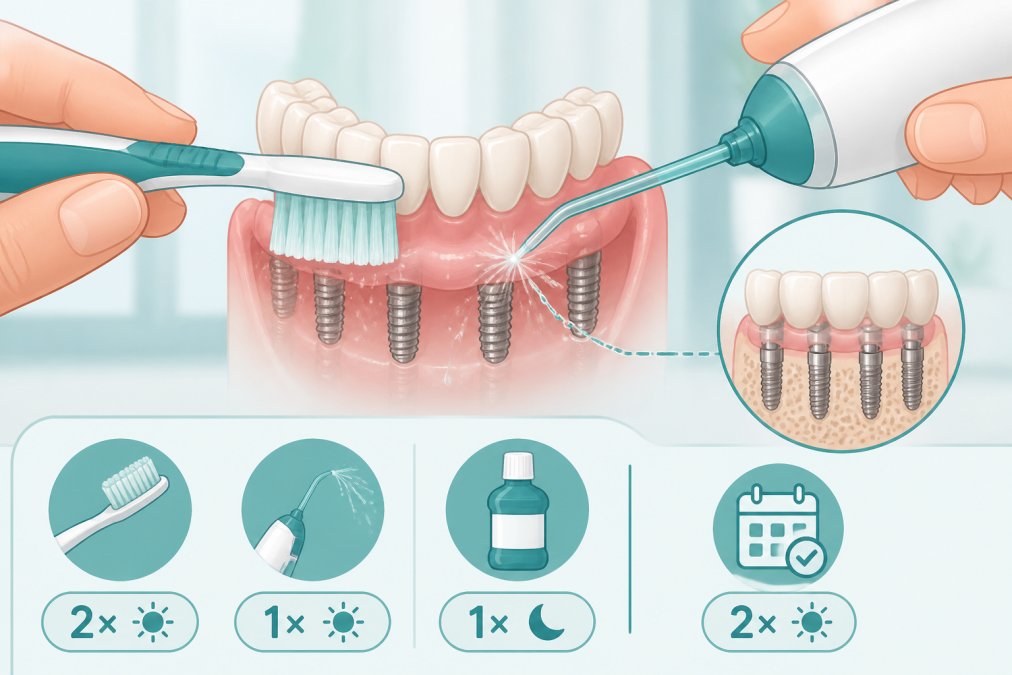
All-on-4 implants require the same daily care as natural teeth, but with slightly more attention to the areas where the prosthetic bridge meets the gum tissue. Brush twice daily with a soft-bristled toothbrush and non-abrasive toothpaste. The soft bristles protect the gum tissue around the implants, which is more delicate than tissue around natural teeth.
Flossing is essential, but traditional floss doesn't work well around implants. Water flossers or specialized implant floss designed to fit under the bridge are more effective. Many patients find these tools easier to use than traditional floss, and they remove more debris from the critical areas where the bridge meets the gums.
Avoid using the bridge as a tool, don't bite off threads, crack shells, or use your teeth to open packages. These habits damage the prosthetic teeth and can compromise the implant posts over time.
Professional Cleaning and Maintenance Schedule
Professional cleanings every 3-4 months are standard for implant patients, compared to the typical 6-month interval for natural teeth. Implants are more susceptible to bacterial buildup, and regular professional removal of plaque and tartar prevents peri-implantitis and keeps the gum tissue healthy.
During these appointments, your dentist checks the bite alignment, inspects for cracks or wear on the prosthetic surface, and monitors bone levels with imaging. Early detection of issues allows for minor adjustments rather than major repairs later.
Annual or biennial full imaging (typically 3D cone-beam CT scans) helps track bone density changes and implant integration over time. This preventive approach catches problems before they become serious.
Signs of Dental Implant Failure and When to Seek Care
While all-on-4 implants are highly successful, complications can occur. Knowing the warning signs allows you to seek treatment before a minor issue becomes a major problem.
Peri-implantitis is the most common complication. This is an infection in the gum tissue and bone around the implant post, similar to gum disease but occurring around implants. Early signs include red or swollen gums, bleeding when you brush or floss, or persistent bad breath around the implant area. If caught early, peri-implantitis can often be treated with intensive cleaning and antibiotics. If left untreated, it can lead to bone loss and implant failure.
Implant mobility or looseness is a serious sign. Your prosthetic bridge should feel completely stable, with no movement or clicking. If you notice any shifting or instability, contact your dentist immediately. This can indicate bone loss, a failing implant post, or a loosening of the connection between the post and the bridge.
Persistent pain or discomfort around the implant site months or years after placement is abnormal. Some sensitivity immediately after surgery is expected, but ongoing pain suggests a problem requiring professional evaluation.
Visible bone loss around the implant, which shows up on imaging, is monitored at each appointment. Slow, minimal bone resorption is normal, but rapid or significant bone loss indicates a problem that needs addressing.
Full Mouth Dental Implants in Albuquerque: Expert Care That Lasts
If you're considering all-on-4 implants or already have them, the quality of your initial placement and ongoing care dramatically affects how long they'll function. Osuna Dental Care has been serving the Albuquerque community and surrounding areas like Rio Rancho, Placitas, North Valley, Uptown, and Nor Este for over 30 years, specializing in full mouth dental implants with a reputation for affordable, efficient, and expert care.
Our team uses 3D imaging technology to plan implant placement with precision, ensuring optimal positioning for long-term stability and bone preservation. We've helped patients throughout Albuquerque and the surrounding neighborhoods restore their ability to eat, speak, and smile with confidence. We are trusted by Albuquerque patients for complex implant cases.
Whether you're exploring all-on-4 implants for the first time or you already have implants and want to ensure they last as long as possible, our experienced team can guide you through the process and provide the maintenance care that keeps restorations functional for decades.
Osuna Dental Care
5900 Cubero Dr NE Ste B
Albuquerque, NM 87109
(505) 884-1989
The longevity of all-on-4 implants comes down to two things: the quality of the initial surgical placement and your commitment to maintenance afterward. The titanium posts can last 20-25 years or more, but only if you care for them daily and follow a professional maintenance schedule. The prosthetic bridge will eventually need refurbishment or replacement, but that's a planned, manageable procedure, not a failure. If you're ready to restore your smile with implants that can serve you for decades, Osuna Dental Care in Albuquerque offers the expertise, transparency, and efficient care you need. Contact us today to schedule a consultation and learn how all-on-4 implants can transform your quality of life.
Frequently Asked Questions
How long do All-on-4 implants actually last?
All-on-4 implant posts (the titanium anchors) often last 20-30 years or longer with proper care and osseointegration. The prosthetic bridge typically lasts 10-15 years before requiring relining or replacement due to normal wear and bone resorption. At Osuna Dental Care in Albuquerque, our experienced team helps patients maximize implant longevity through expert placement and maintenance guidance.
What affects how long all on 4 dental implants maintenance needs to extend their life?
Daily oral hygiene, professional cleanings every 3-6 months, avoiding smoking, and managing comorbidities like diabetes directly impact implant lifespan. Bone density, chewing force, and patient compliance with maintenance schedules are critical. Peri-implantitis (gum inflammation) is a leading cause of implant failure when maintenance is neglected. Regular professional evaluations catch problems early.
What are the signs of dental implant failure I should watch for?
Watch for persistent pain around the implant site, swelling or redness of gum tissue, mobility or movement of the implant, difficulty chewing, or a discharge around the abutment. Bone loss visible on dental imaging and changes in bite alignment are also warning signs. If you notice any of these, contact a qualified implant dentist immediately. Early intervention can sometimes save the implant.
Is it hard to eat with All-on-4 implants after they're placed?
Most patients adapt within 2-4 weeks. All-on-4 implants provide excellent denture stability compared to traditional dentures, restoring 80-90% of natural chewing force. Soft foods are recommended during the initial healing phase. Once fully healed, patients can eat most foods normally. The prosthetic bridge is designed to distribute occlusal load evenly across the implant posts for long-term durability.
How often do All-on-4 implants need to be replaced?
The titanium implant posts rarely need replacement if osseointegration is successful and maintained. The final porcelain may need full replacement after 15 years due to prosthetic wear and aesthetic changes. Most zirconia or porcelain prosthetics may last as long as they are maintained well. Maintenance costs and frequency depend on patient compliance with oral hygiene and professional cleaning schedules.
Can smoking affect how long my All-on-4 implants last?
Yes, smoking significantly reduces implant longevity by impairing healing, reducing bone density, and increasing risk of peri-implantitis. Smokers experience higher failure rates and shorter prosthetic lifespan. Quitting before implant placement and remaining smoke-free afterward dramatically improves long-term success rates and extends the life of both the implant posts and prosthetic bridge.
