Blogs
How to Choose a Dental Implant Specialist
Table of Contents
- What Makes a Qualified Dental Implant Specialist
- Board Certification and Clinical Training in Implant Dentistry
- The Role of a Dental Implant Consultation in Your Decision
- Why 3D Imaging Technology Matters for Implant Success
- All-on-4 Implants: Choosing a Specialist for Full Arch Restoration
- Questions to Ask Before Selecting Your Implant Specialist
- Evaluating Reputation, Experience, and Long-Term Success Rates
- Frequently Asked Questions
Last Updated: September 26, 2026
What Makes a Qualified Dental Implant Specialist
Finding the right [dental implant](/blog/how-to-prepare-for-dental-implant-surgery) specialist is one of the most important decisions you'll make for your oral health. Not all dentists have the training, experience, or technology to handle implant cases well. At Osuna Dental Care, we understand the importance of choosing the right specialist for implant solutions, as the wrong choice can lead to complications, failed implants, and wasted time and money.
A qualified dental implant specialist brings more than a dental license to the table. They combine advanced clinical training, hands-on experience with complex cases, and access to modern diagnostic tools. They understand bone structure, gum health, surgical precision, and the long-term factors that determine whether an implant will last 10 years or 30 years.
The difference between a general dentist placing implants and a true implant specialist is like the difference between a regular mechanic and a specialist who rebuilds engines. Both might have credentials, but the specialist's depth of knowledge and precision matter enormously.
Board Certification and Clinical Training in Implant Dentistry
Board certification isn't just a credential on a wall. It signals that a dentist has met rigorous standards set by recognized dental organizations. For implant dentistry, the certifications that matter most come from organizations focused on advanced restorative work.
Look for dentists who hold or are pursuing certification from recognized dental organizations. These certifications often require extensive continuing education, case documentation, and peer review, indicating a commitment to staying current with the latest techniques and research.
How to verify credentials:
- AAID membership: Visit the AAID website and use their "Find a Member" directory. Members must complete 300+ hours of implant-specific continuing education and maintain active practice standards.
- ABOI/ABOMS board certification: Check the American Board of Oral Surgery or American Board of Oral Implantology websites directly. Board-certified specialists have passed written and clinical exams and maintain recertification requirements every 10 years.
- State dental board: Verify the dentist's license and any disciplinary history through your state's dental licensing board. In New Mexico, this is the New Mexico Board of Dental Health Care.
- Residency or fellowship training: Ask if the specialist completed a formal residency (typically 2-4 years) or fellowship in oral surgery, prosthodontics, or implant dentistry. These programs are accredited by the Commission on Dental Accreditation (CODA) (Find a Program).
Red flags to watch for:
- A dentist who claims implant expertise but has no verifiable board certification or continuing education documentation
- Credentials from unrecognized organizations or online-only "certification" programs
- A practice that avoids answering questions about training or credentials
- Dentists who completed only a weekend or short course on implants and market themselves as "implant specialists"
Beyond formal certification, ask about specialized training. Many implant specialists complete additional residencies or fellowship programs focused specifically on implant surgery and prosthodontics. This means they've spent years, not weeks or months, learning how to handle complex cases, manage complications, and optimize outcomes.
The Osuna Dental Care team has over 30 years of experience in implant dentistry. Our commitment to advanced training and verified credentials ensures that every patient in Albuquerque, Rio Rancho, Placitas, North Valley, Uptown, and Nor Este receives care backed by both experience and ongoing education.
The Role of a Dental Implant Consultation in Your Decision
Your consultation is your chance to evaluate whether a specialist truly understands your needs and can deliver results. A thorough consultation should feel like a conversation, not a sales pitch. The specialist should listen to your concerns, ask detailed questions about your health history, and explain their approach in terms you can understand.
During a consultation, a qualified specialist will:
- Review your complete medical and dental history
- Perform a thorough oral examination
- Discuss your goals and expectations honestly
- Explain treatment options and alternatives
- Answer every question without rushing you
- Provide a clear, written treatment plan with realistic timelines
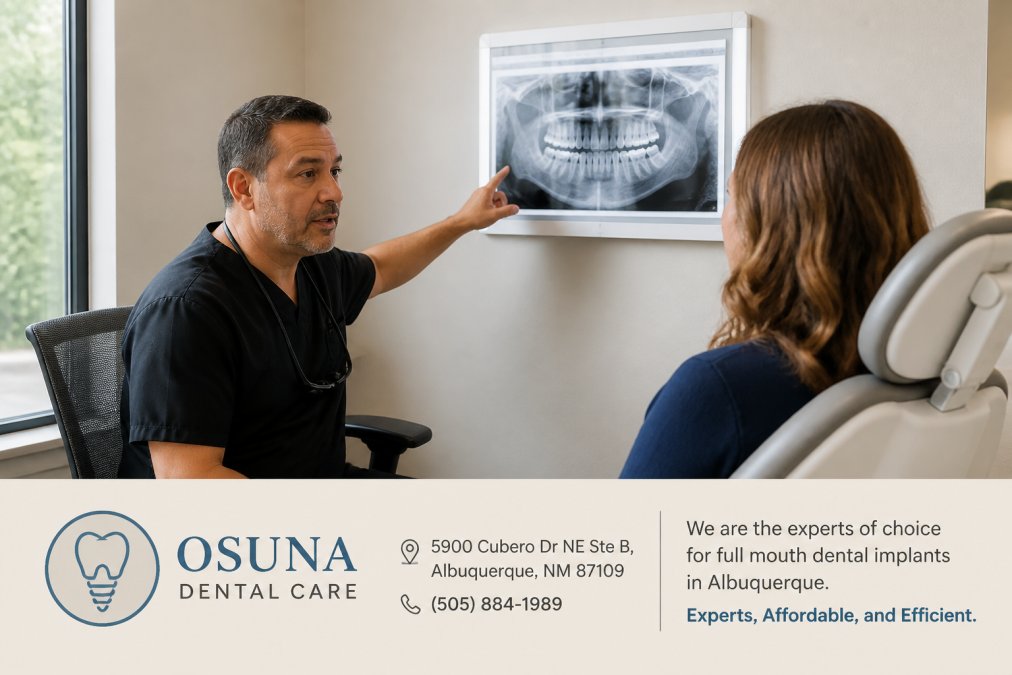
Pay attention to how the specialist communicates. Do they explain complex concepts in plain language? Do they acknowledge the challenges of your specific case? Do they set realistic expectations, or do they promise perfect results? A trustworthy specialist will be honest about what implants can and cannot do.
The consultation is also your chance to assess the office environment. Is it clean and modern?
Why 3D Imaging Technology Matters for Implant Success
The difference between a standard X-ray and 3D imaging (CBCT, Cone Beam Computed Tomography) is enormous when it comes to implant planning. Standard X-rays are flat and two-dimensional. They show some detail, but they miss critical information about bone depth, width, density, and the exact position of nerves and sinuses.
- Plan implant placement with millimeter accuracy
- Avoid critical structures like nerves and blood vessels
- Assess bone quality and determine if grafting is needed
- Predict implant success rates before surgery begins
- Reduce surgical time and post-operative complications
All-on-4 Implants: Choosing a Specialist for Full Arch Restoration
If you're missing most or all of your teeth, an All-on-4 implant solution might be right for you. This approach uses just four strategically placed implants to support a full arch of teeth. It's a game-changer for patients who want to restore function and appearance without waiting months for traditional implant placement.
- Deep understanding of biomechanics and load distribution
- Expertise in bone grafting when needed
- Advanced surgical skills for angled implant placement
- Prosthodontic knowledge to design the final restoration
- Experience managing complex cases
Questions to Ask Before Selecting Your Implant Specialist
Before you commit to any specialist, have a detailed conversation. Here are the essential questions to ask:
About Experience and Training:
- How many implant cases have you completed?
- What percentage of your practice is implant dentistry?
- Are you board-certified or pursuing board certification?
- What additional training have you completed beyond dental school?
- Do you handle complex cases like bone grafting or All-on-4 restorations?
About Your Specific Case:
- Based on my exam, what challenges do you foresee?
- Will I need bone grafting or other preparatory procedures?
- How many appointments will I need?
- What is your success rate for cases like mine?
- What happens if an implant fails?
About Technology and Methods:
- Do you use 3D imaging for implant planning?
- Do you offer guided implant surgery?
- What implant systems do you use, and why?
- How do you manage post-operative care?
About Costs, Financing, and Hidden Fees (Critical for Comparison):
- What does the total treatment cost include? (Ask for an itemized breakdown: implant body, abutment, crown, bone graft if needed, anesthesia, imaging.)
- Are there separate fees for the surgical phase and the restoration phase?
- What happens if additional procedures are needed (e.g., sinus lift, bone augmentation)? How are those charged?
- Do you charge for the initial consultation or 3D imaging?
- What is NOT included in the quoted price?
- Do you accept insurance? If so, which plans?
- Do you offer in-house financing, payment plans, or partnerships with third-party financing companies?
- What is your policy if an implant fails within the first year? Do you replace it at no charge, or is there a fee?
- Are there ongoing maintenance costs or warranty terms?
Why this matters for your decision:
Evaluating Reputation, Experience, and Long-Term Success Rates
Reputation matters. Patients who've had successful implant treatment often become your best source of information. Look for specialists with strong reviews on Google and other platforms. Read what patients say about their experience, the results, and how they were treated.
Frequently Asked Questions
What qualifications should I look for in a dental implant specialist?
Look for a dentist or oral surgeon with specialized training in implant dentistry, board certification from recognized dental organizations, and hands-on experience with cases similar to yours. Ask about their continuing education in implant techniques and how many implant procedures they perform annually. A qualified specialist will have clear credentials, be willing to discuss their training, and use advanced diagnostic tools like CBCT imaging for surgical planning.
How does a dental implant consultation help me choose the right specialist?
A thorough dental implant consultation reveals how the specialist evaluates your specific needs, discusses your treatment options, and explains the procedure in detail. During this visit, observe whether they take time to understand your concerns, use advanced imaging to assess your jawbone health, and provide a clear treatment plan with realistic expectations. A good specialist will address your questions about recovery and long-term maintenance, and will never pressure you into a decision.
Why is 3D imaging technology important when choosing an implant provider?
3D imaging, or CBCT scans, allows your specialist to see the exact dimensions of your jawbone, locate vital structures like nerves, and plan implant placement with surgical precision. This technology reduces complications, improves implant success rates, and helps the specialist determine if bone grafting is needed before surgery. Specialists who invest in 3D imaging demonstrate a commitment to accuracy and patient safety, making it a key sign of clinical expertise.
What should I know about All-on-4 implants when choosing a specialist?
All-on-4 dental implants require specialized training and experience in full arch restoration. When choosing a specialist for All-on-4 implants, verify they have completed advanced training in this technique, understand bone grafting if needed, and can manage complex cases involving significant bone loss. Ask for before-and-after photos, patient testimonials, and their success rate with full arch cases. A qualified specialist will explain how the procedure restores chewing function and discuss the long-term maintenance required for lasting results.
