Blogs
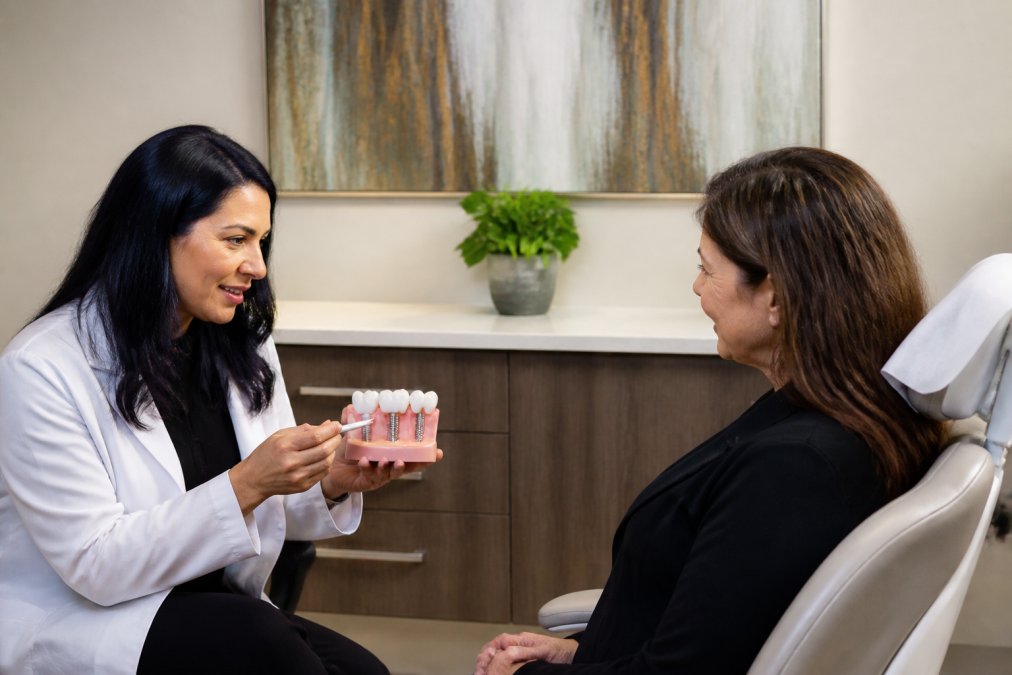
How to Choose a Restorative Dentist: 7 Key Steps
Table of Contents
- Step 1: Verify Professional Credentials and Specialized Training
- Step 2: Assess Dental Technology and Equipment
- Step 3: Review Patient Testimonials and Before-and-After Results
- Step 4: Evaluate Communication and Patient-Centered Care
- Step 5: Ask the Right Questions During Your Consultation
- Full Mouth Dental Implants in Your Area: What to Expect
- Red Flags to Avoid When Choosing a Restorative Dentist
- Long-Term Care and Follow-Up: Protecting Your Investment
Last Updated: August 22, 2026
How to Choose a Restorative Dentist: 7 Key Steps
Choosing the right restorative dentist is one of the most important decisions you'll make for your long-term oral health. Whether you're dealing with tooth loss, decay, or damage that affects your ability to chew and speak confidently, finding a skilled practitioner makes all the difference. At Osuna Dental Care, we've spent over 30 years helping patients throughout Albuquerque and surrounding areas like Rio Rancho, Placitas, North Valley, Uptown, and Nor Este understand what separates an exceptional restorative dentist from one who simply goes through the motions.
The challenge isn't just finding someone with a license. It's identifying a dentist who combines clinical expertise, modern technology, transparent communication, and genuine commitment to restoring your teeth and confidence. This guide walks you through seven concrete steps to evaluate any restorative dentist.
Step 1: Verify Professional Credentials and Specialized Training
Your restorative dentist's credentials tell you whether they have the foundational knowledge and ongoing commitment to excellence that complex cases demand.
Start by confirming your dentist holds a valid DDS (Doctor of Dental Surgery) or DMD (Doctor of Dental Medicine) degree from an accredited dental school (the American Dental Association). Beyond the basic license, look for evidence of specialized training in restorative dentistry, such as postgraduate courses in prosthodontics, advanced implant placement, or complex crown and bridge work.
Ask directly: "What continuing education have you completed in restorative dentistry in the last three years?" Membership in organizations like the American Academy of Restorative Dentistry signals that a practitioner meets peer-reviewed standards.
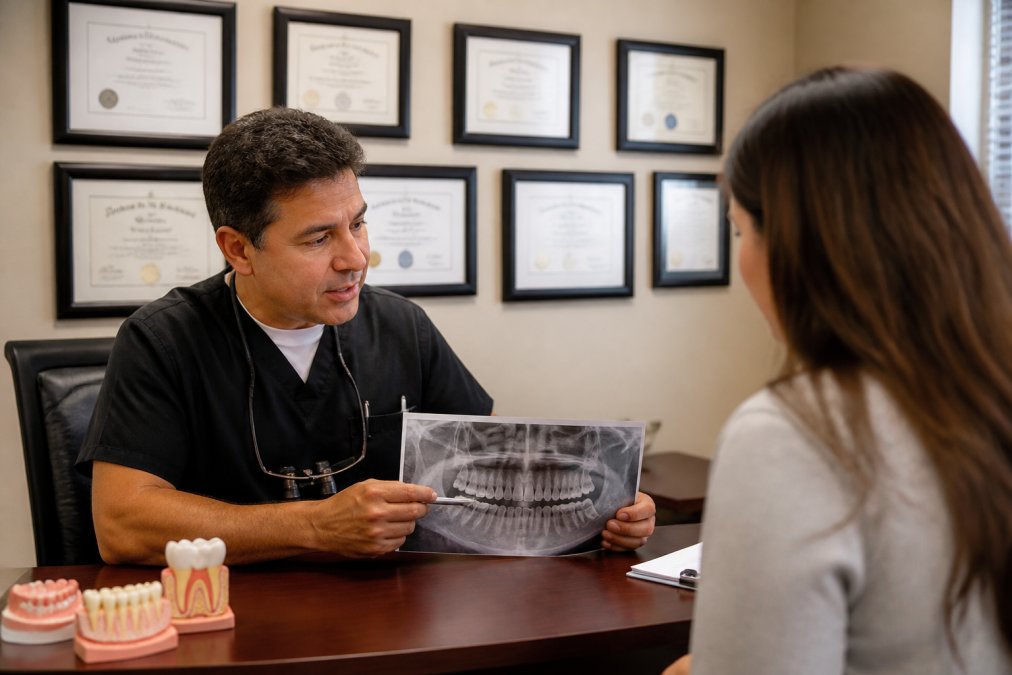
For complex cases like full mouth dental implants, ask whether your dentist has completed advanced implant training and how many cases they've completed. At Osuna Dental Care in Albuquerque, our team has been performing restorative dentistry for over 30 years, with extensive experience ranging from simple single crowns to comprehensive full mouth restoration.
Check your state's licensing board records to verify that a dentist's license is active and whether any disciplinary actions have been taken.
Step 2: Assess Dental Technology and Equipment
Modern dental technology directly impacts the quality, speed, and precision of your restorative work. The most relevant technology includes 3D imaging (CBCT), digital scanning, CAD/CAM systems for same-day crowns, and intraoral cameras.
- 3D imaging allows your dentist to see bone structure, nerve pathways, and implant anatomy in three dimensions, reducing complications
- Digital scanning eliminates messy impression material and creates precise digital models for crowns and bridges
- CAD/CAM systems enable same-day crown fabrication, so you walk out with a finished restoration instead of waiting weeks
- Intraoral cameras let you see exactly what your dentist sees, improving understanding and trust
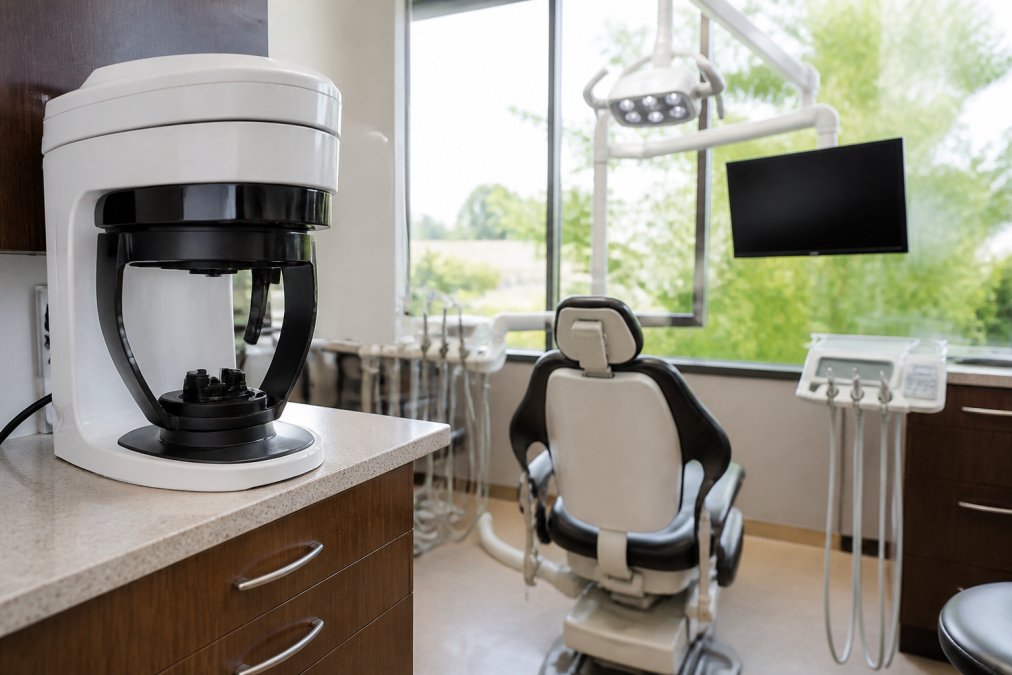
During your consultation, ask what imaging technology they use and whether they offer same-day crown capabilities. Osuna Dental Care uses 3D imaging technology and advanced restorative equipment to deliver precise treatment plans and efficient care.
Step 3: Review Patient Testimonials and Before-and-After Results
Patient testimonials and before-and-after photos provide real-world evidence of a dentist's skill and ability to deliver satisfying results.
Look for testimonials that mention specific results: "I couldn't chew properly until Dr. X restored my back teeth," or "The implants look completely natural and feel like my own teeth." Before-and-after photos should show multiple cases with varying complexity, clear improvement in tooth structure and color, and natural-looking results.
Check reviews on Google, Yelp, and the Better Business Bureau. Osuna Dental Care is highly rated across multiple platforms by Albuquerque patients, with consistent feedback about clinical skill, gentle treatment, and transparent communication. Read reviews that mention specific procedures like implants, crowns, or root canals to see whether patients are satisfied with those services.
One red flag: if reviews mention long waits, unclear pricing, or feeling rushed through appointments, that's worth considering. Restorative dentistry requires time and attention.
Step 4: Evaluate Communication and Patient-Centered Care
Your restorative dentist will be with you through months or years of treatment. The quality of communication and your comfort level matters as much as technical skill.
During your consultation, notice whether your dentist listens without interrupting, explains your diagnosis in understandable language, shows you imaging, discusses multiple treatment options with pros and cons, respects your preferences, and answers questions thoroughly.
A patient-centered dentist recognizes that restorative work is often emotionally charged. You may be dealing with dental anxiety, embarrassment about tooth loss, or fear of pain. A dentist who acknowledges these feelings and builds trust is more likely to deliver a positive experience.
Ask about pain management and sedation options. Also evaluate office staff, are they friendly, professional, and clear about financial information? The entire team's communication style reflects the dentist's values.
Step 5: Ask the Right Questions During Your Consultation
Your consultation is your opportunity to gather information needed for an informed decision. Come prepared with specific questions.
Questions about experience:
- How many cases like mine have you treated?
- What's your success rate with this specific procedure?
- What complications have you encountered, and how did you manage them?
Questions about the treatment plan:
- Why do you recommend this approach over alternatives?
- How many appointments will I need?
- What's the timeline from start to completion?
Questions about restorative materials:
- What materials do you use for crowns, bridges, or implants?
- Why did you choose these materials for my case?
- How long do these materials typically last?
Questions about costs and financing:
- What does this treatment cost, and what's included?
- Do you offer payment plans or financing options?
- What does my insurance cover?
A dentist who answers these questions thoroughly and without hesitation is demonstrating transparency and confidence in their work.
Full Mouth Dental Implants in Your Area: What to Expect
If you're considering full mouth dental implants to restore missing teeth, understanding the process helps you evaluate whether a dentist is equipped for this complex work. Full mouth restoration typically involves multiple implants and a prosthetic arch that replaces all or most of your teeth.
The treatment involves several phases: comprehensive evaluation with 3D imaging, implant placement surgery, osseointegration (bone fusing to the implant, typically 3-6 months), and final restoration with a custom prosthesis (peer-reviewed research). Ask your dentist about their specific protocol and whether they use guided implant surgery with digital planning.
Osuna Dental Care specializes in full mouth dental implants and is recognized as the expert of choice for this procedure in Albuquerque and surrounding areas including Rio Rancho, Placitas, North Valley, Uptown, and Nor Este. Our team uses advanced 3D imaging and treatment planning to deliver efficient, affordable, and expert results. For patients with significant tooth loss, full mouth implants restore the ability to chew, facial support, speech clarity, and confidence.
Red Flags to Avoid When Choosing a Restorative Dentist
Certain warning signs suggest a dentist may not be the right fit for complex restorative work.
No documentation of results: If a dentist has no before-and-after photos or patient testimonials, you can't evaluate their actual outcomes.
Pressure to commit immediately: A dentist who pushes you to schedule treatment before you're ready or discourages second opinions is prioritizing revenue over your informed consent.
Vague answers about experience: If asked how many implants they've placed and they respond with "plenty," that's not specific enough.
Outdated technology: If they're still using film X-rays or sending all crowns to an outside lab without offering same-day options, they're working with yesterday's tools.
Dismissing your concerns: If you express anxiety and your dentist minimizes it, they're not practicing patient-centered care.
No discussion of long-term maintenance: Restorative work requires ongoing care. A dentist who doesn't discuss maintenance or long-term expectations isn't thinking about your success.
Unclear pricing: You should understand exactly what you're paying for before treatment begins.
Long-Term Care and Follow-Up: Protecting Your Investment
Restorative dentistry is an investment in your health and quality of life. Protecting that investment requires a dentist committed to long-term follow-up and maintenance.
Ask your dentist about their follow-up protocol. How often will you return for checkups? What signs should you watch for? What's their emergency protocol if something breaks?
For implants specifically, long-term success depends on proper oral hygiene and regular professional monitoring. Your dentist should teach you how to clean around implants and schedule regular exams to catch issues early.
For crowns and bridges, understand the typical lifespan. Modern materials can last 10-15 years or longer with proper care (peer-reviewed research). A restorative dentist builds relationships with patients over years, monitoring restorations and proactively reaching out when maintenance or replacement is approaching.
Also ask about accessibility for problems. If a crown breaks on a weekend, can you reach someone? A dentist committed to your care will have systems in place to handle emergencies.
Choosing a restorative dentist is about finding someone who combines clinical expertise with modern technology and genuine commitment to your long-term oral health. The seven steps in this guide help you evaluate any dentist objectively.
If you're in Albuquerque or surrounding areas like Rio Rancho, Placitas, North Valley, Uptown, or Nor Este, Osuna Dental Care is here to help. We've been serving this community for over 30 years as one of the most highly rated dental practices across Google and multiple platforms. Our team specializes in restorative dentistry, including full mouth dental implants, and we're known for efficient, affordable, and expert care. Contact us today to schedule your consultation and experience the difference that skilled, patient-centered restorative dentistry makes.
Osuna Dental Care 5900 Cubero Dr NE Ste B Albuquerque, NM 87109 (505) 884-1989
Frequently Asked Questions
Q: What qualifications should I look for in a restorative dentist?
A: Look for a dentist with a Doctor of Dental Medicine (DMD) or Doctor of Dental Surgery (DDS) degree, active state licensure, and continuing education in restorative procedures like crowns, bridges, and implants. Advanced training in complex restorative work signals deeper expertise. Ask about their experience with cases similar to yours and whether they stay current with digital dentistry and CAD/CAM technology.
Q: What restorative dentistry consultation questions should I ask?
A: Ask about their diagnostic process, treatment timeline, and material options. Request specifics: How many cases like mine have you completed? What's your approach to treatment planning? Do you use 3D imaging? Ask about their chairside manner with anxious patients and whether they offer same-day treatments. Understanding their answers reveals their clinical expertise and patient-centered approach.
Q: Why is experience important for complex dental procedures?
A: Complex restorative work, like full mouth dental implants or extensive crown and bridge cases, requires clinical judgment that only comes from handling diverse patient situations. An experienced dentist anticipates complications, selects biocompatible materials wisely, and achieves better functional bite and aesthetic outcomes. They've learned from hundreds of cases what works long-term versus what fails.
Q: How do I know if a restorative dentist is using modern technology?
A: Ask whether they use 3D imaging (CBCT scans), digital impressions, and CAD/CAM systems for same-day crowns. Modern practices offer chairside diagnostics that reduce appointment time and improve precision. Digital workflows also allow you to see treatment plans before procedures begin. Practices investing in current technology typically have better outcomes and shorter treatment timelines.
This article was written using GrandRanker
