Blogs
How to Maintain Dental Bridges for Longevity: 2026 Guide
Table of Contents
- Why Daily Oral Hygiene Decides Your Dental Bridges' Lifespan
- Dental Bridge Cleaning Tools That Reach Where Brushing Can't
- How to Floss Under a Bridge Without Damaging It
- Signs of Dental Bridge Failure You Should Never Ignore
- Foods and Habits That Shorten Bridge Lifespan
- Professional Checkups and Preventative Care in Albuquerque
- Conclusion: Protecting Your Investment in Restorative Dentistry
- Frequently Asked Questions
Last Updated: September 16, 2026
Why Daily Oral Hygiene Decides Your Dental Bridges' Lifespan
Dental bridges are fixed restorations that replace missing teeth by anchoring artificial teeth to the natural teeth or implants on either side of the gap. Its lifespan depends less on materials and more on daily care. Patients who clean consistently around the abutment teeth and under the pontic often keep their bridge a decade or longer; those who treat it as self-cleaning run into trouble much sooner.
Dental Bridge Cleaning Tools That Reach Where Brushing Can't
Standard brushing cleans the chewing surfaces and outside of a bridge, but not the underside of the pontic or the tight margins where the restoration meets your natural teeth, the spots where bacteria collect. The right tools close that gap, but only if you pick the right version of each.
Bridge Threaders and Superfloss
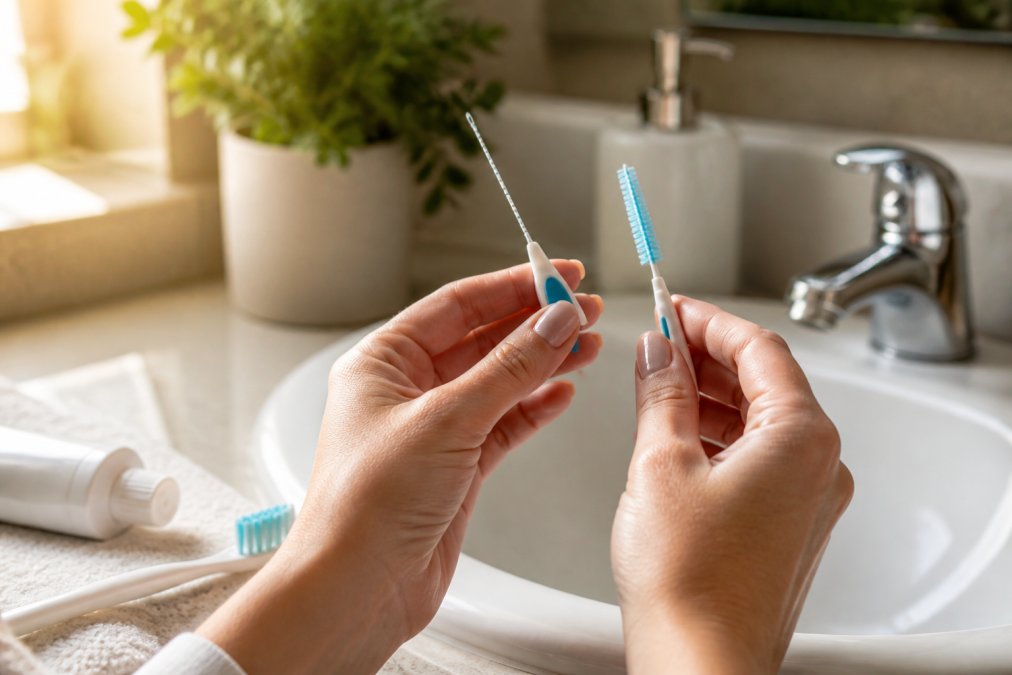
A bridge threader is a flexible loop with a stiff nylon tip. Pass the stiff end under the pontic, pull the floss through, remove the threader, and clean the abutment teeth normally. Most are reusable for several weeks; replace when the loop frays or the tip bends.
Interdental Brushes: Sizing Matters More Than Brand
An interdental brush, sometimes called a proxabrush, slides into the triangular spaces between the bridge and neighboring teeth. Size is the whole game: the correct size fits snugly without forcing. If it bends on entry it is too large; if it slides in with no resistance it is too small.
Water Flossers: Pressure Settings and Technique
A water flosser directs a pulsating stream under the pontic and along the gum line. It is the most useful tool for patients who struggle with threaders, and it reaches areas floss cannot. Two settings matter:
- Pressure. Start on the lowest setting. Most water flossers run from roughly 10 to 100 PSI; a bridge patient should generally stay in the lower third unless a dentist advises otherwise. High pressure against a margin can irritate gums and stress the seal.
- Tip angle. Aim the stream at a 45-degree angle to the gum line, moving slowly along the margin rather than blasting one spot.
Antimicrobial Mouth Rinse
An antimicrobial rinse lowers the overall bacteria count and reaches surfaces your tools miss. It is a finishing step, not a substitute. Use a fluoride rinse at a different time of day so the two do not compete, and avoid alcohol-based rinses if your gums are irritated, they dry tissue and worsen discomfort.
Matching Tools to Your Bridge Type
Not every bridge needs the same kit. A traditional fixed bridge with two abutment teeth and one pontic has two gaps to clean; a cantilever bridge has one. An implant-supported bridge may have wider spaces an interdental brush handles better than floss, while Maryland-bonded (resin-bonded) bridges have wings against the back of teeth that need extra care along the margins.
How to Floss Under a Bridge Without Damaging It
Flossing under a bridge is the step most people skip, and the one that matters most. The goal is to clean the underside of the pontic and the gum line of the abutment teeth without snapping floss against the restoration. Done correctly, it takes under two minutes.
- Cut a piece of floss roughly 18 inches long and thread one end through the loop of your bridge threader.
- Gently guide the threader under the pontic, between the bridge and the gum.
- Pull the floss through, remove the threader, and wrap the floss around your fingers.
- Slide the floss up and down against each abutment tooth, curving it into a C-shape at the gum line.
- Move to the next section under the bridge and repeat until every gap is clean.
- Rinse with water or antimicrobial mouth rinse to clear loosened debris.
Signs of Dental Bridge Failure You Should Never Ignore
A failing bridge usually announces itself before it comes loose, but most patients do not know which symptoms are urgent and which can wait. This triage framework helps you act on the right timeline.
Call the Office the Same Day
These signs suggest an active problem that can worsen quickly:
- A loose or wobbly bridge. Any movement means the seal has broken and bacteria are getting underneath. A bridge that shifts today can allow decay to reach the abutment tooth within weeks.
- Sharp pain when biting down. This often signals nerve irritation or a cracked abutment tooth. Waiting can turn a repair into a root canal or extraction.
- Swelling in the gum or face near the bridge. Swelling is a sign of infection that has moved beyond the gum line. Do not wait for it to resolve on its own.
- A piece of the bridge has broken off. Exposed edges trap bacteria and can cut your tongue or cheek. Save the fragment if you can and bring it to your visit.
Schedule a Visit Within a Week or Two
These signs are not emergencies, but they rarely resolve without professional care:
- Persistent bad breath or a metallic taste. This often points to decay or a low-grade infection under the restoration. A metallic taste can also mean the metal framework is exposed at a margin.
- Bleeding gums around the bridge when you brush or floss. Occasional bleeding after a new bridge is placed can be normal for a few days. Bleeding that continues past two weeks, or returns after a period of no bleeding, is a red flag for gingivitis or periodontal disease.
- Sensitivity to hot or cold. Mild sensitivity can come from exposed dentin at a margin. Sensitivity that lingers after the temperature stimulus is gone is more concerning.
- Visible gaps or dark lines at the margins. Food and plaque collect here and accelerate tooth decay. Dark lines can also mean the metal is showing through the porcelain.
Monitor and Mention at Your Next Checkup
These are worth noting but rarely urgent on their own:
- A chipped or worn spot on the pontic that is not sharp and not exposing the underlying structure.
- Mild food trapping in a spot that used to be clean, this can mean the margin has shifted slightly.
- A change in how the bridge feels when you bite, without pain.
How Fast Do These Problems Progress?
A common pattern in practice: a slightly loose bridge ignored for a few months often becomes one that needs replacement because the abutment tooth has decayed beyond repair. Gum inflammation around a bridge can progress to periodontal disease over months, not years, especially with inconsistent home care. The earlier you call, the more likely the fix is a repair rather than a new restoration.
What to Expect at a Troubleshooting Visit
When you come in with a bridge concern, the exam usually includes a visual check of the margins, a gentle probe for movement, X-rays or 3D imaging to look for decay under the restoration, and a gum assessment. If the bridge is sound, the fix may be as simple as a professional cleaning and a new flossing technique.
Foods and Habits That Shorten Bridge Lifespan
What you eat and how you use your bridge directly affect how long it lasts. Hard foods like ice, nuts, and unpopped popcorn kernels can crack porcelain or zirconia, and sticky sugary substances feed decay-causing bacteria around the margins. Chewing pens, fingernails, or ice cubes loads the bridge unevenly and stresses the abutment teeth.
A few practical habits protect your investment:
- Cut hard foods into small pieces and chew on both sides of your mouth.
- Limit sugary drinks and snacks, and rinse with water afterward.
- Avoid using your teeth as tools to open packaging.
- If you grind your teeth at night, ask your dentist about a night guard.
Professional Checkups and Preventative Care in Albuquerque
Home care handles the daily work, but it cannot remove hardened tartar or detect problems hidden under a bridge. That requires professional cleaning and imaging. Regular dental checkups let your dentist inspect the margins, check the abutment teeth for decay, and confirm the bridge is still seated correctly.
Conclusion: Protecting Your Investment in Restorative Dentistry
A bridge is a significant investment in your smile, and it deserves more than a quick brush twice a day. Cleaning under the pontic, using the right tools, watching for early warning signs, and keeping up with professional care separate a bridge that lasts a few years from one that serves you for many.
Frequently Asked Questions
Can a dental bridge last 40 years?
With excellent oral hygiene and regular dental visits, some bridges last 15 to 20 years or more, though 40 years is uncommon. Longevity depends on how well you clean under the pontic, avoid hard foods, and control plaque. Gum disease and tooth decay around abutment teeth are the main reasons bridges fail early. Osuna Dental Care in Albuquerque can assess your bridge and recommend steps to extend its life.
What are the best tools for cleaning under a dental bridge?
A bridge threader, interdental brush, and water flosser are the most effective tools for cleaning under a dental bridge. A threader guides floss beneath the pontic, while an interdental brush removes plaque from gaps. A water flosser reaches areas that brushing misses. Pair these with a soft-bristled toothbrush and fluoride toothpaste. Osuna Dental Care can show you the right technique during your visit.
How often should I visit Osuna Dental Care for bridge maintenance?
Most patients with dental bridges should schedule a professional cleaning and exam every six months. Your dentist will check the fit, look for signs of dental bridge failure like looseness or gum recession, and clean areas you cannot reach at home. If you notice any issues between visits, call Osuna Dental Care at (505) 884-1989 to book an appointment.
Can poor oral hygiene cause a dental bridge to fail?
Yes. Plaque accumulation around abutment teeth leads to tooth decay and gum disease, which can loosen or compromise a bridge. Without proper cleaning, bacteria thrive under the pontic and along the gumline. Daily brushing, flossing under the bridge, and regular checkups at Osuna Dental Care help prevent failure. If you notice bleeding gums or a loose bridge, seek care promptly.
