Blogs

Managing Dental Implant Pain After Surgery
Table of Contents
- What to Expect: Pain and Discomfort in the First 48 Hours
- Pain Relief Medication After Dental Implant Surgery
- Cold Therapy and Managing Swelling
- What to Eat After Dental Implant Surgery
- Dental Implant Recovery Timeline: Pain Progression
- Signs of Dental Implant Infection and When to Call Your Dentist
- Physical Activity Limits and Oral Hygiene During Healing
- Natural and Non-Pharmacological Pain Management
- Frequently Asked Questions
Last Updated: September 30, 2026
What to Expect: Pain and Discomfort in the First 48 Hours
The first two days after dental implant surgery are when you'll feel the most discomfort. Your mouth has experienced tissue trauma during the procedure, and swelling peaks around 24-48 hours after surgery. This is completely normal and expected.
During this initial period, you may notice:
- Mild to moderate aching at the surgical site
- Swelling in your cheek, jaw, or lip
- Some bleeding or oozing from the extraction site
- Bruising that develops over the first few days
- Difficulty opening your mouth fully
At Osuna Dental Care in Albuquerque, we prepare patients for this recovery phase so they know exactly what's coming. Our team has guided countless patients through postoperative healing, and one consistent message helps: what you're experiencing is your body's natural healing response, not a sign something went wrong.
The aching typically feels like a dull throb rather than sharp pain. Most patients describe it as similar to a bad toothache. You'll likely need pain relief medication during these first 48 hours, and cold therapy becomes your best friend.
Pain Relief Medication After Dental Implant Surgery
Your dentist will recommend specific pain relief options tailored to your situation. The most common choices are over-the-counter analgesics like ibuprofen and acetaminophen, often used together for better pain control.
Ibuprofen works as an anti-inflammatory, which directly addresses the swelling causing much of your discomfort. Taking it on a regular schedule (every 6-8 hours) works better than waiting until pain becomes severe. Acetaminophen complements ibuprofen by providing additional pain relief through a different mechanism.
Some patients find that alternating between the two medications every 3-4 hours provides the best results. For example: ibuprofen at 9 a.m., acetaminophen at 12 p.m., ibuprofen at 3 p.m., and so on.
Your surgeon may also prescribe stronger pain medication if needed. Take prescribed medication exactly as directed. Never exceed recommended doses, and always take pain medication with food to prevent stomach upset.
Common questions about pain management:
- Can I use aspirin? No. Aspirin thins your blood and can increase bleeding at the surgical site.
- When should I start taking medication? Begin taking your prescribed or recommended pain relief before anesthesia wears off, typically within 2-3 hours of surgery.
- How long will I need pain medication? Most patients need regular medication for 3-5 days, then occasional doses for 1-2 weeks.
Cold Therapy and Managing Swelling
Cold therapy is one of the most effective ways to reduce swelling and numb discomfort during the first 48 hours after surgery. Applying ice to your cheek constricts blood vessels, which slows inflammation and reduces pain signals.
Use ice packs or a bag of frozen peas wrapped in a clean cloth. Apply cold therapy for 20 minutes, then remove for 20 minutes. This cycle prevents ice burn while maximizing the anti-inflammatory effect.
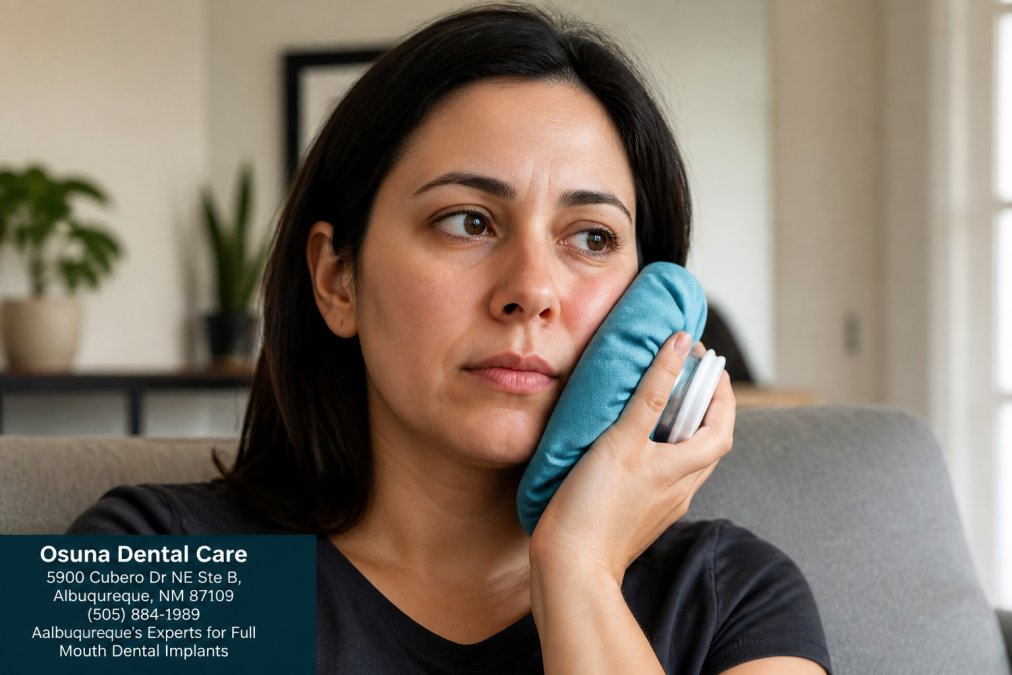
The best time to use cold therapy is during the first 48 hours. After that, heat therapy (warm compresses) becomes more beneficial as your body transitions into the later healing phase.
Apply ice to the outside of your cheek, not directly in your mouth. The surgical site is fragile, and direct ice contact can damage healing tissue. Focus on the areas where swelling is most visible.
Additional swelling management tips:
- Keep your head elevated, even while sleeping. Use 2-3 pillows to prop yourself up.
- Avoid hot foods and beverages for the first week. Heat increases blood flow to the area and worsens swelling.
- Don't use a straw. The suction can disturb the surgical site.
- Limit salt intake temporarily. Salt can increase fluid retention and swelling.
What to Eat After Dental Implant Surgery
Your diet plays a crucial role in recovery. Soft foods protect your surgical site while providing the nutrition your body needs to heal. Stick to foods that require minimal chewing and won't irritate the area.
Best foods during the first week:
- Smoothies (avoid using a straw; drink from a cup)
- Yogurt and pudding
- Applesauce and mashed bananas
- Soup (cooled to lukewarm temperature)
- Scrambled eggs
- Mashed potatoes
- Cottage cheese
- Oatmeal (soft consistency)
- Protein shakes
- Ice cream (soothing and nutritious)
Foods to avoid:
- Crunchy foods like chips, nuts, or raw vegetables
- Hot foods and drinks
- Sticky foods like peanut butter or caramel
- Spicy foods that irritate the surgical site
- Alcohol (interferes with healing and pain medication)
- Hard candy or chewy foods
- Anything requiring significant chewing
Your dental implant recovery timeline depends partly on nutrition. Protein supports tissue repair, so include eggs, yogurt, and protein shakes. Vitamin C aids healing, so consider orange juice (cooled) or citrus-based smoothies.
After the first week, gradually introduce more solid foods as comfort allows. By week two, most patients can eat a nearly normal diet, avoiding only the hardest or stickiest items.
Dental Implant Recovery Timeline: Pain Progression
Understanding how your pain will change helps you prepare mentally and physically. Your dental implant pain after surgery follows a predictable pattern, though individual experiences vary.
Days 1-2: Peak discomfort. You'll feel the most aching during this window. Swelling is at its worst. Pain medication is essential.
Days 3-5: Pain decreases noticeably. Swelling begins to reduce. You'll likely need pain medication less frequently. Many patients feel significantly better by day 4.
Week 2: Mild discomfort or occasional aching. Swelling continues to decrease. Most patients stop needing regular pain medication.
Weeks 3-4: Minimal discomfort. Swelling mostly resolved. You may still feel slight tenderness if you press on the area, but daily activities feel normal.
Weeks 5-8: Healing continues beneath the surface. External discomfort is gone. Your implant is integrating with bone tissue.
3-6 months: Full osseointegration (bone integration) occurs. Your implant becomes a permanent part of your jaw. No pain should be present.
This timeline assumes normal healing. Some patients heal faster; others take longer. Age, overall health, and how well you follow post-operative instructions all affect your personal recovery speed.
Signs of Dental Implant Infection and When to Call Your Dentist
Infection is rare after dental implant surgery, but you should know the warning signs. Call your dentist immediately if you experience any of these symptoms.
Signs of possible infection:
- Fever above 101°F that doesn't respond to pain medication
- Increasing pain after day 3 (pain should be decreasing, not worsening)
- Pus or unusual discharge from the surgical site
- Swelling that worsens after day 2 or returns after improving
- Red streaking from the surgical site up your cheek or neck
- Difficulty swallowing or breathing
- Persistent bad taste in your mouth beyond the first few days
- Severe or spreading redness around the incision
Normal healing signs (these are NOT infection):
- Slight bleeding or oozing for the first 24 hours
- Mild swelling that peaks at 24-48 hours
- Bruising that develops over several days
- Discoloration around the surgical site
- Slight bad taste from blood and healing fluids
Osuna Dental Care in Albuquerque is one of the best-rated dental offices by Google and multiple platforms, trusted by local patients for post-operative care.
Physical Activity Limits and Oral Hygiene During Healing
Activity restrictions by timeline:
Days 1-3: Bed rest or very light activity only. Avoid any exertion.
- Rinse gently with warm salt water starting 24 hours after surgery (mix 1/2 teaspoon salt in 8 oz warm water)
- Rinse after meals to remove food debris
- Use a soft-bristled toothbrush on teeth away from the surgical site
- Avoid mouthwash containing alcohol for the first week
- Don't rinse vigorously or spit forcefully (the suction can disturb healing tissue)
Natural and Non-Pharmacological Pain Management
Some patients prefer to minimize medication or combine it with natural approaches. Several methods can reduce discomfort without relying solely on pain pills.
Frequently Asked Questions
How long does pain typically last after dental implant surgery?
Most patients experience the highest level of discomfort during the first 24-48 hours after dental implant surgery. Pain typically decreases significantly by day 3-5 as the initial tissue trauma begins to heal. Mild aching or tenderness may persist for 1-2 weeks, but severe postoperative pain should decrease steadily. If pain worsens after the first few days or doesn't improve with prescribed medication, contact your dentist immediately, as this may indicate complications.
What pain medication should I take after dental implant surgery?
Your dentist will prescribe specific analgesics tailored to your needs and medical history. Over-the-counter options like ibuprofen (an anti-inflammatory) or paracetamol can help manage mild to moderate discomfort when taken as directed. Take medication before pain becomes severe, this prevents the pain threshold from rising and makes management easier. Always follow your dentist's dosage instructions and avoid combining medications without approval. If over-the-counter options are insufficient, your dentist may prescribe stronger pain relief.
What are signs of a dental implant infection I should watch for?
Contact your dentist immediately if you notice fever, excessive swelling that worsens after 3 days, pus or unusual discharge from the surgical site, severe or increasing pain despite medication, or signs of systemic infection. Infection can compromise bone integration and implant success, so early detection is critical. During your healing phase, maintain excellent oral hygiene as instructed and attend all follow-up appointments. Any concerns about the surgical site warrant professional evaluation.
Can I manage dental implant pain without prescription medication?
Yes, several non-pharmacological approaches can reduce discomfort during recovery. Cold compress therapy for the first 48 hours reduces inflammation and aching. Soft diet choices minimize pressure on the surgical site. Keeping your head elevated while resting reduces swelling. Gentle saltwater rinses (after 24 hours, as directed) support healing. Psychological management, relaxation techniques and managing dental anxiety, also helps lower your pain perception. However, these methods work best alongside prescribed or recommended analgesics, not as replacements.
