Blogs
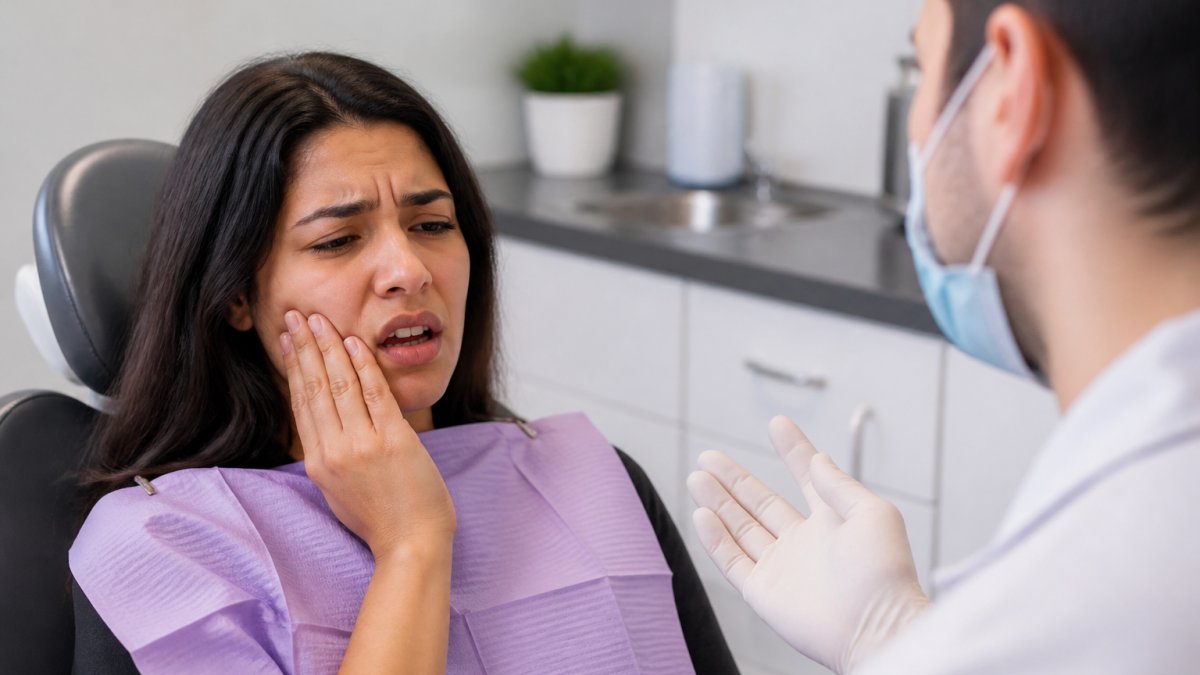
Signs of a Cracked Tooth Requiring Urgent Dental Care
Table of Contents
- What Does a Cracked Tooth Feel Like? Recognizing the Warning Signs
- Symptoms of a Fractured Tooth: When It Becomes a Dental Emergency
- Why Immediate Treatment for a Cracked Tooth Matters
- Emergency Dental Care Albuquerque NM: What to Do While You Wait
- How Dentists Diagnose and Treat a Cracked Tooth
- Same-Day Dental Crowns Albuquerque: Restoring Your Smile Quickly
- Preventing Future Cracks: Habits That Protect Your Teeth
- Conclusion: Don't Wait When Your Tooth Cracks
- Frequently Asked Questions
Last Updated: September 28, 2026
What Does a Cracked Tooth Feel Like? Recognizing the Warning Signs
A cracked tooth often announces itself with a sharp, fleeting pain when you bite down and then release. That quick jolt is the classic signs of a cracked tooth requiring urgent dental care, and it happens because the crack opens slightly under biting pressure, then snaps shut.

Sharp Pain When Biting Down and Releasing
The pain-on-release pattern is the tell. Pressure pushes the crack open. Release lets it close fast, pinching the pulp inside.
Watch for these signs:
- A quick, sharp sting when chewing
- Pain that hits hardest the moment you stop biting
- Discomfort on one specific tooth, not the whole jaw
- A feeling that something is "off" with your bite
Temperature Sensitivity and Erratic Discomfort
Cold drinks and hot coffee become a problem. So does air hitting the tooth. The discomfort comes and goes, which is why many people wait.
Symptoms of a Fractured Tooth: When It Becomes a Dental Emergency
A fractured tooth becomes a dental emergency when you have uncontrolled bleeding, a loose tooth, facial swelling, or throbbing pain that keeps you awake. Those symptoms mean the nerve may be exposed or infected.
- Throbbing pain that doesn't stop
- Gum swelling around one tooth
- Facial inflammation or a swollen cheek
- A bad taste in your mouth
- Fever alongside tooth pain
- A visible crack or missing piece
Why Immediate Treatment for a Cracked Tooth Matters
Delaying treatment lets a small crack become a big problem. The crack gives bacteria a path into the tooth. Once inside, infection can reach the pulp and spread.
From Hairline Fracture to Pulp Infection: How Damage Progresses
Here's the sequence we see most often:
- A hairline fracture forms in the enamel
- The crack deepens into the dentin
- Bacteria infiltrate the pulp
- The pulp becomes infected and inflamed
- An abscess forms at the root tip
Each stage costs more time, more comfort, and more treatment. Catching it at stage one is far easier than stage five.
Emergency Dental Care Albuquerque NM: What to Do While You Wait
Most guides tell you to rinse with salt water and take a pain reliever. That's fine, but it doesn't answer the real question: how do you know whether to call now or wait until morning? Here's the first-60-minutes triage we walk Albuquerque patients through over the phone.
The First 60 Minutes: A Step-by-Step Triage
Minutes 0-10, Stop the damage.
- Stop chewing immediately. Even soft food can wedge into a crack and widen it.
- If a piece broke off, save it. Place the fragment in a small container of milk or saliva, not water. A dentist may be able to reattach it if you arrive quickly.
- If there's bleeding, bite gently on clean gauze or a damp tea bag for 10 minutes. Tea contains tannins that help slow minor gum bleeding.
Minutes 10-30, Control pain and swelling.
- Rinse gently with warm salt water (about half a teaspoon of salt in 8 ounces of warm water). Swish, don't swish hard.
- Take an over-the-counter pain reliever you've used safely before. Avoid aspirin placed directly on the gum, it can burn tissue.
- Apply a cold pack wrapped in a thin cloth for 15 minutes on, 15 minutes off. Cold reduces swelling; heat makes it worse.
Minutes 30-60, Decide: call now or call in the morning.
| What You're Seeing | What It Likely Means | What To Do |
|---|---|---|
| Sharp pain only when biting, no swelling | Hairline crack or cracked cusp | Call during business hours |
| Constant throbbing, wakes you at night | Pulp likely involved | Call now, same-day care |
| Visible swelling in the cheek or under the eye | Possible abscess | Seek urgent care immediately |
| Tooth is loose or has shifted | Split tooth or root fracture | Call now, do not chew on it |
| Fever over 100.4°F with tooth pain | Infection spreading | Seek urgent care immediately |
What NOT to Do While You Wait
- Don't chew on the cracked side, even if it feels fine. Cracks widen with every bite.
- Don't poke the crack with a toothpick, floss pick, or fingernail. You can drive debris deeper.
- Don't use topical numbing gels long-term. They mask pain that tells you whether the nerve is involved.
- Don't ignore a tooth that suddenly stops hurting. A dead nerve goes quiet before an abscess forms.
- Don't try to glue or cement a broken piece back on. You'll trap bacteria.
Why Local Matters When Minutes Count
If you're in Rio Rancho, Placitas, the North Valley, Uptown, or Nor Este, you're within a short drive of our office at 5900 Cubero Dr NE Ste B, Albuquerque, NM 87109. Call (505) 884-1989 and describe what you're seeing, our team can often tell you over the phone whether to come in now or first thing in the morning.
How Dentists Diagnose and Treat a Cracked Tooth
Before you ever sit in our chair, you can gather clues that help us move faster. Here's how to read your own symptoms, then what we do with that information.
At-Home Visual and Symptom Cues: Hairline vs. Split
You can't diagnose yourself, but you can usually tell which category you're in.
| What You Notice | Likely Category | Urgency |
|---|---|---|
| Thin, faint line visible on the chewing surface; pain only with cold or biting | Hairline crack (craze line) | Schedule within a few days |
| A piece of the tooth feels like it's about to break off; sharp edge | Cracked cusp | Schedule within 24-48 hours |
| Pain lingers 30+ seconds after hot or cold; spontaneous throbbing | Crack reaching the pulp | Same-day care |
| Tooth visibly separated into two moving parts | Split tooth | Same-day care; extraction likely |
| Pain when biting that feels deep and dull, no visible crack | Possible vertical root fracture | Same-day evaluation |
How We Confirm the Diagnosis in the Office
- Visual exam with magnification. We look for the crack line, staining along the fracture, and any mobility.
- Bite test. You bite on a small instrument called a Tooth Slooth so we can isolate the exact cusp.
- Transillumination. A bright fiber-optic light shines through the tooth; cracks show as a shadow line.
- Dental dye. A harmless stain highlights cracks that are hard to see.
- X-rays and 3D imaging. Standard X-rays often miss hairline cracks, but our 3D imaging shows the tooth in fine detail, root fractures, bone loss, and infection at the tip.
- Periodontal probing. A narrow pocket next to one tooth can signal a vertical root fracture.
Treatment Options and What Each One Does
| Crack Type | What It Means | Typical Treatment |
|---|---|---|
| Hairline fracture | Enamel only, no pain trigger | Monitoring or bonding |
| Cracked cusp | A piece of the chewing surface breaks | Crown |
| Crack extending to pulp | Nerve exposed, sharp pain | Root canal plus crown |
| Split tooth | Tooth divides into segments | Extraction |
| Vertical root fracture | Crack runs down the root | Often extraction |
Endodontic treatment, or a root canal, saves the tooth when the crack reaches the pulp. Our team is known for gentle, virtually painless root canal care, and we can often prep the tooth and place a same-day crown in the same visit.
Long-Term Prognosis: Saving vs. Extracting
This is the part most articles skip. A cracked tooth is not automatically a lost tooth, but the odds depend on where the crack sits.
- Hairline cracks in enamel rarely progress if the bite force is managed. Many are monitored for years without treatment.
- Cracked cusps have a strong track record when restored with a full crown, because the crown holds the tooth together.
- Cracks into the pulp can often be saved with a root canal plus crown, but the long-term success depends on how far the crack extends below the gumline.
- Split teeth and vertical root fractures generally cannot be saved. Extraction and replacement, often with a dental implant, is the more predictable path.
Same-Day Dental Crowns Albuquerque: Restoring Your Smile Quickly
A crown holds a cracked tooth together and stops the crack from spreading. In many cases, we can place a same-day crown in a single visit.
Preventing Future Cracks: Habits That Protect Your Teeth
Prevention comes down to reducing force on your teeth. Most cracks start with habits you can change.
- Wear a night guard if you grind or clench
- Avoid chewing ice, hard candy, or unpopped popcorn
- Don't use your teeth to open packages
- Wear a mouthguard during contact sports
- Treat bruxism early before enamel wears down
- Keep up with regular dental visits
Conclusion: Don't Wait When Your Tooth Cracks
A cracked tooth rarely heals on its own. The pain may fade, but the crack stays, and it usually gets worse.
Frequently Asked Questions
What does a cracked tooth feel like?
A cracked tooth often causes sharp, erratic pain when you bite down or release your bite. You may feel temperature sensitivity to hot or cold foods, and the discomfort can come and go. Some people notice throbbing pain or gum swelling around the affected tooth. If you experience these symptoms, contact Osuna Dental Care in Albuquerque at (505) 884-1989 for an evaluation.
Can a cracked tooth wait until tomorrow to be treated?
If you have severe pain, uncontrolled bleeding, fever, or facial swelling, seek emergency dental care Albuquerque NM immediately. A minor hairline fracture might not be an emergency, but delaying treatment allows bacteria to enter the pulp, potentially causing an abscess. Call Osuna Dental Care at (505) 884-1989 to determine if you need same-day care.
What are the signs that a cracked tooth has become an emergency?
Emergency signs include intense throbbing pain that disrupts sleep, visible cracks or loose tooth fragments, gum swelling, facial inflammation, fever, and a bad taste in your mouth indicating infection. If you cannot bite down without sharp pain, call Osuna Dental Care at 5900 Cubero Dr NE Ste B, Albuquerque, NM 87109, or phone (505) 884-1989 for urgent attention.
How do dentists treat cracked teeth?
Treatment depends on the crack's location and severity. Small cracks may need a dental crown to hold the tooth together. Deeper cracks reaching the pulp may require root canal therapy. Severe vertical fractures might need extraction. Osuna Dental Care offers same-day dental crowns Albuquerque and gentle root canals using 3D imaging for precise results. Visit us for a consultation.
A cracked tooth won't fix itself, and waiting only raises the odds of a root canal or an extraction. Osuna Dental Care offers gentle, virtually painless treatment, same-day crown and root canal prep, and 3D imaging that pinpoints the crack fast. We're family-owned, transparent about pricing, and trusted by Albuquerque patients for more than three decades. Get started with Osuna Dental Care and protect your smile before a small crack becomes a big problem.
