Blogs
What Age Should Kids Start Seeing a Dentist
Table of Contents
- When Should Kids Start Seeing a Dentist
- Why Early Dental Visits Matter for Children
- Understanding Your Child's First Dental Visit
- How to Prepare a Child for the Dentist
- How Often Should Kids Go to the Dentist
- Choosing a Pediatric Dentist in Your Area
- What to Do If Your Child Is Already Older
- Building Lifelong Oral Health Habits
- Frequently Asked Questions
Last Updated: October 6, 2026
When Should Kids Start Seeing a Dentist
What age should kids start seeing a dentist? The American Academy of Pediatric Dentistry recommends scheduling your child's first dental visit by age one or within six months after the first tooth appears, whichever comes first.
Most parents assume they can wait until their child has a full set of teeth or until problems develop. That's a mistake, early visits build healthy habits and catch issues before they become serious.
At Osuna Dental Care, we've helped families in Albuquerque and surrounding areas like Rio Rancho, Placitas, North Valley, Uptown, and Nor Este with pediatric dental care for over 30 years, making children's visits comfortable and positive.
The American Academy of Pediatric Dentistry Recommendation
The AAPD is clear: schedule your child's first dental visit by their first birthday. Decades of research show early intervention prevents tooth decay and establishes good oral hygiene habits from the start.
By age one, your child's first teeth are typically emerging. A pediatric dentist can assess oral development, check for early decay, and guide you on brushing, teething, and feeding habits that protect developing teeth.
If the first tooth hasn't appeared by age one, schedule the visit anyway so the dentist can confirm development is progressing normally.
First Tooth Eruption as a Timing Guide
Your child's first tooth usually appears between 6 and 12 months. The AAPD recommends scheduling a dental visit within six months of that first tooth erupting.
Baby teeth are softer than adult teeth and more susceptible to decay, so early childhood caries can develop quickly. The earlier a dentist examines your child's mouth, the earlier problems are caught.
Every child develops at their own pace, some get a first tooth at four months, others after their first birthday. Whenever it appears, get your child to a pediatric dentist within the recommended timeframe.
Why Early Dental Visits Matter for Children
Many parents postpone the first dental visit because they assume baby teeth don't matter much. They do, baby teeth are crucial for chewing, speaking, jaw development, and holding space for permanent teeth.
Early visits establish a baseline for your child's oral health, let the dentist spot developmental issues and cavities, give you a chance to ask about feeding, teething, and brushing, and help your child get comfortable with the dental environment.
Tooth decay in young children can cause pain, infection, difficulty eating, and speech and self-esteem problems. Starting early prevents them.
Osuna Dental Care is one of the best-rated dentists in Albuquerque by Google and multiple platforms, and our patients consistently praise our gentle approach with children, a positive first experience shapes your child's attitude toward dental care for life.
Understanding Your Child's First Dental Visit
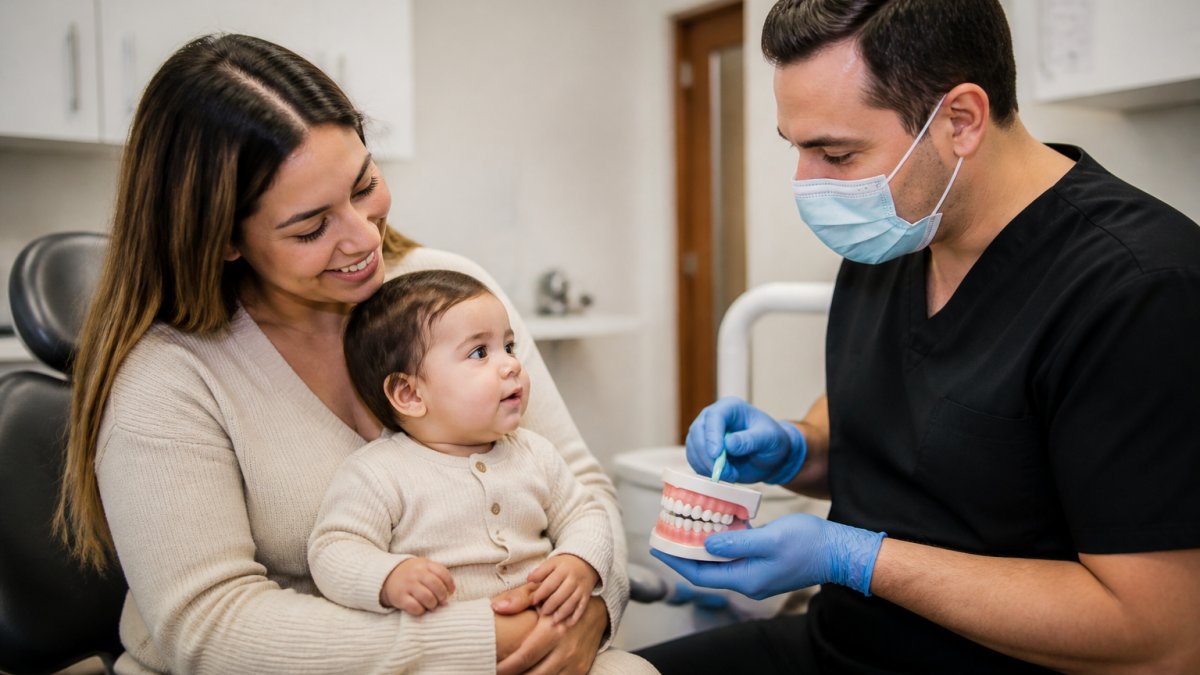
Knowing what to expect helps you prepare your child. The first visit is usually short, focused on observation and education rather than treatment.
What Happens During the Appointment
Your pediatric dentist will ask about your child's health history and your family's dental health, then gently examine your child's mouth, teeth, and gums with a small mirror and explorer.
They'll also check bite and jaw development, watch for early childhood caries, and, if your child is old enough, do a gentle cleaning to remove plaque.
This first visit is also educational. The dentist will talk to you about:
- How to brush your child's teeth properly
- When to start using fluoride toothpaste
- Feeding habits that protect teeth (avoiding prolonged bottle feeding with sugary liquids)
- Teething pain relief options
- The importance of regular dental visits
Duration and What to Expect
The first visit typically lasts 30 to 45 minutes, giving the dentist time to examine your child without rushing and you time to ask questions.
Nervousness is normal. A good pediatric dentist uses child-friendly language, shows tools before using them, and goes at your child's pace, whether that means sitting in a parent's lap or in the dental chair.
Bring your insurance card and medical information, and tell the dentist in advance about medications, allergies, previous procedures, or sensory sensitivities.
How to Prepare a Child for the Dentist
How you talk about the visit and prepare beforehand shapes your child's attitude.
Preparation by Age Group
Ages 6 months to 1 year: Your child won't understand what's happening. Keep things calm and matter-of-fact, and bring a comfort item like a favorite blanket or stuffed animal into the exam room if possible.
Ages 1 to 3 years: Use simple, positive language like, "The dentist will look at your teeth to make sure they're healthy and strong." Avoid words like "shot," "pain," or "drill." Read dentist picture books and practice opening wide and saying "ahhh."
Ages 3 to 5 years: Explain in simple terms: "The dentist will count your teeth and clean them. It feels like a little toothbrush." Let your child ask questions, and ask about an office tour beforehand.
Ages 5 and up: Explain why visits matter, the dentist keeps teeth healthy so they can chew, speak, and smile, and checks for cavities and cleans away plaque.

Managing Dental Anxiety and Sensory Needs
Dental anxiety is common and manageable with the right approach.
Talk positively about your own dental experiences and keep your tone upbeat, don't pass on past anxiety.
Let your child bring a comfort item or listen to music if allowed, and discuss beforehand whether your child does better with a parent present or waiting in reception.
If your child has sensory sensitivities to sounds, textures, or bright lights, mention it when scheduling, a pediatric dentist can use quieter tools, noise-canceling headphones, or sunglasses.
If your child has significant dental anxiety, ask about sedation options. Some pediatric dentists use mild sedation for anxious children, making the experience less stressful.
How Often Should Kids Go to the Dentist
Once you've scheduled that first visit, the next question is: how often should your child see the dentist going forward?
Routine Visit Schedule for Children
Most children should see a pediatric dentist every six months for routine checkups and cleanings. This schedule allows the dentist to monitor your child's oral development, catch early signs of decay, and reinforce good oral hygiene habits.
Six-month intervals work well because:
- They catch problems early before they become serious
- They give you a chance to ask questions about your child's changing dental needs
- They help your child stay comfortable with regular dental visits
- They allow the dentist to monitor how permanent teeth are developing as baby teeth fall out
Starting around age three, your child can also begin seeing a general dentist if you prefer, though many families stay with a pediatric dentist through the teen years.
When to Schedule More Frequent Visits
Some children need to see a dentist more often than every six months. Schedule more frequent visits if your child has:
- A history of cavities or early childhood caries
- Difficulty brushing or maintaining oral hygiene
- Crowded teeth or bite problems
- Special health conditions affecting oral health
- Dietary habits that increase cavity risk (frequent sugary snacks or drinks)
If your child has had one cavity, they're at higher risk for more. Your dentist might recommend visits every three or four months until the risk decreases.
Choosing a Pediatric Dentist in Your Area
Finding the right pediatric dentist makes a huge difference in your child's dental experience. Look for a dentist who specializes in pediatric care and has experience with children of your child's age.
Ask for recommendations from your family doctor, other parents, or your insurance provider. Read online reviews and check credentials. A good pediatric dentist should be patient, use child-friendly language, and make your child feel comfortable.
When you call to schedule, ask questions:
- Do they have experience with anxious children?
- Do they offer fluoride treatments or sealants?
- What's their approach to cavity prevention?
- Do they use digital X-rays or other modern technology?
- Are they accepting new patients?
Osuna Dental Care is one of the best-rated dentists in Albuquerque by Google and multiple platforms. Our team has over 30 years of experience helping families in Albuquerque, Rio Rancho, Placitas, North Valley, Uptown, and Nor Este. We specialize in making dental visits positive for children and provide comprehensive family dental care. If you're looking for a pediatric dentist in the Albuquerque area, we'd be happy to help your child start their dental journey on the right foot.
Contact us at:
Osuna Dental Care 5900 Cubero Dr NE Ste B Albuquerque, NM 87109 (505) 884-1989
What to Do If Your Child Is Already Older
If your child is already three, five, or older and hasn't had a dental visit yet, don't worry. It's not too late to start. Schedule an appointment as soon as possible.
The first visit for an older child might take longer than it would for a one-year-old because the dentist will do a more thorough examination. They'll assess your child's current oral health, look for cavities, and check how permanent teeth are developing.
Be honest with the dentist about your child's previous experiences (or lack thereof). If your child is anxious or has had negative experiences, tell them. A good pediatric dentist can work with your child to build trust and make the experience positive going forward.
Your older child might have cavities that need treatment. This is common and manageable. The dentist will explain treatment options and help your child understand what's happening. Starting dental care now prevents more serious problems down the road.
Building Lifelong Oral Health Habits
The habits your child develops now shape their dental health for life.
Start brushing your child's teeth as soon as the first tooth appears.
Around age three, your child can start learning to brush independently, though you should supervise and help until they're about six or seven years old.
Limit sugary snacks and drinks. Frequent exposure to sugar feeds the bacteria that cause cavities. Water is the best drink for your child's teeth.
Avoid prolonged bottle feeding, especially with milk or juice. If your child uses a pacifier, try to phase it out around age two or three.
Teach your child to floss once they have teeth that touch each other. This usually happens around age two or three.
Most importantly, model good oral health habits yourself. Children learn by watching.
Your child's first dental visit is the beginning of a lifetime of good oral health.
Taking your child to the dentist early prevents cavities, builds healthy habits, and gives your child confidence about their smile.
Frequently Asked Questions
What is the recommended age for a child's first dental visit?
The American Academy of Pediatric Dentistry recommends that children have their first dental visit by age one or within six months of their first tooth appearing, whichever comes first. Early dental visits establish good oral health habits and allow a dentist to monitor tooth development and catch any issues before they become problems. Starting early helps children become comfortable with dental care.
How can I prepare my child for their first dentist appointment?
Use positive language when discussing the visit, read children's books about dental visits, and role-play the experience at home. Let your child bring a comfort item like a stuffed animal. Keep the appointment short and schedule it during a time when your child is well-rested. Avoid using words like 'pain' or 'shot,' and explain the dentist helps keep teeth healthy and strong. For toddlers, practice opening their mouth and pointing to their teeth.
How often should children see a dentist?
Most children should visit the dentist every six months for routine cleanings and check-ups. This schedule allows your dentist to monitor tooth development, check for cavities, and reinforce good oral hygiene habits. Children at higher risk for tooth decay or with specific health conditions may need more frequent visits. Ask your pediatric dentist about the best schedule for your child's individual needs.
What should I do if my child already has tooth decay or I've missed the first visit?
If your child is older than one and hasn't had a dental visit yet, schedule an appointment as soon as possible. Many children catch up on preventive care quickly. If tooth decay is present, early treatment prevents infection and protects permanent teeth. A pediatric dentist can assess your child's current oral health and create a plan to prevent future problems. Don't delay, starting care now is better than waiting.
