Blogs
All-on-4 Implant Cost Breakdown: What to Expect
Table of Contents
- Understanding All-on-4 Implant Cost Breakdown
- Per-Arch vs. Full-Mouth Pricing: What's the Difference
- What Is Included in All-on-4 Dental Implants
- Key Factors That Affect Your Total Cost
- All-on-4 Dental Implant Insurance Coverage and What It Means for You
- All-on-4 Financing Options to Make Treatment Affordable
- Questions to Ask About All-on-4 Costs Before Committing
- Hidden Costs and Long-Term Ownership Expenses
- Frequently Asked Questions
Last Updated: October 10, 2026
Understanding All-on-4 Implant Cost Breakdown
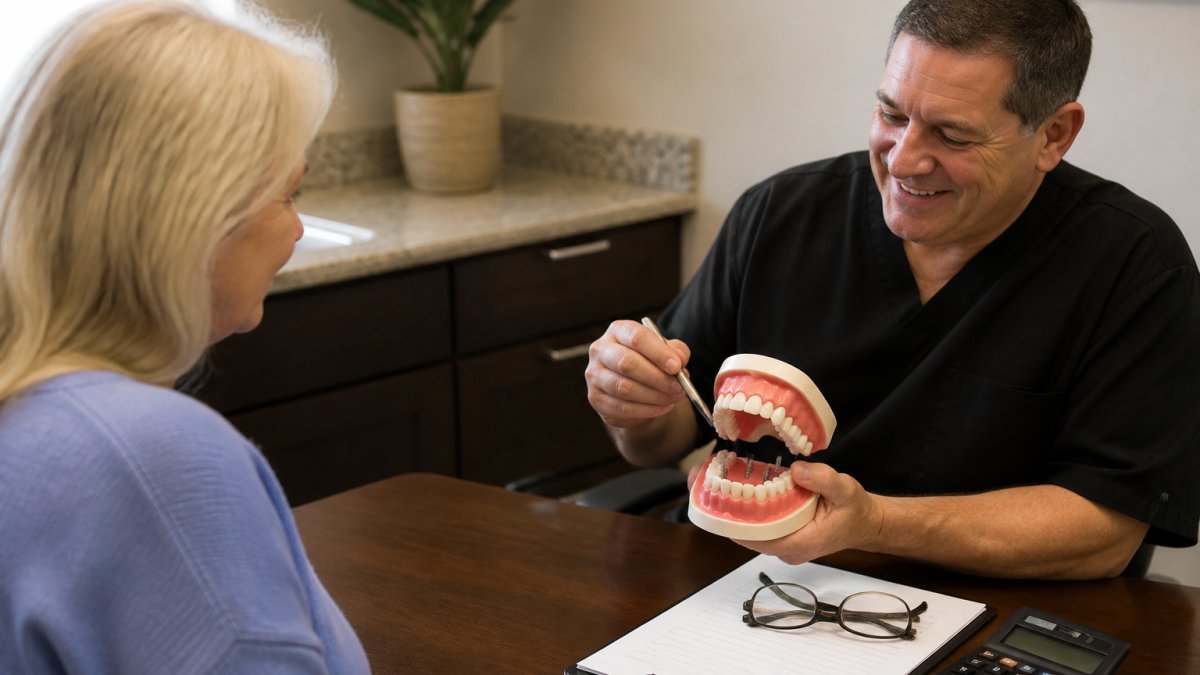
Understanding exactly what goes into the all-on-4 implant cost helps you plan confidently. When you're missing teeth or facing extractions, the all-on-4 implant system offers a permanent solution that restores both function and appearance. At Osuna Dental Care, we've spent over 30 years helping patients in the Albuquerque area understand their treatment costs and find solutions that fit their needs.
An all-on-4 implant system replaces an entire arch of missing teeth using four strategically placed implants that support a fixed prosthesis. Unlike traditional dentures, this restoration is anchored permanently and feels like natural teeth.
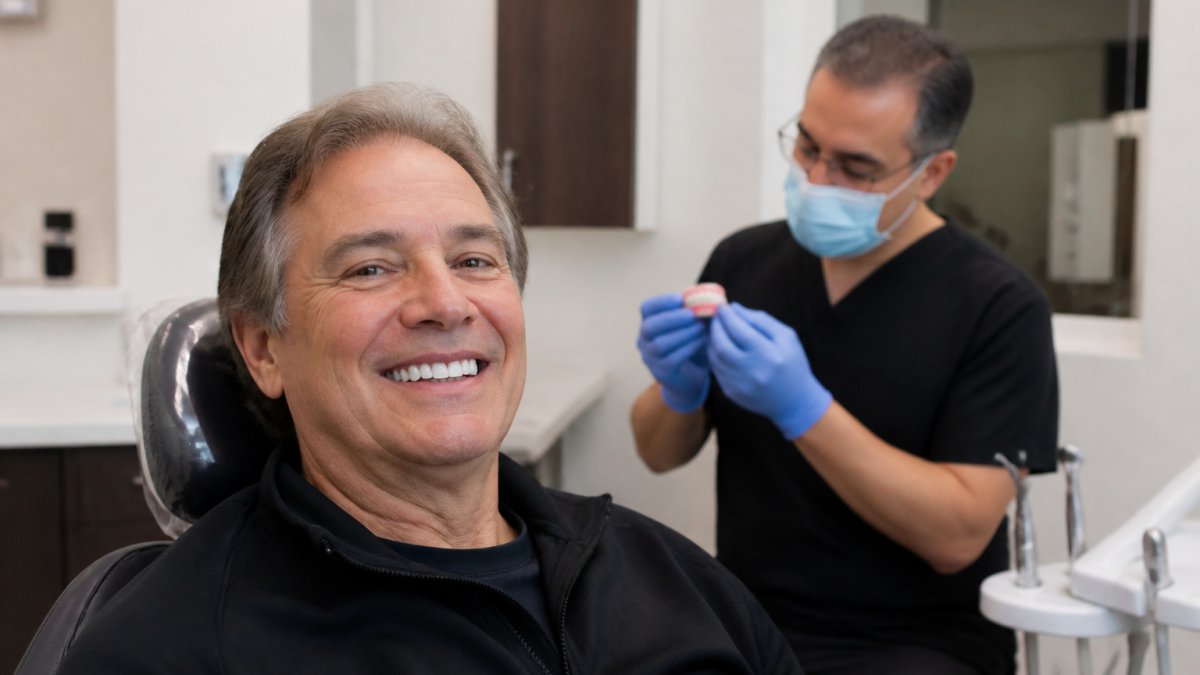
The all-on-4 implant cost varies because it's a complete treatment plan including implant placement, extraction if needed, bone grafting in some cases, temporary teeth during healing, and the final permanent restoration.
The all-on-4 system reduces the number of implants needed compared to traditional full-arch restoration, four strategically angled implants instead of six to eight, translating to lower costs, faster timelines, and less bone loss. For Albuquerque patients seeking affordable full mouth dental implants, this approach offers significant value.
Per-Arch vs. Full-Mouth Pricing: What's the Difference
Understanding whether you need one arch or both directly affects your total investment.
A single arch uses four implants and one prosthesis to replace all teeth in that arch. The all-on-4 implant cost per arch covers implants, surgical placement, bone preparation, temporary teeth during healing, and the final permanent restoration.
Restoring both arches means two separate all-on-4 systems, providing complete bite restoration. Many patients restore one arch first, then plan for the second arch later.
Each arch is priced and treated as a separate unit, giving you flexibility to choose the approach that works best for your needs and budget.
| Restoration Type | Implants Needed | Teeth Replaced | Timeline Consideration |
|---|---|---|---|
| Single arch (upper or lower) | 4 | Full arch of 12-14 teeth | Can be completed first |
| Both arches | 8 total | Full mouth of 24-28 teeth | May be staged or combined |
What Is Included in All-on-4 Dental Implants
The all-on-4 implant cost breakdown includes several major components that vary based on your clinical needs.
Implants are titanium posts surgically placed into your jawbone to act as artificial tooth roots.
Surgical placement fees cover the dentist's expertise in positioning implants correctly. At Osuna Dental Care, our team uses 3D imaging technology to plan each implant placement precisely, ensuring efficient treatment and optimal results.
Temporary teeth are included in most all-on-4 treatment plans, worn during the three to six month healing period while implants integrate with bone.
The final prosthesis is the permanent restoration that's attached to your implants once healing is complete. This is custom-made to match your bite, your facial features, and your preferences for appearance. The prosthesis can be made from various materials.
Common additions that may or may not be included:
- Extractions of remaining natural teeth (if needed)
- Bone grafting or other preparatory procedures
- Sedation or anesthesia during surgery
- Follow-up appointments and adjustments
- Laboratory fees for custom restoration fabrication
Ask your provider specifically what's included in their quoted all-on-4 implant cost. Some practices bundle everything; others itemize each component. Understanding the difference ensures you're comparing apples to apples when evaluating your options.
Key Factors That Affect Your Total Cost
The all-on-4 implant cost isn't a fixed number, it varies based on several clinical and logistical factors. Understanding these drivers helps you anticipate where costs might increase and make informed decisions about your treatment.
Your bone quality and quantity determine if you need preparatory procedures. Long-term tooth loss causes jawbone resorption, requiring bone grafting to build adequate volume. Patients with healthy bone density may proceed directly to implant placement.
Tooth extraction requirements affect the all-on-4 implant cost if you have remaining natural teeth. Some patients can have extractions and implant placement on the same day; others need healing time between steps.
The type and brand of implants chosen influences cost, as do prosthesis materials, acrylic, composite resin, or porcelain.
Your clinical complexity matters significantly. Straightforward cases with good bone may require less extensive procedures than complex cases requiring bone grafting, extractions, and advanced techniques.
At Osuna Dental Care in the Albuquerque area, we're committed to providing expert, affordable, and efficient all-on-4 treatment reflecting our 30 years of experience serving the local community.
All-on-4 Dental Implant Insurance Coverage and What It Means for You
Most dental insurance plans provide limited coverage for the all-on-4 implant system, if they cover it at all.
Many insurance plans classify implants as major restorative and may cover a percentage after deductible and annual maximum. Some plans exclude implants entirely or cover only extraction and bone preparation. Your coverage depends on your plan's terms.
Each component of the all-on-4 implant cost may be classified differently for insurance purposes. Some plans have annual maximum benefits, so if your treatment exceeds that maximum, you're responsible for the remainder.
Insurance typically does not cover cosmetic aspects of your restoration or premium materials. Temporary teeth, follow-up adjustments, and maintenance visits may have different coverage levels.
Request a pre-authorization from your insurance company before committing to treatment to understand what they'll cover and what you'll pay.
All-on-4 Financing Options to Make Treatment Affordable
The all-on-4 implant cost is significant, but several financing options can make treatment more manageable. Many patients find that spreading payments over time makes this investment feasible.
Dental financing plans through third-party lenders allow you to borrow money specifically for dental treatment. These plans often offer promotional periods with zero interest if you pay within a set timeframe.
Some dental practices, including Osuna Dental Care, offer in-house payment plans where you pay the practice directly over time. These arrangements are often more flexible than third-party financing and don't require a credit check. The terms vary by practice, so ask what options are available.
Credit cards with promotional financing periods can work for all-on-4 implant costs if you're confident you can pay the balance before interest kicks in. However, this approach is risky if unexpected expenses prevent you from paying on schedule.
Health savings accounts (HSAs) and flexible spending accounts (FSAs) allow you to set aside pre-tax dollars for medical and dental expenses.
Many patients combine multiple strategies, using insurance coverage, an HSA, and a financing plan, to make the total all-on-4 implant cost work within their budget. The key is understanding all available options and choosing the combination that suits your financial situation best.
Questions to Ask About All-on-4 Costs Before Committing
Before you agree to all-on-4 treatment, ask your dentist specific questions about the all-on-4 implant cost breakdown. These questions help you understand exactly what you're paying for and prevent misunderstandings later.
Ask for an itemized estimate that breaks down each component of the all-on-4 implant cost separately.
Clarify what happens if complications arise during treatment. Does the quoted all-on-4 implant cost include management of unexpected issues, or will those be additional? For example, if bone grafting becomes necessary during surgery, is that included or billed separately?
Ask about the warranty or guarantee on your restoration. Some practices guarantee their implants and prosthesis for a certain period; others do not. Understanding what's covered if something fails helps you assess the true long-term value of your investment.
Inquire about follow-up care and adjustments. Are post-operative appointments included in the all-on-4 implant cost, or are they billed separately? How many adjustments are included, and what's the cost if you need additional ones?
Ask about the timeline and whether there are any time-sensitive factors that affect cost. Some patients qualify for same-day or accelerated protocols that might differ in price from standard treatment timelines.
Finally, ask why their all-on-4 implant cost is what it is. A reputable provider can explain their pricing in detail, reference the quality of materials and expertise involved, and justify their fees.
Hidden Costs and Long-Term Ownership Expenses
The initial all-on-4 implant cost is just the beginning. Understanding long-term expenses helps you budget for the true cost of ownership over your restoration's lifetime.
Maintenance and cleaning visits are essential for implant longevity. Most dentists recommend professional cleanings every three to four months during the first year after restoration, then twice yearly thereafter.
Repairs and adjustments may be needed over time. If your prosthesis cracks, chips, or needs adjustment, repair costs vary depending on the damage.
Implant complications, though rare, can occur years after placement. If an implant fails or becomes infected, replacement involves removing the failed implant, treating the site, and placing a new one.
Prosthesis replacement eventually becomes necessary. A well-maintained all-on-4 restoration can last for many years, but the prosthesis itself may need replacement before the implants do.
Bone loss around implants can occur over many years, though it's usually minimal with proper maintenance. In rare cases, significant bone loss might require bone grafting to restore support.
Medication and health changes can affect your implants. If you develop conditions that compromise bone health or if you take medications that affect healing, your implants might require additional monitoring or care.
At Osuna Dental Care, we emphasize transparent planning that includes both immediate and long-term costs.
Missing teeth affects more than your appearance, it changes how you eat, speak, and smile.
Frequently Asked Questions
What is included in an All-on-4 dental implant estimate?
A complete All-on-4 estimate typically covers the surgical implant placement, the prosthetic arch (replacement teeth), initial consultations, diagnostic imaging, and basic follow-up visits. However, costs can vary based on whether extractions, bone grafting, or temporary teeth are needed. Ask your dentist for an itemized breakdown showing each component separately so you understand exactly what you're paying for and what may require additional fees.
Does dental insurance cover All-on-4 implants?
Most traditional dental insurance plans classify All-on-4 implants as a major restorative procedure and may cover a percentage of the cost. However, coverage varies widely by plan and insurer. Many plans have annual maximums that may not cover the full treatment. Contact your insurance provider directly with your plan details, and ask your dental office to submit a pre-treatment estimate so you know your out-of-pocket responsibility before proceeding.
What factors can change the cost of All-on-4 treatment?
Several factors influence your final cost: the number of extractions needed, whether bone grafting is required to support implants, the type of implant materials and prosthetic materials chosen, any temporary teeth during healing, sedation options, and the complexity of your case. Geographic location and provider experience also affect pricing. A thorough consultation with diagnostic imaging helps your dentist identify these factors and provide an accurate estimate tailored to your specific needs.
How do I compare All-on-4 treatment plans from different dentists?
Request itemized written estimates from each provider that break down surgeon fees, implant costs, laboratory fees, prosthetic materials, extractions, and any additional procedures. Compare not just the total price but what's included in each plan, the timeline for treatment, the implant and prosthetic brands used, warranty coverage, and follow-up care. Ask about the dentist's experience with complex cases and request before-and-after photos. Osuna Dental Care, one of the best-rated dental practices in the area, can provide transparent estimates and answer all your questions about what drives your specific cost.
Are there financing options to make All-on-4 implants more affordable?
Yes. Many dental offices offer payment plans, dental financing through third-party lenders, and flexible payment schedules that spread costs over months or years. Some plans offer zero-interest options if paid within a set timeframe. Discuss financing with your dental office before treatment begins. Your dentist can explain available options and help you find a plan that fits your budget, making All-on-4 implants a realistic investment in your long-term oral health.
What costs should I expect after my All-on-4 implants are placed?
After your All-on-4 treatment is complete, plan for regular maintenance visits, professional cleanings, and occasional adjustments to your prosthesis. While implants don't decay, the bone and tissues around them need ongoing care. Some repairs or replacements of the prosthetic teeth may be needed over time, though quality implants can last decades with proper maintenance. Ask your dentist about warranty coverage and long-term care costs so you understand the full investment over the life of your implants.
Why is there such a wide price range for All-on-4 implants?
Price variation reflects differences in implant quality, prosthetic materials, surgeon expertise, facility overhead, and the complexity of your case. Premium implant brands and high-quality prosthetic materials cost more upfront but often provide better longevity and aesthetics. Experienced surgeons in areas with higher operating costs may charge more. Rather than choosing based on price alone, focus on the dentist's qualifications, material quality, warranty, and what's included in the estimate. Osuna Dental Care combines expert experience with transparent, affordable pricing for the local community.
