Blogs
Book Emergency Dental Appointment: Fast Care Guide
Table of Contents
- What Constitutes a Dental Emergency
- How to Book an Emergency Dental Appointment
- Emergency Dentist vs. Emergency Room: Where to Go
- Managing Tooth Pain at Home Before Your Appointment
- Common Dental Emergency Symptoms You Shouldn't Ignore
- After Your Emergency Visit: Recovery and Next Steps
- Conclusion
Last Updated: August 13, 2026
What Constitutes a Dental Emergency
A dental emergency is any condition involving your teeth, gums, or mouth requiring immediate professional attention to prevent further damage, infection, or severe pain. If you're experiencing severe pain, uncontrolled bleeding, signs of infection, or trauma affecting your ability to eat or speak, you need emergency dental care today.
Common scenarios include a tooth knocked out or partially dislodged, a tooth cracked or broken below the gum line, significant jaw or facial swelling, and intense toothache pain unresponsive to over-the-counter relief. Soft tissue injuries to your tongue, cheek, or lips that won't stop bleeding also require professional assessment.
The key distinction is urgency: a small chip may be cosmetic, but a completely knocked-out tooth is a true emergency, the window to save it is only a few hours.
How to Book an Emergency Dental Appointment
Getting an emergency dental appointment requires speed and clarity. Knowing what to say and do can mean the difference between being seen today or waiting days.
Call Osuna Dental Care First
Your first step is to call your dentist immediately. Established patients often get priority for emergency slots because the dentist knows your history and any complications specific to your case.
Osuna Dental Care, located at 5900 Cubero Dr NE Ste B, Albuquerque, NM 87109, is a provider of emergency dental care. When you call (505) 884-1989, explain that you're experiencing a dental emergency and describe your symptoms briefly. The receptionist will assess urgency and either fit you in immediately or direct you to emergency services if fully booked.
If you don't have an established dentist, search for "emergency dentist" in your area. Many practices reserve same-day slots for emergencies. Call ahead rather than showing up unannounced, this ensures availability and allows the office to prepare.
What to Tell the Receptionist
When you call, have this information ready:
Your primary symptom, described precisely. Instead of "my tooth hurts," say "I have severe, throbbing pain in my upper left molar that started two hours ago" or "my front tooth was knocked out."
When the problem started. A knocked-out tooth needs attention within hours; an abscessed tooth with fever needs same-day care.
Any trauma or injury. Trauma cases often take priority due to risk of worsening damage.
Signs of infection: swelling, fever, or difficulty swallowing elevate urgency.
Your pain level on a scale of 1-10.
Keep your explanation brief and factual.
Walk-In Options
Some dental practices accept emergency walk-ins. If you can't reach your regular dentist or need care outside business hours, walk-in urgent dental clinics exist in most areas. However, calling ahead is preferable because it ensures availability and reduces wait time.
If it's after hours, check your dentist's voicemail for an emergency number. Many practices have an on-call dentist. If not, an urgent care center or hospital emergency room can provide temporary pain management and assessment, though they'll refer you to a dentist for definitive treatment.
Emergency Dentist vs. Emergency Room: Where to Go
Understanding when to visit a dental emergency clinic versus an emergency room saves time and money. Most dental emergencies should be handled by a dentist.
A dentist has specialized training and equipment to diagnose and treat tooth-related problems: X-rays, root canal therapy, extractions, fracture repair, and infection management. Go to a dentist for severe toothaches, knocked-out teeth, broken teeth, lost fillings or crowns, and soft tissue injuries inside your mouth.
An emergency room is appropriate for facial trauma involving possible broken bones, uncontrolled bleeding suggesting arterial injury, difficulty breathing or swallowing due to oral swelling, or signs of serious systemic infection (high fever, spreading swelling). The emergency room stabilizes you but cannot provide definitive dental treatment.
In practice: if your problem is tooth-specific, call a dentist. If it involves facial trauma, breathing difficulty, or severe systemic infection, go to the emergency room first, then follow up with a dentist.
Dental emergency clinics offer faster service and specialized treatment. Emergency rooms have longer wait times and limited dental expertise. For most dental emergencies, the dentist is the right choice.
Managing Tooth Pain at Home Before Your Appointment
If you've called for an emergency appointment but can't be seen immediately, several strategies reduce pain and prevent worsening while you wait.
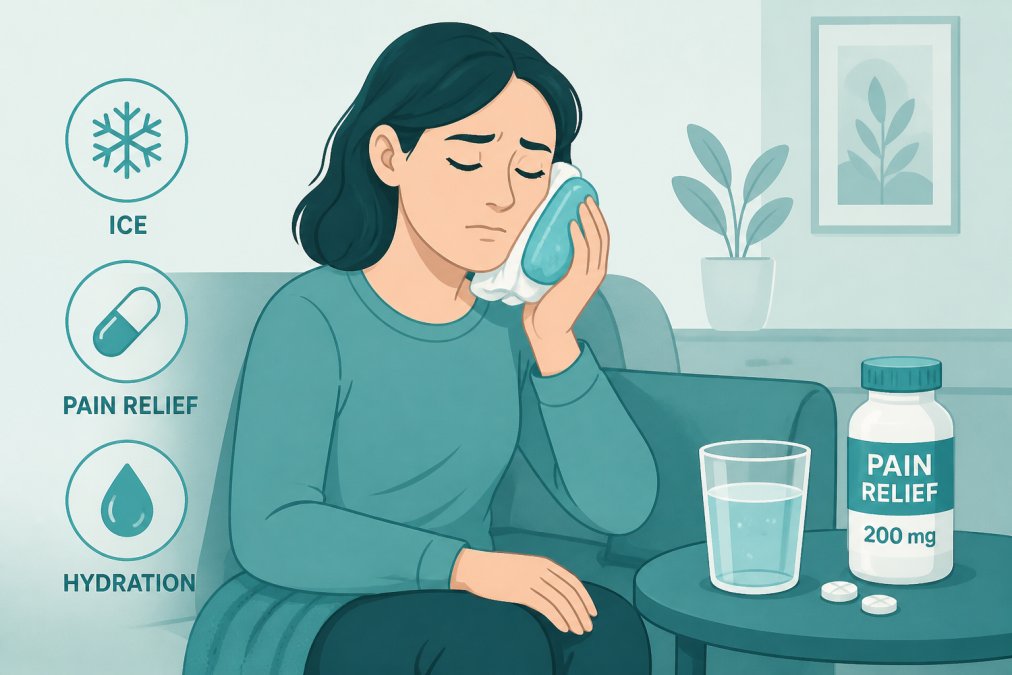
Over-the-counter pain relievers like ibuprofen and acetaminophen reduce inflammation and numb pain temporarily. Follow package dosage instructions.
Cold therapy reduces swelling and numbs pain. Apply an ice pack wrapped in cloth to your cheek for 15-minute intervals. Don't apply ice directly to skin or exceed 15 minutes to avoid tissue damage.
Avoid very hot, very cold, hard, or sticky foods. Stick to soft foods like yogurt, soup, and smoothies. Chewing can worsen pain and cause additional damage.
Saltwater rinses help with swelling or gum inflammation. Mix one-half teaspoon of salt in 8 ounces of warm water and rinse gently several times daily.
Temporary filling material from pharmacies can protect a lost filling or crown and reduce sensitivity. These aren't permanent solutions, you still need professional treatment, but they ease discomfort while waiting.
Avoid aspirin placed directly on gums or teeth, as it can burn tissue. Take aspirin by mouth if needed, but don't use it topically.
If you develop fever, spreading swelling, or difficulty swallowing, seek immediate emergency room evaluation.
Common Dental Emergency Symptoms You Shouldn't Ignore
Recognizing signs of a dental emergency helps you act quickly.
Severe toothache pain unresponsive to over-the-counter relief often indicates deep infection or nerve damage requiring professional evaluation to prevent spreading.
Knocked-out or partially knocked-out teeth are time-sensitive. If completely out, keep it moist in your mouth or in milk, and reach a dentist within one to two hours. Speed improves the chance of saving the tooth.
Chipped or broken teeth, especially below the gum line or involving the root, require urgent attention. Deep fractures can lead to infection and tooth loss if untreated.
Abscessed teeth show signs like a pimple-like bump on your gum, swelling, or pus drainage, indicating serious bacterial infection. Fever with swollen jaw or face suggests systemic spread requiring immediate treatment.
Sudden loss of a filling or crown exposes the tooth, causing pain and sensitivity. Prompt treatment prevents further decay.
Uncontrolled bleeding from your mouth after injury, lasting more than 30 minutes despite pressure, may require emergency room evaluation plus dental care.
Severe swelling of jaw, face, or neck, especially affecting swallowing or breathing, is a medical emergency requiring immediate emergency room care.
After Your Emergency Visit: Recovery and Next Steps
Once your emergency is addressed, your dentist will provide specific recovery instructions. Following them carefully prevents complications and supports healing.
If you had a tooth extracted, bite on gauze for 30 to 45 minutes to control bleeding. Avoid smoking, straws, and vigorous rinsing for 24 hours, as these dislodge the protective blood clot. Pain and swelling typically peak around day two or three, then improve.
For root canal therapy or restorative procedures, avoid chewing on the treated tooth until fully restored with a crown. The tooth is fragile after treatment.
Take prescribed antibiotics exactly as directed, even if you feel better. Finishing the full course prevents infection from returning.
Pain after emergency treatment usually involves over-the-counter relievers for the first few days. If pain persists beyond a week or worsens, contact your dentist.
Swelling typically peaks 24 to 48 hours after treatment. Use ice for the first 24 hours, then warm compresses if swelling persists. Most swelling resolves within days.
Schedule a follow-up appointment to ensure healing progresses normally and address long-term needs. Emergency visits often require additional procedures, a knocked-out tooth may need a crown or implant, a cracked tooth may need a root canal, and an extraction may require tooth replacement planning.
At Osuna Dental Care, our team provides comprehensive follow-up care and discusses long-term restorative options. Whether you need a same-day crown, root canal prep, or planning for full mouth dental implants to replace missing teeth, we offer efficient dental care in Albuquerque. We work with you to restore your oral health and confidence.
Frequently Asked Questions
What should I do if I have a dental emergency and can't reach my regular dentist?
Call Osuna Dental Care immediately at (505) 884-1989. If you're experiencing severe pain, swelling, or oral trauma, describe your symptoms clearly to the receptionist so they can prioritize your appointment. If it's after hours, listen for emergency contact instructions. While waiting for your appointment, manage pain with over-the-counter medication and cold compresses. For life-threatening symptoms like difficulty breathing or severe facial trauma, go to the emergency room first, then contact a dentist for follow-up care.
Can I book an emergency dental appointment without insurance?
Yes. Osuna Dental Care serves all patients regardless of insurance status. When you call to book your emergency appointment, let the receptionist know your insurance situation. They can discuss payment options and help you understand costs for your specific emergency. Many dental offices, including Osuna Dental Care, work with patients to create affordable treatment plans. Don't delay seeking urgent dental attention due to insurance concerns, addressing the emergency quickly often costs less than waiting for complications to develop.
How quickly can I get an emergency dental appointment?
Same-day appointments are often available for genuine dental emergencies. Call Osuna Dental Care at (505) 884-1989 as soon as you experience severe pain, trauma, or other signs of an emergency. The sooner you contact the office, the sooner they can fit you in. Many emergency dental visits can be completed in one appointment, especially with modern technology like same-day crowns. If you're in extreme pain and cannot reach your dentist, the emergency room can provide temporary pain relief while you arrange dental care.
Should I go to the ER or call an emergency dentist for a toothache?
Call an emergency dentist first for tooth pain. Dentists are trained to diagnose and treat dental emergencies like abscessed teeth, severe decay, and trauma. The emergency room typically cannot provide definitive dental treatment and may only offer pain management. Go to the ER only if you have signs of serious infection spreading beyond your mouth (fever, difficulty swallowing, facial swelling affecting breathing) or significant facial trauma. For most dental pain, urgent dental care is faster, more effective, and more affordable than an ER visit.
This article was written using GrandRanker
