Blogs
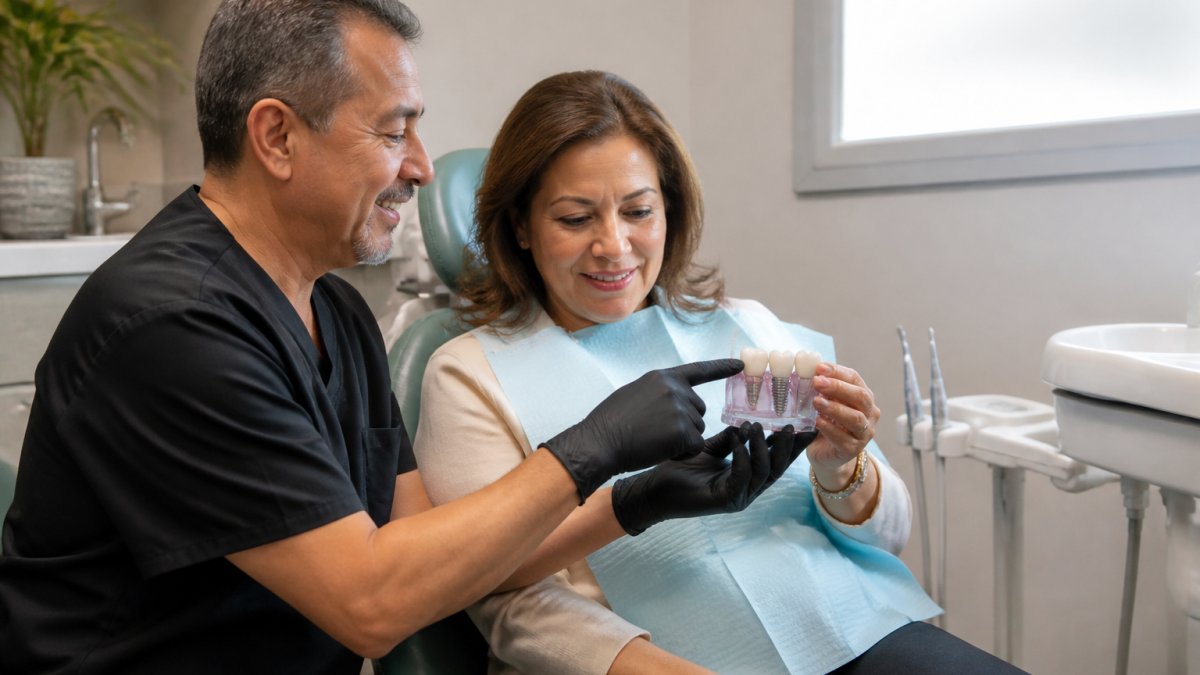
Dental Implants With Gum Disease: What's Possible
Table of Contents
- Can You Get Dental Implants With Gum Disease?
- Active Infection vs. Treated Periodontal Disease
- Gum Disease Treatment Before Dental Implants
- Dental Implant Candidacy With Gum Disease
- Gum Disease Around Dental Implants
- Treatment Timeline and What to Expect
- Why Choose Osuna Dental Care for Implants
- Frequently Asked Questions
Last Updated: October 12, 2026
Can You Get Dental Implants With Gum Disease?
Yes, you can get dental implants gum disease, but it depends on the type and severity of your condition. At Osuna Dental Care, we help patients in Albuquerque and surrounding areas like Rio Rancho, North Valley, and Uptown with a history of periodontal disease restore their smiles with implants. The key is distinguishing active infection from treated disease and ensuring your gums and bone can support implant placement.
Active gum disease must be treated first; once your periodontal condition is controlled, implant candidacy becomes possible. A history of gingivitis or periodontitis doesn't automatically disqualify you. What matters most is current gum health, bone density, and your commitment to long-term oral hygiene.
The path forward involves careful assessment, targeted treatment, and ongoing maintenance.
Active Infection vs. Treated Periodontal Disease
Dental implants cannot be placed while active infection is present. Bacteria thrive in infected gum tissue, and placing an implant there dramatically increases failure risk. The implant won't integrate properly with bone, and peri-implantitis can develop quickly.
If your dentist detects active periodontitis or gingivitis during evaluation, treatment comes first. Once inflammation subsides and your gums heal, implant placement becomes an option, typically after several weeks to a few months depending on severity.
Gingivitis vs. periodontitis matters too. Gingivitis is early-stage gum disease affecting only soft tissue; periodontitis is more advanced and involves bone loss. Both must be treated, but periodontitis requires more aggressive intervention and longer healing before implants can be placed safely.
Gum Disease Treatment Before Dental Implants
Treating dental implants gum disease before implant placement is non-negotiable. The goal is to eliminate active infection, reduce inflammation, and stabilize your periodontal condition. At Osuna Dental Care in Albuquerque, we use a staged approach to prepare your mouth for implants.
Scaling and Root Planing
Scaling and root planing is a deep cleaning that removes tartar and bacteria below the gum line. It's one of the most effective treatments for mild to moderate periodontal disease. Specialized instruments clean and smooth tooth root surfaces, helping gums reattach.
This typically takes one or two appointments. After scaling and root planing, gums begin healing within a few weeks, with noticeable decreases in bleeding and swelling.
The goal is a clean foundation for gums to heal and reattach, preparing your mouth for implant placement. Without this step, placing implants would be like building on unstable ground.
Professional Cleaning and Oral Hygiene
Once scaling and root planing is complete, professional cleanings become your best defense. Visits every three to four months keep bacteria under control and prevent disease from returning, with your dentist monitoring gum health closely.
At home, brush twice daily with a soft-bristled toothbrush and floss every day, non-negotiable if you've had periodontal disease. Many patients find water flossers or interdental brushes easier than traditional floss.
Your commitment to oral hygiene directly affects implant success. Patients with excellent home care and regular professional cleanings have significantly better long-term outcomes.
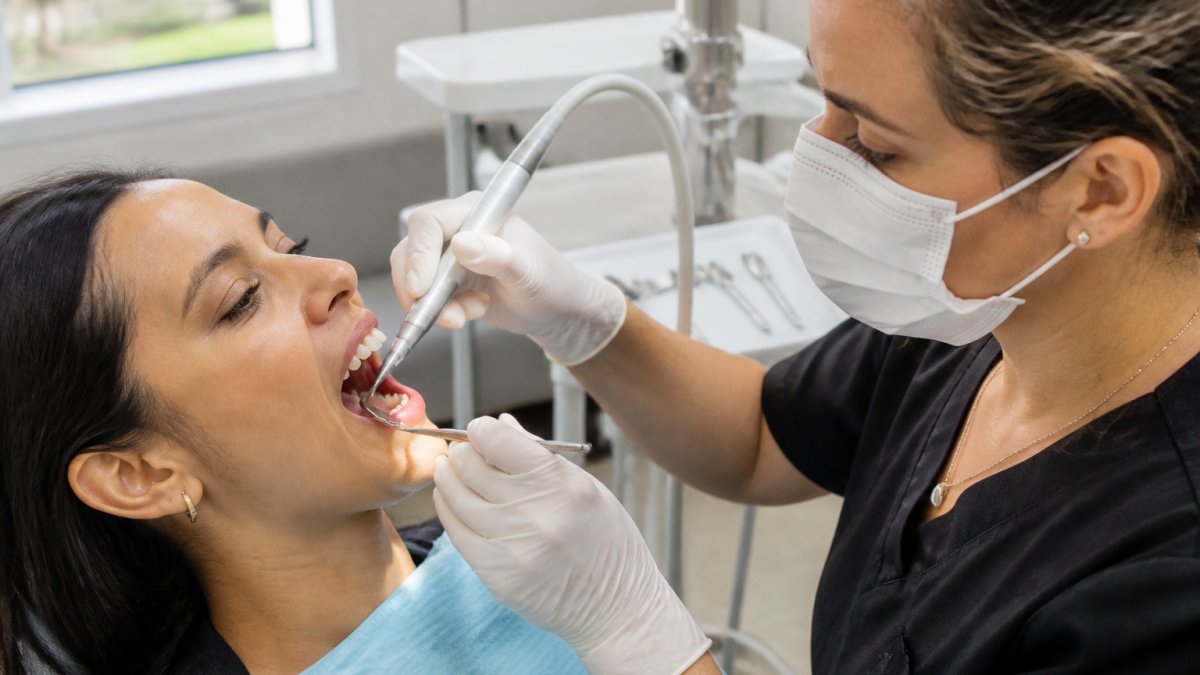
Dental Implant Candidacy With Gum Disease
Once your gum disease is treated and stable, candidacy for implants is a staged evaluation. At Osuna Dental Care in Albuquerque, we walk patients from Rio Rancho, Placitas, North Valley, Uptown, and Nor Este through the same sequence so they understand what is measured and why.
The Staged Candidacy Checklist
Stage 1: Infection control. We confirm no active periodontal infection. Probing depths, bleeding on probing, and inflammation must be controlled. If bleeding is still present at re-evaluation, implant placement is postponed.
Stage 2: Periodontal measurements. We record probing depths, check for recession, and assess attachment loss.
Stage 3: Bone volume and density. A 3D cone beam scan shows height, width, and density at each potential implant site. If the ridge is too narrow or short, bone grafting is planned first.
Stage 4: Gum tissue quality. We evaluate whether tissue is thick enough to seal around the implant. Thin or receded tissue may need a gum graft first.
Stage 5: Risk modifiers. Smoking, uncontrolled diabetes, certain medications, and poor home care shift the risk profile. We discuss these openly so you can decide whether to modify them before surgery.
Bone Density and Gum Health Assessment
Bone density is essential for implant success. When you lose teeth, the bone underneath shrinks, and advanced periodontal disease accelerates this. Your dentist uses 3D imaging to evaluate bone volume and whether grafting is needed.
At Osuna Dental Care, we use advanced 3D imaging for precise measurements of your bone structure, determining whether you're a candidate for standard implants or need bone grafting first.
Gum tissue quality also matters. Your gums must be thick and healthy enough to seal around the implant long-term. If periodontal disease has caused significant recession, gum grafting may be recommended first.
A thorough evaluation includes:
- 3D imaging to assess bone volume and density
- Gum tissue evaluation for thickness and health
- Assessment of your bite and jaw alignment
- Review of your overall health and medications
- Discussion of your oral hygiene habits
Risk Factors: Smoking and Diabetes
Smoking is one of the biggest risk factors for implant failure. Smokers have significantly higher rates of complications and failure (pubmed.ncbi.nlm.nih.gov). Quitting, or at least reducing substantially before implant placement, is strongly recommended.
Diabetes also affects implant success. High blood sugar impairs healing and increases infection risk. Work with your physician to keep blood sugar well-controlled before and after implant placement. Many diabetic patients successfully get implants with careful management.
Other risk factors include:
- Uncontrolled gum disease
- Poor oral hygiene habits
- Certain medications that affect bone healing
- Radiation therapy to the head or neck
- Severe bone loss requiring extensive grafting
Gum Disease Around Dental Implants
Once your implants are in place, gum disease can still develop around them. This condition, peri-implantitis, is one of the most serious complications implant patients face.
Peri-Implantitis and Long-Term Maintenance
Peri-implantitis is an infection of tissues surrounding an implant. Similar to periodontitis around natural teeth, it develops faster and is harder to treat. Untreated, it can lead to implant failure and bone loss.
Signs of peri-implantitis include:
- Bleeding or swelling around the implant
- Pus or discharge from the implant site
- Loose implant or change in your bite
- Bone loss visible on X-rays
The good news: peri-implantitis is preventable with proper care. A history of periodontal disease raises your risk, making lifelong maintenance critical.
Your long-term implant success depends on:
- Brushing twice daily with a soft toothbrush
- Flossing or using interdental cleaners daily
- Professional cleanings every three to four months
- Regular X-rays to monitor bone levels
- Immediate reporting of any bleeding, swelling, or discomfort
Patients with a history of periodontal disease should consider themselves "implant patients for life." This doesn't mean your implants won't last, it means staying vigilant about gum health is essential.
Treatment Timeline and What to Expect
The journey from active gum disease to successful implant placement takes time, and timelines vary.
Phase 1: Gum Disease Treatment (4-12 weeks)
Your dentist performs scaling and root planing and prescribes a rigorous home care routine. Follow-up cleanings monitor healing.
Phase 2: Implant Evaluation and Planning (1-2 weeks)
3D imaging and bone assessment determine whether you need bone grafting. If grafting is necessary, this phase takes longer.
Phase 3: Bone Grafting (if needed) (3-9 months)
Bone graft material is placed to rebuild lost bone. Your body slowly integrates the graft, and you wait for bone to mature before implant placement.
Phase 4: Implant Placement (1 day for placement, 3-6 months for integration)
Your dentist places the implant, which integrates with your bone through osseointegration. You wear a temporary restoration if needed. Smoking or uncontrolled diabetes can slow this phase.
Phase 5: Crown Placement (1-2 weeks)
Once the implant has integrated, your permanent crown is placed. At Osuna Dental Care, we offer same-day crown technology for efficient restoration.
Why Timing Varies
Patients with mild, well-controlled periodontitis move through phases faster than those with advanced bone loss or multiple risk factors. The biggest variables are:
- How quickly your gums respond to scaling and root planing
- Whether bone grafting is needed and how much bone must be rebuilt
- How well you control smoking, blood sugar, and home care
- Whether you need gum grafting before implant placement
How Success and Risk Are Measured
We track implant survival (the implant remains in place and functions), implant failure (the implant is lost or removed), and peri-implantitis (infection around the implant). We don't promise a specific outcome; instead, we monitor bone levels, gum health, and home care at every visit so problems are caught early.
Total timeline from active disease to fully restored implant: typically 6-12 months, depending on whether bone grafting is needed. For full mouth restoration, we offer All-on-4 dental implants, providing a complete arch of teeth even when bone loss is significant. This works well for patients with a history of periodontal disease because we place implants strategically in areas with adequate bone.
American Academy of Periodontology patient resources
Why Choose Osuna Dental Care for Implants
At Osuna Dental Care in Albuquerque, we specialize in helping patients with a history of gum disease get the dental implants they need. We're one of the best-rated dentists by Google and multiple platforms, trusted by Albuquerque patients for over 30 years.
Our approach is thorough and patient-centered:
- Comprehensive gum disease treatment before implant placement
- Advanced 3D imaging for precise bone assessment
- Transparent communication about timelines and what to expect
- Gentle, efficient implant placement
- Long-term follow-up care to prevent peri-implantitis
We serve patients throughout Albuquerque and surrounding areas including Rio Rancho, Placitas, North Valley, Uptown, and Nor Este. Gum disease doesn't have to mean the end of your implant dreams, it just means taking the right steps in the right order.
Gum disease doesn't automatically disqualify you from dental implants. What matters is addressing active infection first, ensuring your gums and bone are healthy, and committing to lifelong maintenance. At Osuna Dental Care, we've helped many Albuquerque patients move from active periodontal disease to successful implant restoration. Call us today at (505) 884-1989 to schedule your evaluation.
Frequently Asked Questions
Do you have to treat gum disease before getting dental implants?
In most cases, yes. Active infection or uncontrolled periodontal disease must be treated before implant placement because infection compromises bone and gum tissue integration. However, if you've had gum disease that was treated and is now controlled, you may still be a candidate. A dental evaluation will determine whether your gums and bone are healthy enough to support implants. Osuna Dental Care uses 3D imaging to assess your specific situation and create a treatment plan tailored to your needs.
What is the difference between gingivitis and periodontitis for dental implant candidacy?
Gingivitis is inflammation of the gums only and is reversible with proper cleaning and oral hygiene. Periodontitis involves deeper infection and bone loss. Gingivitis typically doesn't prevent implants once treated, but periodontitis requires more extensive periodontal therapy and bone assessment before implant surgery. Both conditions need professional treatment to reduce infection risk and ensure implant success. Your dentist will evaluate the extent of disease to determine candidacy.
Can gum disease return around dental implants?
Yes, a condition called peri-implantitis can develop around implants if oral hygiene is poor or if you have a history of periodontitis. This is why long-term maintenance is critical. Daily brushing, flossing, and regular professional cleanings help prevent infection. If you've had gum disease before, maintaining excellent oral hygiene and attending follow-up appointments becomes even more important to protect your implants and natural teeth for years to come.
How do dentists determine if gum disease is controlled enough for implants?
Dentists perform a thorough oral examination, measure gum pocket depth, assess bone density with imaging, and review your oral hygiene habits. They look for signs of active infection, bleeding, or bone loss. If periodontal disease is stable or treated, and gum tissue is healthy, you may proceed. At Osuna Dental Care, we use advanced 3D imaging to evaluate bone and gum health precisely, ensuring you're a good candidate before moving forward with implant placement.
