Blogs
How to Explain Dental Cleanings to Toddlers
Table of Contents
- Why Dental Cleanings Matter for Toddlers
- Preparing Toddlers for Their First Dentist Visit
- What to Expect at a Child's First Dental Exam
- How to Reduce Dental Anxiety in Children
- Step-by-Step Guide: Explaining the Dental Cleaning Process
- At-Home Dental Hygiene Tips for Toddlers
- When to Schedule Your Toddler's First Cleaning
- Conclusion
Last Updated: August 29, 2026
Why Dental Cleanings Matter for Toddlers
Early dental care sets the foundation for a lifetime of healthy teeth. Regular professional cleanings during the toddler years prevent cavities, gum disease, and other dental problems that can affect speech development and nutrition. Understanding what to expect transforms anxiety into confidence.
At Osuna Dental Care, our team understands that pediatric dentistry requires patience, clear communication, and a child-friendly approach.
The American Academy of Pediatric Dentistry recommends that children visit the dentist by age one or within six months of their first tooth erupting (aapd.org). These early visits establish preventative care habits and allow dentists to monitor tooth development and identify potential issues before they become serious. Regular cleanings remove plaque and tartar buildup that brushing alone cannot eliminate, protecting your child's enamel health (the American Dental Association).
Preparing Toddlers for Their First Dentist Visit
Start the Conversation Early
Begin introducing the idea of dental visits long before the scheduled appointment. Use age-appropriate language focusing on the helpful aspects of dentistry. For toddlers ages 18 months to 3 years, short, simple sentences work best.
Try these conversation starters:
- "The dentist is a helper who looks at teeth to keep them healthy and strong."
- "We're going to visit the tooth doctor. They use special tools to clean your teeth so they sparkle."
- "The dentist counts your teeth and makes sure they're growing just right."
Avoid words like "shot," "pain," "needle," or "drill", these trigger fear even in children who've never experienced them. If your child asks if something will hurt, answer honestly but simply: "You might feel some vibration or water spray, but the dentist is very gentle."

Use Role-Play and Visual Aids
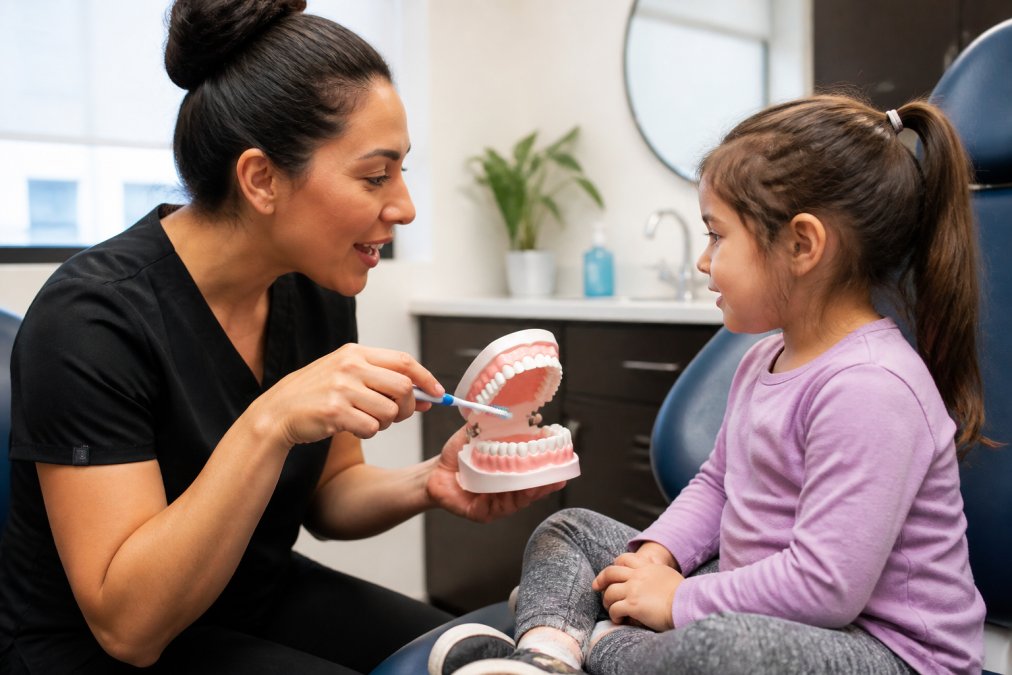
Role-play is one of the most effective ways to demystify the dental experience. Let your child take turns being the dentist and the patient. Use a soft toothbrush as a "dental tool" and let them practice looking in your mouth. This playful approach reduces anxiety by giving them a sense of control.
Visual aids and social stories also help toddlers understand what to expect. Children's books about visiting the dentist use illustrations to show the examination room, dental tools, and the cleaning process in a non-threatening way. Reading these stories repeatedly helps normalize the experience.
Create a simple visual schedule showing the steps of a dental visit:
- Check-in at the desk
- Sit in the special chair
- The dentist looks at teeth
- The dentist cleans teeth
- We go home
Seeing these steps in sequence helps toddlers know what comes next, which reduces uncertainty and anxiety.
What to Expect at a Child's First Dental Exam
The Examination Room Tour
When you arrive for your toddler's first dental exam, ask the staff for a brief tour of the examination room before the appointment begins. Let your child sit in the dental chair, touch the chair controls if they're safe, and see the dental tools up close. Familiarity reduces fear.
The examination room will contain several items your child might notice: the large overhead light, the suction tool that makes a slurping sound, the water spray, and various handheld instruments. Explaining each one briefly helps your child understand they're not dangerous, they're just tools that help the dentist do their job.
Most pediatric dental offices in the Albuquerque area design their examination rooms with children in mind. Bright colors, friendly decorations, and child-sized furniture make the space feel welcoming rather than clinical.
Understanding the Dental Tools
Dental tools can look intimidating to a toddler, but they serve specific, helpful purposes. Here's how to explain the most common ones:
The Mirror, "This tiny mirror helps the dentist see all your teeth, just like how you look in a mirror at home."
The Suction Tool, "This little straw drinks up the water in your mouth so you don't have to swallow it. It makes a slurping sound like a vacuum cleaner."
The Scaler, "This tool gently scrapes away the sticky stuff on your teeth that your toothbrush can't reach. It tickles a little but doesn't hurt."
The Polisher, "This spinning tool polishes your teeth to make them shiny and smooth. It feels like a tiny electric toothbrush."
The Water Spray, "The dentist sprays a little water to rinse your teeth and keep them clean while working."
Let your child watch the dentist demonstrate these tools on your own teeth first. Seeing a parent undergo the same procedure without fear reassures children that it's safe.
How to Reduce Dental Anxiety in Children
Sensory-Friendly Preparation Strategies
Toddlers experience the world through their senses, so preparing them for the sensory aspects of a dental visit is crucial. Dental environments involve sounds, tastes, textures, and sensations that might feel strange to a child experiencing them for the first time.
Introduce these sensations gradually at home:
Sound desensitization, Play recordings of dental office sounds (the suction tool, the polisher, the water spray) at low volume during playtime. Over several weeks, gradually increase the volume so your child becomes accustomed to these noises.
Texture exploration, Let your child touch different textures: soft bristles (like the polisher), smooth plastic (like dental instruments), and cool metal spoons. This familiarizes them with the sensations they'll experience.
Taste preparation, Some dental products have flavors. If your dentist offers flavored polishing paste, ask for a small sample to let your child taste it beforehand.
Light sensitivity, The overhead dental light is bright and can startle children. Practice having your child look at bright lights briefly at home, or let them wear sunglasses in the car to adjust gradually. manage separation anxiety.
Using Positive Reinforcement
Positive reinforcement works far better than bribes or threats. The goal is to help your child associate dental visits with feeling proud and capable.
Use these reinforcement strategies:
Praise effort, not just behavior, "You sat so still in that chair. That took real courage!" rather than "You were good, so you get a toy."
Create a celebration ritual, After each dental visit, do something small and special together: read an extra story, go to the park, or call a grandparent to share the news.
Use a progress chart, For children ages 2 and up, a simple sticker chart showing completed dental visits helps them see their progress and feel accomplished.
Let them choose small rewards, Instead of dentist-office toys, let your child pick something meaningful: extra playtime, a special snack, or choosing the next book to read together.
Step-by-Step Guide: Explaining the Dental Cleaning Process
Step 1: The Plaque and Tartar Check
The dental cleaning begins with a thorough examination. The dentist uses a small mirror and explorer tool to look at each tooth and check for plaque buildup and tartar. Plaque is the sticky film that forms on teeth throughout the day; tartar is hardened plaque that only professional tools can remove.
Here's how to explain this step to your toddler:
"The dentist is going to look very carefully at all your teeth. They use a tiny mirror so they can see every tooth, just like when you look in the mirror at home. They might use a small pointy tool to gently feel your teeth and check if they're healthy. This doesn't hurt, it just feels a little tickly."
Early detection of problems like cavity formation or gum disease allows for prompt treatment, preventing more serious complications.
Step 2: Gentle Scaling and Polishing
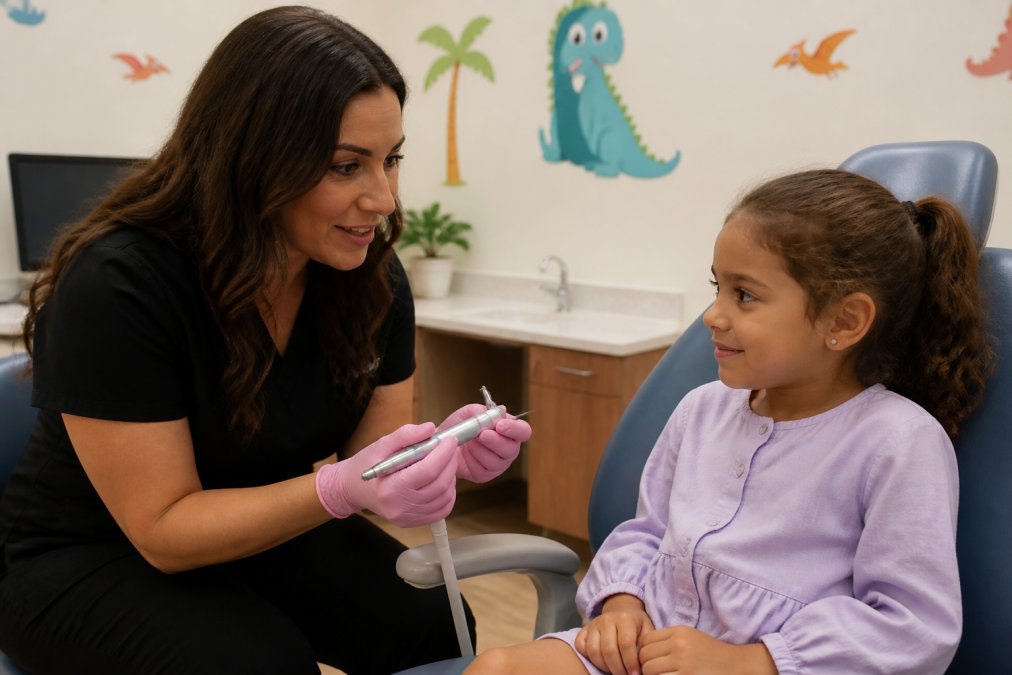
After the examination, the dentist uses a scaler to remove plaque and tartar from the tooth surfaces. The scaler vibrates gently and may produce a high-pitched sound.
Explain it this way:
"Now the dentist is going to use a special tool to clean your teeth really well. It makes a buzzing sound and feels a little like a tiny electric toothbrush. The tool sprays a little water to keep your teeth cool and clean. You might taste something a little salty or minty."
After scaling, the dentist polishes the teeth with a rubber cup attachment that spins slowly. The polishing paste often has a pleasant flavor. Tell your child: "This spinning tool polishes your teeth to make them shiny and smooth. It feels like a soft toothbrush."
Step 3: Fluoride Varnish Application
Many pediatric dental cleanings end with a fluoride varnish application. Fluoride is a mineral that strengthens tooth enamel and helps prevent cavities (the CDC). The varnish is painted onto the tooth surfaces and hardens quickly.
Explain fluoride varnish like this:
"The dentist is going to paint a special coating on your teeth. It's called fluoride, and it's like a superhero shield that protects your teeth from getting cavities. It tastes a little like [whatever flavor your dentist uses]. The coating will harden really fast, and then you're done!"
After the fluoride application, most dentists recommend waiting 30 minutes before eating or drinking.
At-Home Dental Hygiene Tips for Toddlers
Maintaining good oral hygiene between dental visits is essential for cavity prevention and overall enamel health. Establish a consistent routine that makes brushing and flossing part of your toddler's daily life.
Brushing technique for toddlers:
Use a soft-bristled toothbrush and a smear of fluoride toothpaste (about the size of a grain of rice for children under 3). Brush gently in small circles, focusing on the gum line where plaque accumulates. Brush for about two minutes, twice daily, once in the morning and once before bed.
Make brushing fun by singing songs, using a timer, or letting your child pick a favorite toothbrush character.
Flossing for toddlers:
Begin flossing as soon as two teeth touch each other. Use child-sized floss picks or water flossers designed for young children. Floss once daily, ideally before bedtime.
Diet and cavity prevention:
Limit sugary snacks and drinks, especially between meals. Sugary foods feed cavity-causing bacteria. Encourage water as the primary beverage. Milk and water are tooth-friendly; juice and sugary drinks promote cavity formation.
Regular dental visits:
Schedule dental cleanings every six months for toddlers. These regular visits allow the dentist to monitor tooth development, catch problems early, and reinforce good oral hygiene habits.
When to Schedule Your Toddler's First Cleaning
The ideal time for a toddler's first dental visit is around age one or within six months of the first tooth erupting. This early visit establishes a relationship with a pediatric dentist and allows for preventative guidance before problems develop.
For families in the Albuquerque area and surrounding neighborhoods like Rio Rancho, Placitas, North Valley, Uptown, and Nor Este, Osuna Dental Care offers comprehensive family dentistry services. Our team specializes in working with young children and understands how to explain dental cleanings to toddlers in ways that reduce anxiety and build confidence.
When scheduling, let the office know this is your child's first visit. Many pediatric dental practices allow extra time for first appointments to ensure a comfortable, unhurried experience.
Timing matters too. Schedule appointments when your toddler is well-rested and fed, typically mid-morning or early afternoon. Avoid scheduling right before naptime or when your child is tired or hungry.
Helping your toddler understand and feel comfortable with dental cleanings is one of the best investments in their long-term oral health. When children develop positive associations with dental care early, they're more likely to maintain good habits throughout their lives. At Osuna Dental Care in Albuquerque, our experienced team has helped countless families make their toddler's first dental visit a success. We combine clinical expertise with genuine patience and child-friendly communication to ensure every young patient feels safe and supported.
Contact us today at (505) 884-1989 or visit us at 5900 Cubero Dr NE Ste B, Albuquerque, NM 87109. We're here to help your child build a lifetime of healthy, confident smiles.
Frequently Asked Questions
At what age should a toddler have their first dental cleaning?
The American Academy of Pediatric Dentistry recommends scheduling a child's first dental visit by age one or when the first tooth erupts, whichever comes first. Early dental visits establish positive oral health habits and allow your dentist to monitor tooth eruption and catch any issues early. Regular cleanings and checkups help prevent cavity formation and gum disease in young children.
Is a dental cleaning painful for toddlers?
Professional dental cleanings are not painful for toddlers. The dentist uses gentle techniques and soft-bristled instruments designed for young children. You may hear buzzing sounds or feel slight vibrations during scaling and polishing, but these sensations are not painful. Preparing your child with honest explanations and sensory familiarization helps reduce anxiety and makes the experience comfortable.
How can I explain what the dental tools do without scaring my toddler?
Use simple, child-friendly language to describe each tool. Call the scaler the 'tickle tool' that gently removes sticky buildup. Describe the polisher as making teeth 'shiny and smooth.' Practice with toys or stuffed animals, letting your toddler hold and explore similar objects. Role-play games where you take turns being the dentist and patient help normalize the experience and reduce dental phobia before the actual visit.
What should I do if my toddler shows signs of dental anxiety before the appointment?
Start preparation weeks in advance using positive reinforcement and social stories. Visit the dental office ahead of time to familiarize your child with the environment. Use calm, confident language when discussing the visit. Avoid phrases like 'it won't hurt' or 'don't be scared,' which can increase anxiety. Instead, focus on what the dentist will do to help keep teeth strong and healthy. For children with significant dental anxiety, ask your dentist about anticipatory guidance techniques tailored to your child's needs.
This article was written using GrandRanker
