Blogs
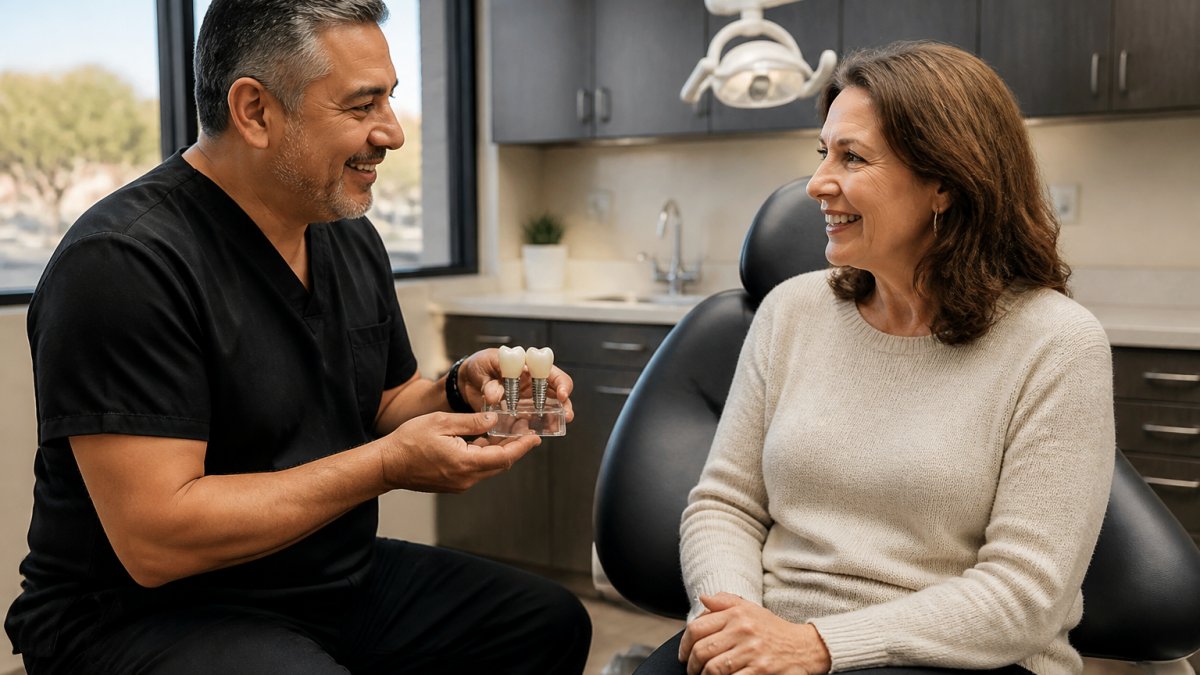
Who Is a Good Candidate for Dental Implants
Table of Contents
- Who Is a Good Candidate for Dental Implants
- Dental Implant Candidacy Requirements You Need to Know
- Dental Implant Bone Requirements and Assessment
- Dental Implants and Gum Disease: What You Need to Know
- Overall Health Factors That Affect Your Candidacy
- Dental Implant Healing Time and Recovery Expectations
- Assessing Your Candidacy: What to Expect at Your Consultation
- Not a Candidate Right Now? Your Realistic Options
- Frequently Asked Questions
Last Updated: October 12, 2026
Who Is a Good Candidate for Dental Implants
Determining who is a good candidate for dental implants depends on several key factors. At Osuna Dental Care, we help patients throughout the Albuquerque area understand whether implants are the right choice for restoring their smile.
Dental implants offer a permanent solution for missing teeth. Unlike dentures or bridges, implants anchor directly into your jawbone, creating a foundation that feels and functions like natural teeth. But not everyone qualifies immediately.
Dental Implant Candidacy Requirements You Need to Know
Several basic requirements determine whether you can move forward with implant treatment. These aren't barriers, they're guidelines that help ensure your implants succeed and last for decades.
Missing One or More Teeth
You need at least one missing tooth to be a candidate for dental implants. Implants replace teeth that are gone, severely damaged, or decayed beyond repair.
Single-tooth implants work well for isolated gaps. Multiple missing teeth can be restored with implant-supported bridges or full-arch solutions like All-on-4 implants, which replace an entire row of teeth with just four strategically placed implants.
Adult Jaw Development
Your jawbone must be fully developed before implant placement. This typically happens by age 18, though some people mature later. Younger patients should wait until growth is complete.
For adults of any age, implants can work well. Age alone isn't a disqualifier, we've placed implants in patients well into their 80s. What matters is bone health and overall wellness, not the number of candles on your birthday cake.
Dental Implant Bone Requirements and Assessment
Adequate jawbone is essential for implant success. Your bone must be thick and tall enough to support the implant fixture. This is where many candidacy questions arise.
Bone density matters most. Dense bone provides stable anchorage for the implant. Soft bone may not hold an implant securely.
Bone volume is equally important. You need enough bone height and width. If bone loss has occurred from missing teeth, gum disease, or injury, you might need bone grafting before implant placement.
At Osuna Dental Care, we use 3D imaging technology to assess your bone precisely. This imaging shows us exactly what you're working with and whether grafting is needed.
Dental Implants and Gum Disease: What You Need to Know
Healthy gums are non-negotiable for implant success. Gum disease creates inflammation and bone loss, both of which threaten implant stability.
If you have active gum disease, treatment comes first. You'll need to eliminate infection and restore gum health before implant placement.
Ongoing oral hygiene is critical after implant placement. Brush twice daily, floss around the implant, and attend regular cleanings.
Overall Health Factors That Affect Your Candidacy
Your general health influences implant success. Certain conditions and medications require careful consideration.
Chronic Conditions and Diabetes Management
Diabetes doesn't automatically disqualify you. Well-controlled diabetes poses minimal risk. Uncontrolled diabetes slows healing and increases infection risk, which threatens implant integration.
If you have diabetes, work with your doctor to keep blood sugar stable before implant surgery. Share your A1C levels with your dental team. This transparency helps us plan treatment safely.
Other chronic conditions require similar assessment. Heart disease, autoimmune disorders, and bone disorders all need evaluation. Most can be managed with proper planning.
Smoking and Tobacco Use
Smoking significantly increases implant failure risk. Tobacco reduces blood flow, slowing healing and weakening bone integration (Smoking and Dental Implants: A Systematic Review and Meta-Analysis).
If you smoke, quitting before implant surgery improves your chances dramatically. Even cutting back helps.
Many patients ask if they can smoke after healing. Technically possible, but risky. Smoking long-term increases the chance your implant fails years down the road. It's not worth jeopardizing a permanent solution.
Dental Implant Healing Time and Recovery Expectations
Understanding the healing timeline helps you plan and manage expectations.
Initial healing takes 7-10 days. Swelling and discomfort peak around day three, then improve steadily. Most patients return to light activity within a week.
Bone integration takes 3-6 months. This is where the real work happens.
Final restoration happens after integration. Once bone has fused, we place the crown, bridge, or denture on top.
For patients seeking efficiency, All-on-4 implants offer faster timelines.
Assessing Your Candidacy: What to Expect at Your Consultation
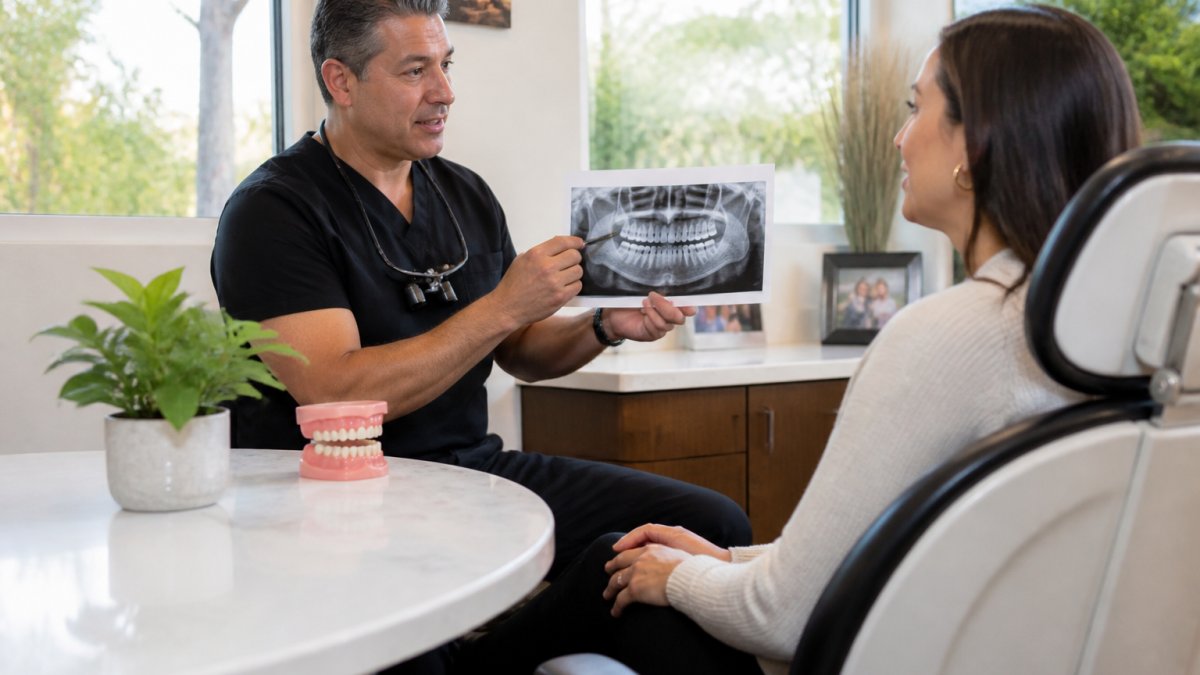
A thorough consultation is where candidacy stops being a guess and becomes a documented clinical decision. Knowing what to expect in advance helps you prepare, and helps you ask better questions.
Step 1: Medical History Review
Your dentist starts with a written health history and a conversation. Expect questions about:
- Current medications, including blood thinners, bisphosphonates, and immunosuppressants
- Diagnosed conditions such as diabetes, heart disease, and autoimmune disorders
- Prior surgeries, radiation therapy to the head or neck, and chemotherapy
- Smoking and tobacco use, including how much and how long
- History of gum disease and how it was treated
Be honest here. This is not a judgment exercise, it is the information that determines whether implant surgery is safe for you and how your healing is likely to go.
Step 2: Oral Examination
Next comes a hands-on exam. Your dentist checks:
- Gum tissue for signs of active periodontal disease, redness, bleeding on probing, pocket depth
- Remaining teeth for decay, cracks, or instability that could affect the plan
- Bite relationship and how your upper and lower teeth meet
- The ridge where the implant would go, feeling for shape and firmness
Step 3: Imaging and Bone Measurement
This is the step most patients underestimate. A 3D cone beam scan (CBCT) shows bone height, width, and density in three dimensions, far more than a standard 2D X-ray.
At Osuna Dental Care, we use 3D imaging to make this assessment precise rather than approximate. If the scan shows insufficient bone, grafting is discussed before anything else is scheduled.
Step 4: How the Recommendation Is Reached
After the history, exam, and imaging, your dentist weighs three things together:
- Can the bone support the implant? If not, can grafting make it possible?
- Are the gums healthy enough? If not, how long will treatment take?
- Is your overall health stable enough for surgery and healing? If not, what needs to change first?
The answer to those three questions produces one of three outcomes: you are ready now, you are ready after a preparatory step, or implants are not the right option for you. All three are legitimate answers.
Questions Worth Asking
- How many appointments will I need, and what happens at each one?
- Will I need bone grafting, and if so, when?
- What are the risks specific to my health history?
- What happens if an implant fails, and how is that handled?
- What does aftercare look like for the first year?
If you are in Albuquerque, Rio Rancho, Placitas, North Valley, Uptown, or Nor Este and want a candidacy evaluation, call Osuna Dental Care at (505) 884-1989 or visit us at 5900 Cubero Dr NE Ste B, Albuquerque, NM 87109. We are the experts of choice for full mouth dental implants in Albuquerque, and we are consistently rated among the best dental practices in the area by local patients.
Not a Candidate Right Now? Your Realistic Options
"Not right now" is not the same as "never." Most patients who are told to wait fall into one of four categories, and each has a defined path forward. Understanding the alternatives helps you make a decision you can live with while you prepare.
If Gum Disease Is the Obstacle
Active periodontal disease has to be treated before an implant goes in. Treatment usually involves scaling and root planing (deep cleaning below the gumline), sometimes with localized antibiotics, followed by a re-evaluation a few weeks later to confirm that pockets have closed and bleeding has stopped. Once your gums are stable, implant placement can be scheduled. A history of gum disease is not a disqualifier, current, active disease is.
If Bone Loss Is the Obstacle
Bone grafting rebuilds the ridge so an implant has something to anchor into. Graft material can come from your own bone, a donor, or a synthetic source, and your dentist will explain which is appropriate for your case. Two things are worth knowing:
- Grafting and implant placement can sometimes happen in the same visit. When the bone is borderline rather than severely deficient, a combined approach shortens the overall timeline.
- When grafting is done first, healing typically takes several months before the implant is placed. That waiting period is not wasted time, it is the bone regenerating and strengthening.
If a Health Condition Is the Obstacle
Uncontrolled diabetes, uncontrolled high blood pressure, and certain bleeding disorders can delay implant surgery. The path forward is usually coordination with your primary care doctor: stabilize the condition, then revisit candidacy. Many patients find that the implant conversation is what finally motivates them to get a chronic condition under control, and that benefits far more than their smile.
If Smoking Is the Obstacle
Smoking reduces blood flow to the gums and bone, which slows healing and raises failure risk. Quitting before surgery, and staying off tobacco through the integration period, meaningfully improves outcomes. If quitting outright is not realistic yet, talk to your dentist about a reduction plan and a realistic timeline.
Temporary Alternatives While You Wait
If you need to restore function and appearance now, these options can bridge the gap:
- Removable partial dentures, replace one or a few teeth, can be adjusted as your situation changes
- Complete dentures, replace a full arch, with or without adhesive
- Tooth-supported bridges, anchored to adjacent teeth, a fixed option when those teeth are healthy
Each has trade-offs. Bridges require reshaping the neighboring teeth. Dentures can slip and do not preserve bone the way implants do. None of them are permanent in the way an implant is, but they are legitimate choices, and your dentist should walk you through them without pressure.
If you are in Albuquerque or the surrounding areas, Rio Rancho, Placitas, North Valley, Uptown, or Nor Este, and want an honest assessment of where you stand, contact Osuna Dental Care at (505) 884-1989 or stop by 5900 Cubero Dr NE Ste B, Albuquerque, NM 87109. We are the experts of choice for full mouth dental implants in Albuquerque, and we are rated among the best dental practices by local patients across multiple platforms.
Frequently Asked Questions
Can you get dental implants if you have gum disease?
Gum disease must be treated and controlled before implant placement. Healthy gums are essential for implant stability and long-term success. Your dentist will assess the severity of your periodontal condition and may recommend treatment to restore gum health first. Once your gums are healthy, you can move forward with implant candidacy evaluation. At Osuna Dental Care in Albuquerque, we evaluate your complete oral health before recommending implant treatment.
How much bone do you need to be a candidate for dental implants?
Adequate bone volume and density in your jaw are critical for dental implant bone requirements. Your dentist uses imaging to measure bone height and width where the implant will be placed. If you don't have sufficient bone, bone grafting can build up the area to support an implant. The exact amount needed depends on implant size and placement location. A consultation with an experienced implant dentist will determine if you meet the bone requirements for your specific situation.
Why am I not a candidate for dental implants?
Common reasons include insufficient jawbone volume, active gum disease, uncontrolled diabetes, heavy smoking, or certain medical conditions that affect healing. Young patients whose jaws are still growing may also need to wait. However, many barriers are temporary or manageable. Bone grafting, gum treatment, or improved health management can make you eligible later. A professional evaluation identifies your specific situation and whether alternatives like dentures or bridges suit your needs now.
Can smokers get dental implants?
Smoking significantly increases implant failure risk because it impairs bone healing and reduces blood flow to the implant site. Many dentists require patients to quit smoking before implant placement or strongly recommend it for the best outcome. If you smoke, discuss your situation with your dentist. Quitting improves your candidacy and dramatically increases the chance your implant will integrate successfully with your jawbone and last for years.
