Blogs

Broken Tooth With a Hole: What to Do Now
Table of Contents
- What Is a Broken Tooth With a Hole?
- Causes of a Broken Tooth With a Hole
- Symptoms of a Fractured Tooth
- Immediate Care: What to Do Right Now
- Emergency Dentist in Your Area
- Treatment Options for Broken Teeth
- Same-Day Dental Crowns and Restorations
- Conclusion
What Is a Broken Tooth With a Hole?
A broken tooth with a hole is a dental condition where the tooth structure has fractured and created an opening that exposes the inner layers beneath the protective enamel. This differs from a simple crack or chip, the hole means damage has penetrated deeper, potentially reaching the dentin or pulp chamber. The exposed inner structure becomes vulnerable to infection, sensitivity, and further decay.
The hole can vary in size and depth, from barely visible during examination to obvious to the naked eye. What matters is that the tooth's integrity is compromised, creating a pathway for bacteria and food particles to reach sensitive areas inside. Unlike a simple cosmetic chip, a hole represents structural damage that won't heal on its own and requires prompt professional attention.
Causes of a Broken Tooth With a Hole
Trauma and impact remain the leading cause. A fall, sports injury, motor vehicle accident, or direct blow to the face can fracture teeth suddenly, sometimes creating a hole where a piece breaks away.
Untreated tooth decay is another major culprit. When a cavity goes without treatment, decay continues eating through enamel and into dentin, eventually creating a hole. What starts as a small cavity can expand significantly if left unaddressed, which is why regular dental checkups matter.
Weakened tooth structure from previous damage or large fillings makes teeth more susceptible to breaking. Teeth with root canals become more brittle, and those with large fillings have less remaining natural structure to support them.
Grinding and clenching habits (bruxism) put constant stress on teeth over time, gradually weakening structure and creating microscopic fractures that eventually lead to breaks.
Biting on hard objects, ice, hard candy, nuts, or popcorn kernels, can cause immediate fractures, especially if the tooth is already weakened.
Symptoms of a Fractured Tooth
Sharp pain when chewing is the most common symptom, as the hole exposes sensitive inner layers. You might notice pain is worse with certain foods or when biting in a specific direction.
Tooth sensitivity to temperature develops because the hole allows hot and cold to reach the dentin and potentially the pulp. You might feel a sharp twinge when drinking hot coffee or cold water.
Visible damage or a dark spot on the tooth is often noticeable, a hole, dark line indicating a crack, or discoloration around the damaged area.
Swelling or tenderness in the gum around the broken tooth indicates inflammation or early infection.
Persistent ache or throbbing pain suggests the pulp may be inflamed or infected, often worsening over time and indicating you may need a root canal.
Food getting stuck in or around the hole is uncomfortable and increases infection risk.
Some people have minimal symptoms initially, which is deceptive. The absence of pain doesn't mean the tooth is fine, it means damage hasn't yet reached the nerve. The longer you wait, the more likely complications develop.
Immediate Care: What to Do Right Now
Rinse your mouth with warm salt water to clean the area and reduce inflammation. Mix one-half teaspoon of salt in eight ounces of warm water and gently rinse several times. This removes food debris and bacteria from the hole, reducing infection risk.
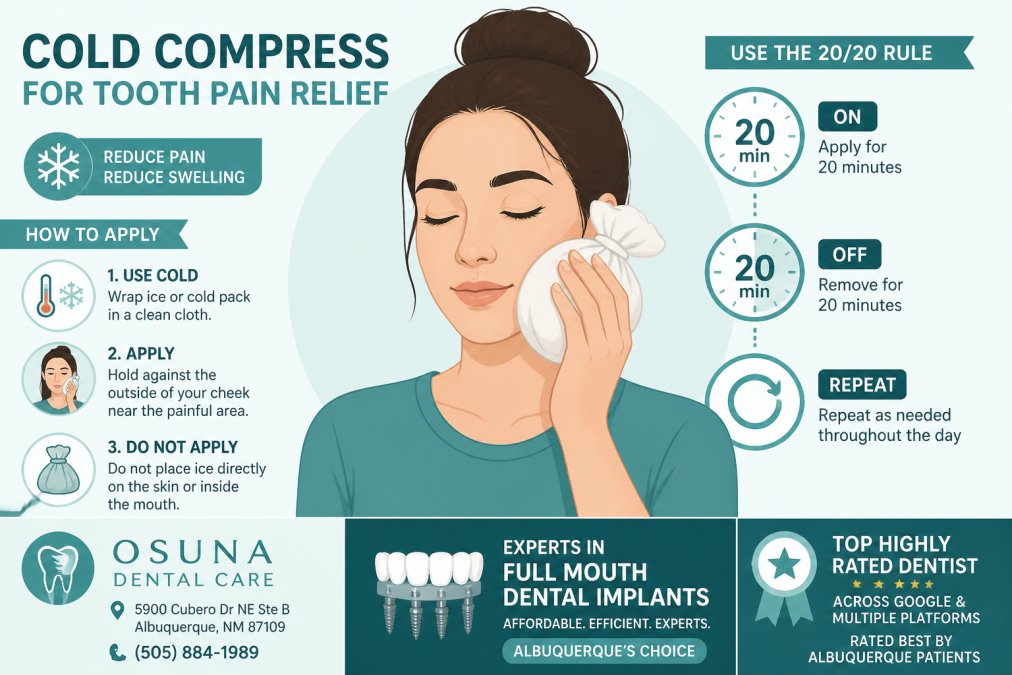
Apply a cold compress to the outside of your cheek near the broken tooth for 15-20 minutes at a time. Wrap ice in a cloth and hold it against the area. The cold reduces swelling, numbs the area, and provides temporary pain relief. Repeat every few hours as needed.
Avoid chewing on the broken tooth completely. Eat soft foods on the other side of your mouth, yogurt, applesauce, scrambled eggs, mashed potatoes, and soup are good options.
Take over-the-counter pain medication if needed. Ibuprofen or acetaminophen can help manage discomfort while you arrange professional care.
Protect the hole if possible. Apply dental wax or temporary filling material (available at pharmacies) to cover it. This prevents food from entering and reduces sensitivity, though it's only temporary.
Avoid very hot or very cold foods and drinks that trigger sensitivity. Room-temperature options are more comfortable.
Do not delay seeking professional care. These steps provide temporary relief only. The broken tooth requires professional treatment within days, not weeks.
Emergency Dentist in Your Area
Finding emergency dental care quickly is critical. Many dental offices in the Albuquerque area offer same-day or next-day appointments for urgent cases.
Osuna Dental Care serves patients throughout Albuquerque and surrounding areas including Rio Rancho, Placitas, North Valley, Uptown, and Nor Este. Osuna Dental Care specializes in emergency treatment and restorative solutions. The practice has earned recognition across Google and multiple platforms for high-quality care and patient satisfaction.
Contact Osuna Dental Care at (505) 884-1989 or visit 5900 Cubero Dr NE Ste B, Albuquerque, NM 87109 to schedule an emergency appointment. The team prioritizes scheduling emergency patients quickly and understands that a broken tooth with a hole causes pain and concern.
When calling any emergency dentist, describe your symptoms clearly, mention that you have a broken tooth with a hole, describe your pain level, and note whether you have swelling. This helps the office prioritize your case.
Treatment Options for Broken Teeth
The right treatment depends on the extent of damage, whether the pulp is exposed, and the tooth's location. Your dentist examines the tooth and takes X-rays to determine the best approach.
Dental bonding works well for smaller breaks where the hole is shallow and doesn't extend into the pulp. The dentist cleans the area, applies tooth-colored resin, and hardens it with a special light. This restores appearance and function relatively quickly, though it may not last as long as crowns.
Dental fillings are appropriate when decay has created the hole. The dentist removes the decayed portion, cleans the area thoroughly, and fills it with composite resin or other filling material.
Root canal therapy becomes necessary when the hole is deep enough to expose or infect the pulp. The dentist removes the infected or inflamed pulp tissue, cleans the inside of the tooth, and fills the space with biocompatible material. Root canal therapy saves the tooth and eliminates the source of pain. Osuna Dental Care offers gentle, efficient root canal treatment designed to minimize discomfort.
Tooth extraction may be recommended if the break is so severe that the tooth cannot be saved or if damage extends below the gum line. For patients missing teeth, Osuna Dental Care specializes in affordable, efficient full mouth dental implants and All-on-Four solutions that restore function and appearance.
Temporary restoration might be placed during your first visit if the dentist needs time to plan more complex treatment.
Your dentist discusses which option makes sense for your specific situation, considering the tooth's location, your age, your bite force, and your long-term goals.
Same-Day Dental Crowns and Restorations
When a broken tooth with a hole requires a crown, same-day crowns offer a convenient solution that eliminates multiple visits and temporary restorations.
Traditional crowns require two appointments: one to prepare the tooth and place a temporary crown, and another weeks later to place the permanent crown. Same-day crowns use advanced technology to design and mill a permanent crown during your appointment. The dentist prepares the tooth, takes a digital scan using 3D imaging, and a milling machine creates your crown while you wait. Within a few hours, your permanent crown is ready and cemented in place.
Osuna Dental Care offers same-day crown technology, making it possible to address a broken tooth with a hole in a single visit. The practice uses 3D imaging for precise, efficient results, ensuring your crown fits accurately and looks natural. For busy professionals in Albuquerque who cannot afford multiple dental appointments, same-day crowns are ideal. You can have your broken tooth restored and return to normal function the same day.
Same-day crowns work well for most broken teeth with holes, especially when the underlying tooth structure is sound enough to support a crown. Your dentist confirms whether your specific situation is appropriate during your examination.
A broken tooth with a hole is painful and concerning, but it's treatable. The key is acting quickly. Contact Osuna Dental Care at (505) 884-1989 or visit 5900 Cubero Dr NE Ste B, Albuquerque, NM 87109 to schedule an emergency appointment. Osuna Dental Care specializes in emergency treatment and restorative solutions. The team uses advanced 3D imaging and same-day crown technology to restore your tooth efficiently. Whether your broken tooth needs bonding, a filling, a root canal, or a crown, Osuna Dental Care provides expert, compassionate care designed to save your tooth and get you out of pain.
Frequently Asked Questions
Is a broken tooth with a hole considered a dental emergency?
Yes, a broken tooth with a hole often requires prompt attention. If the hole exposes the inner layers of the tooth (dentin or pulp), you may experience severe pain and infection risk. Even without immediate pain, the hole allows bacteria to penetrate deeper, leading to tooth decay and potential root canal therapy. Contact an emergency dentist as soon as possible to prevent complications. Osuna Dental Care, rated highly by patients in the area, offers same-day evaluations for urgent cases.
What should I do at home to manage pain from a broken tooth with a hole?
Apply a cold compress to the outside of your cheek for 15-20 minutes to reduce swelling and numb the area. Avoid chewing on that side of your mouth. Rinse with warm salt water to keep the area clean and reduce inflammation. Over-the-counter pain relievers may help temporarily. Avoid very hot or cold foods and drinks, as they can trigger sensitivity. These steps provide temporary relief, but you need professional dental care to address the underlying damage and prevent infection.
What are the main treatment options for a broken tooth with a hole?
Treatment depends on the extent of damage. For smaller breaks, tooth bonding can restore the structure cosmetically. If the hole is deeper and affects the tooth's integrity, a dental crown protects and restores function. If the hole exposes the pulp (the nerve center), root canal therapy may be necessary before placing a crown. In severe cases where the tooth cannot be saved, extraction and replacement with a dental implant might be the best option. Your dentist will assess which option suits your situation.
How long can a tooth with a hole last without treatment?
A tooth with a hole will gradually worsen without treatment. Bacteria enter through the hole, causing decay to spread deeper into the tooth structure. Within days to weeks, you may develop pain, infection, or an abscess. The longer you wait, the more extensive the damage becomes, potentially making the tooth impossible to save. What starts as a restorable break can become a tooth extraction if left untreated. Seeking prompt care preserves your natural tooth and prevents costly complications.
