Blogs
Is Dental Implant Surgery Painful? What to Expect
Table of Contents
- Is Dental Implant Surgery Painful? The Short Answer
- Anesthesia and Sedation Dentistry for Implants
- What to Expect During the Procedure
- Post-Operative Discomfort: The First 72 Hours
- Dental Implant Recovery Timeline and Pain Management
- Full Mouth Dental Implants in Albuquerque: What's Different
- When to Call Your Dentist After Surgery
- Conclusion
Last Updated: August 18, 2026
Is Dental Implant Surgery Painful? The Short Answer
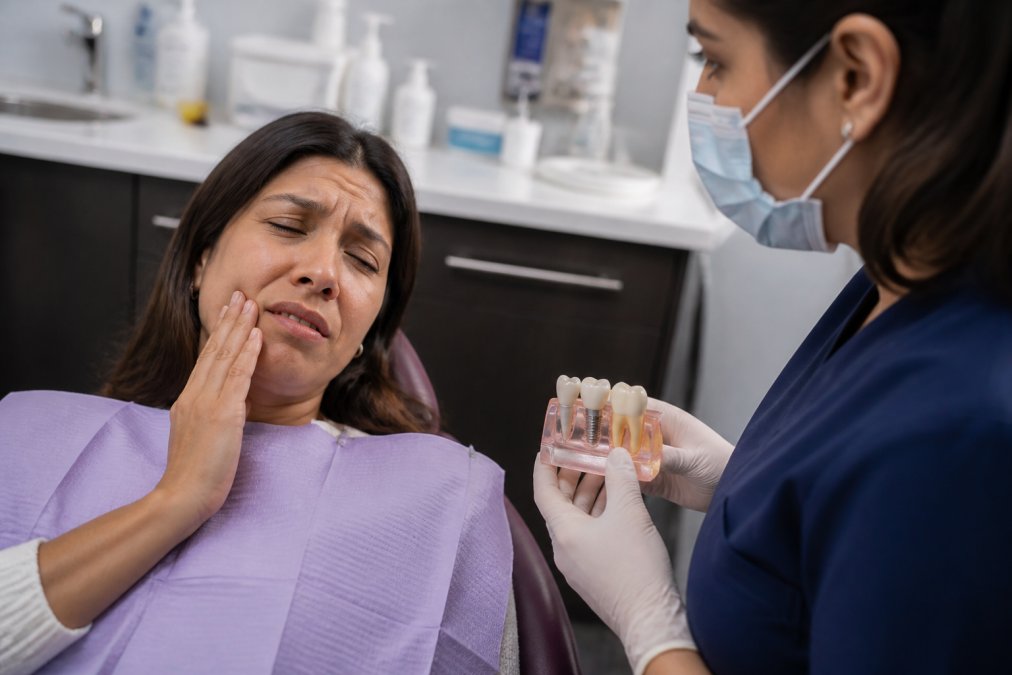
Dental implant surgery itself is not painful during the procedure because local anesthesia numbs the surgical site completely. You'll feel pressure, vibration, and movement, but not sharp pain. The discomfort comes after the anesthesia wears off, typically in the first 72 hours when post-operative soreness and swelling develop. At Osuna Dental Care, we've guided patients through implant placement, and understanding what to expect helps reduce anxiety and prepares you for manageable recovery.
If you're considering full mouth dental implants in Albuquerque or a single implant restoration, knowing the real pain profile matters. This guide covers exactly what happens during surgery, how anesthesia works, what the recovery timeline looks like, and practical strategies to manage discomfort at home.
Anesthesia and Sedation Dentistry for Implants
Local anesthesia is the standard for dental implant surgery. Your oral surgeon injects numbing medication around the surgical site, blocking nerve signals so you feel no pain during the procedure. The injection itself may cause a brief sting, but within seconds the area becomes completely numb. You remain awake and aware throughout the surgery, which many patients prefer because they can communicate with the surgical team if needed.
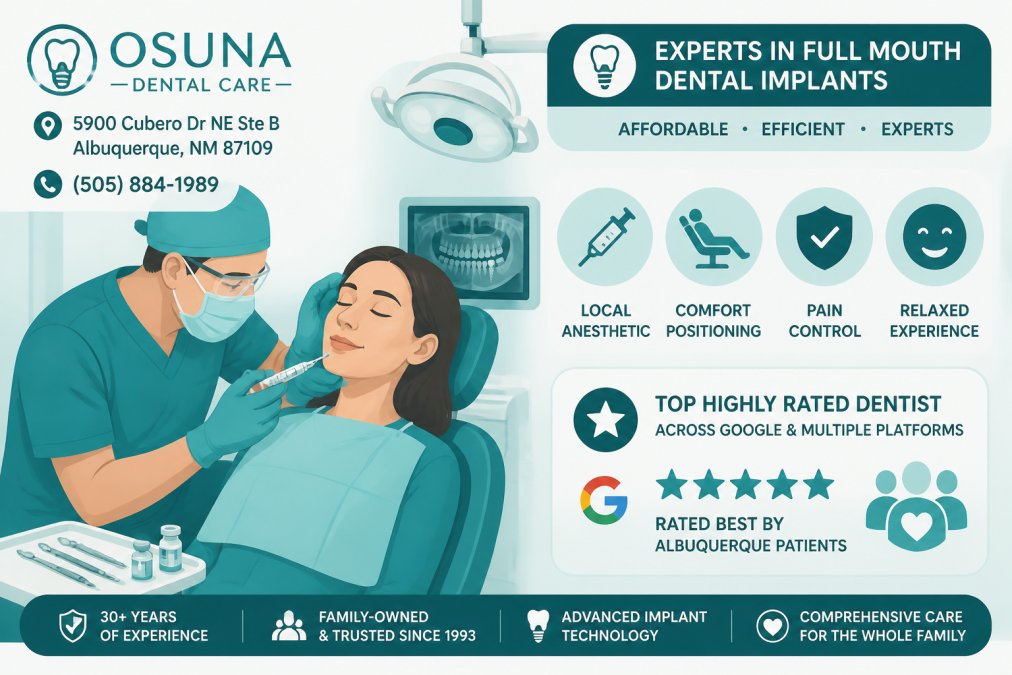
For patients with significant dental anxiety, sedation dentistry offers an alternative. Nitrous oxide (laughing gas) combined with local anesthesia keeps you relaxed while remaining conscious. Oral sedation, where you take a medication before the procedure, produces deeper relaxation. Some practices offer IV sedation for complex cases or multiple implants. Sedation dentistry doesn't eliminate the need for local anesthesia, you still need the numbing medication at the surgical site, but it reduces anxiety and makes the experience feel shorter.
The choice between local anesthesia alone and sedation depends on your anxiety level, the complexity of your case, and your comfort with being awake during surgery. Osuna Dental Care discusses sedation options during your consultation so you can choose what works best for you.
What to Expect During the Procedure
The actual implant placement takes 30 to 60 minutes for a single implant, though full mouth dental implants may require longer depending on how many implants are needed. Once the anesthesia takes effect, your surgeon makes an incision in the gum tissue to access the jawbone. You'll hear a drill sound and feel vibration and pressure as the surgeon creates the space for the implant post. This sensation can feel intense, but because the area is numb, it's not painful, many patients describe it as similar to the pressure of a regular dental cleaning, just more sustained.
The surgical site experiences some bleeding, which is completely normal. Your surgeon controls bleeding with gauze and irrigation as they work. You may taste blood or feel the vibration intensely, but pain should not be part of the experience. If you do feel sharp pain at any point, tell your surgeon immediately, it means the anesthesia isn't working properly in that area, and they can inject more numbing medication.
After placing the implant post into the bone, your surgeon may place a bone graft if your jawbone needs additional support for long-term stability. The graft material helps the implant integrate with your natural bone, a process called osseointegration. The incision is then closed with stitches. Some surgeons place a temporary crown immediately (same-day implant), while others wait several months for the bone to heal before adding the crown.
Post-Operative Discomfort: The First 72 Hours
The first three days after surgery are when most discomfort occurs. As the local anesthesia wears off (usually 2 to 4 hours after surgery), you'll start to feel soreness at the surgical site. This is not sharp pain for most patients, it's more of a dull throbbing ache or mild soreness, similar to what you'd feel after a tooth extraction. Swelling typically peaks around day two or three, which can increase the sensation of pressure and discomfort.

Bleeding is normal for the first 24 hours. You may notice blood-tinged saliva or light oozing from the surgical site. Bite gently on a gauze pad for 30 to 45 minutes at a time if bleeding continues. Avoid rinsing, spitting, or using a straw for the first week, as these actions can disturb the surgical site and increase bleeding.
Bruising and swelling develop gradually over the first few days. Some patients experience minimal swelling, while others notice significant puffiness in the cheek and jaw area. This is your body's natural inflammatory response to surgery and typically subsides within a week.
Most patients manage post-operative discomfort with over-the-counter pain medication. Many find that alternating ice and heat helps, ice for the first 24 to 48 hours to reduce swelling, then heat afterward to ease muscle soreness. Soft foods like yogurt, applesauce, smoothies, and mashed potatoes are easier to eat when your jaw is sore.
Dental Implant Recovery Timeline and Pain Management
Days 1-3: Soreness peaks during this window. Pain medication and ice packs are most helpful. Rest and avoid strenuous activity. Stick to soft, cool foods.
Days 4-7: Discomfort typically decreases noticeably. Swelling begins to reduce. You can gradually return to normal activities, though avoiding heavy exercise for at least a week is wise. Some numbness or tingling in the lower lip or chin may occur, this is temporary nerve irritation and usually resolves within weeks.
Weeks 2-4: Most patients feel significantly better. Residual soreness may linger, but sharp pain should be gone. You can resume normal eating and exercise. The surgical site continues healing beneath the surface.
Weeks 4-12: Osseointegration progresses as your bone fuses with the implant. You may feel no discomfort at all during this phase. Some patients notice occasional mild aches or pressure sensations, which are normal as healing progresses.
3-6 months and beyond: Full integration occurs. Once your implant is fully healed and stable, you should feel no pain or discomfort from the implant itself. If you experience ongoing pain after several weeks, contact your surgeon, it may indicate an infection or other complication that needs attention.
Pain medication management is straightforward for most patients. Over-the-counter options like ibuprofen or acetaminophen work well for mild to moderate soreness. Your surgeon may prescribe stronger pain medication if needed, though most patients don't require it beyond the first few days. Take medication as directed and don't skip doses in the first 48 hours, staying ahead of pain is easier than catching up once it builds.
Antibiotics are typically prescribed to prevent infection at the surgical site. Take the full course even if you feel fine. Infection is rare when proper post-operative care is followed, but it's a risk worth preventing.
Full Mouth Dental Implants in Albuquerque: What's Different
Full mouth dental implants, often performed using the All-on-4 technique, involve placing multiple implants to support a complete arch of teeth. This is more complex than a single implant, and the recovery experience differs in some ways.
With full mouth dental implants, you're dealing with more surgical sites, which means more swelling and potentially more post-operative discomfort. However, many patients find that the discomfort is still manageable and well worth the result of having a complete, functional set of teeth. The first 72 hours are similar to single implant recovery, soreness, swelling, and the need for soft foods, but the effects may be more pronounced because more of your mouth is involved in healing.
The timeline for full mouth dental implants is also different. With All-on-4 placement, you often receive a temporary restoration (temporary teeth) on the same day as surgery. This means you leave with teeth in place, even while healing occurs. The temporary restoration allows you to eat soft foods and function relatively normally, which many patients find psychologically helpful. The permanent restoration is placed after several months of healing and osseointegration.
Osuna Dental Care specializes in full mouth dental implants for patients in Albuquerque and surrounding areas including Rio Rancho, Placitas, North Valley, Uptown, and Nor Este. The practice uses 3D imaging to plan implant placement precisely, which often reduces surgical time and post-operative discomfort compared to traditional methods.
When to Call Your Dentist After Surgery
Most post-operative experiences are straightforward, but certain symptoms warrant immediate contact with your surgeon. Call if you experience severe pain that doesn't respond to pain medication, this could indicate infection or a complication. Excessive bleeding that doesn't slow after 24 hours or returns after seeming to stop also needs evaluation.
Fever above 101°F suggests infection. Swelling that worsens after day three (when it should be improving) or spreads to your throat or neck is concerning. Difficulty swallowing or breathing requires emergency care. Numbness that persists beyond a few weeks or spreads beyond the immediate surgical area should be discussed with your surgeon.
Some patients experience dry socket, a condition where the blood clot at the extraction site dissolves or dislodges, exposing bone. This causes severe pain (much worse than normal post-operative soreness) and a foul taste or odor. It's rare with implants compared to extractions, but if it occurs, your surgeon can treat it.
Allergic reactions to medications are uncommon but possible. Rash, itching, swelling of the lips or throat, or difficulty breathing require immediate attention. Keep your surgeon's contact information handy and don't hesitate to call with concerns.
For routine questions about your recovery, whether some swelling is normal, when you can resume exercise, or how to manage mild discomfort, contact Osuna Dental Care at (505) 884-1989. The team is available to answer questions and provide reassurance during your healing process. Located at 5900 Cubero Dr NE Ste B in Albuquerque, Osuna Dental Care is committed to making your implant experience as comfortable and successful as possible.
The reality of dental implant surgery is less intimidating than most people expect. With proper anesthesia, the procedure itself is painless. Post-operative discomfort is manageable with ice, elevation, soft foods, and over-the-counter pain relief. Most patients feel dramatically better within a week and return to normal function within a few weeks. If you're considering implants to restore missing teeth and improve your smile, understanding the actual pain experience, rather than imagining the worst, helps you move forward with confidence. Osuna Dental Care brings over 30 years of experience to implant placement and patient comfort. Contact the practice to schedule a consultation and discuss your implant options with a team that prioritizes your comfort and results.
Frequently Asked Questions
What's the worst part of dental implant surgery?
Most patients report that the worst part is psychological anxiety before the procedure, not pain during it. Once local anesthesia or sedation takes effect, you feel pressure and vibration but not sharp pain. The post-operative soreness in the days after surgery is typically manageable with ice packs and over-the-counter pain medication. Osuna Dental Care uses advanced techniques to minimize trauma to the surgical site, making recovery gentler for patients in Albuquerque and surrounding areas.
How long will pain last after getting dental implants?
Most patients experience the strongest discomfort in the first 24-48 hours after surgery. Swelling and bruising peak around day 2-3, then gradually improve over 1-2 weeks. Sharp pain typically subsides within 3-5 days; mild soreness or dull throbbing sensations may persist for 1-2 weeks as the surgical site heals. Pain medication prescribed by your dentist, combined with ice therapy and rest, controls discomfort effectively. Recovery varies by individual and the complexity of your implant placement.
How does sedation dentistry for implants help with anxiety?
Sedation dentistry reduces or eliminates awareness during the procedure, allowing anxious patients to remain calm while the oral surgeon works. Options range from nitrous oxide (laughing gas) to IV sedation, depending on your anxiety level and the complexity of your case. Sedation doesn't eliminate pain sensation during surgery, local anesthesia does that, but it removes the psychological stress of watching, hearing, and feeling pressure. Many patients report that sedation made their implant experience painless and anxiety-free.
Is getting a dental implant more painful than tooth extraction?
Dental implant surgery typically causes less acute pain than tooth extraction because the implant is placed in bone after the tooth is removed, with a controlled surgical approach. Tooth extraction involves breaking down the tooth structure and ligaments, which can create sharper, more immediate discomfort. However, implant recovery involves more prolonged post-operative soreness due to the surgical site and bone integration (osseointegration). Both procedures are manageable with proper anesthesia, sedation, and pain management. Your dentist can discuss which option suits your situation.
This article was written using GrandRanker
